



Hervé Lehning
90 articles published in Tangente
 Math for everyoneN°64Sep 12, 2017
Dissecting an obtuse triangle
The problem of dissecting an obtuse triangle was proposed by Martin Gardner in Scientific American.
Read → Math for everyoneN°64Sep 12, 2017
A first overview
Tiling began as a practical idea. Roads and houses were paved long before anyone saw mathematics in them! Since then, the concept has been extended, and today even non-Euclidean and four-dimensional spaces are tiled…
Read → History and CultureN°177Jul 17, 2017
Application of the Chinese remainder theorem
The Chinese remainder theorem finds, among other things, applications in cryptography
Read →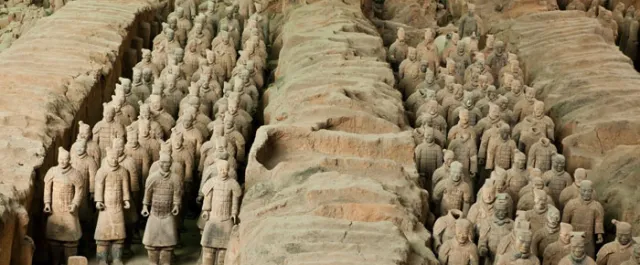 History and CultureN°177Jul 17, 2017
The Chinese remainder theorem
The Chinese remainder theorem owes its name to ancient Chinese mathematicians’ interest in the arrangement problems it describes. Originally a source of puzzles, it has since found more practical applications, particularly in cryptography.
Read → Math for everyoneN°177Jul 17, 2017
Logarithms in everyday life
Logarithms are also used to establish laws that attempt to account for human subjectivity.
Read →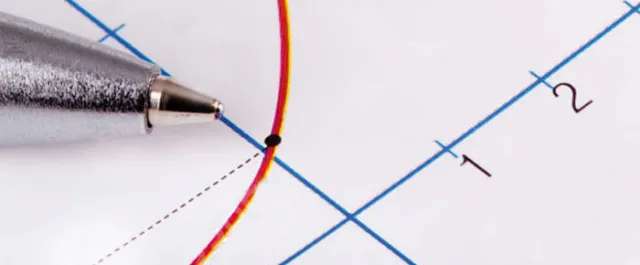 Math for everyoneN°177Jul 16, 2017
The inverse of the exponential function
The introduction of logarithms can be traced back to the Renaissance, when they were used to solve computational problems. They have since found more theoretical applications and today even lie at the heart of some cryptographic systems—and hence of our computers.
Read → Math for everyoneN°63May 23, 2017
Speeding up integer multiplication
Complex numbers seem very far removed from the modern world’s concerns about profitability. Yet they underpin methods used to speed up the multiplication of large integers. They save time—a great deal of time—and therefore money!
Read → Games and ChallengesN°63May 23, 2017
? is an algebraically closed field
The field ? of complex numbers was constructed to provide solutions to every quadratic equation. Surprisingly, it also contains the solutions to all algebraic equations with coefficients in ?. In technical terms, it is algebraically closed.
Read →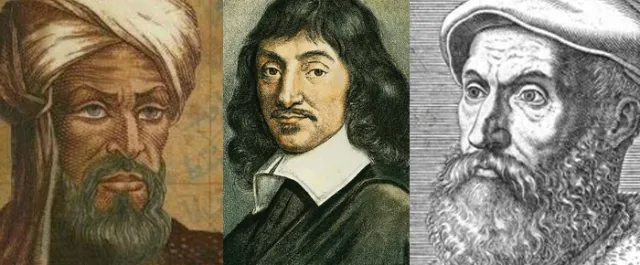 History and CultureN°63May 23, 2017
Those equation fanatics who created imaginary numbers
Complex numbers, initially termed "imaginary," were not conceived as we study them today. Above all, they were introduced as tools for solving polynomial equations—and tackling the mathematical challenges that raged across Renaissance Europe.
Read →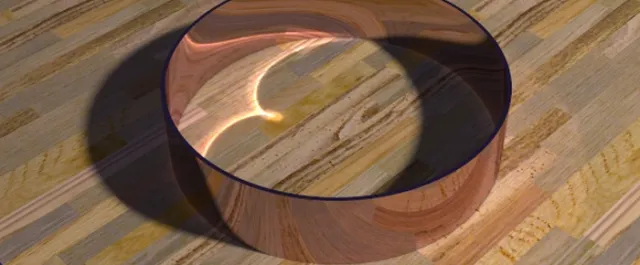 Math for everyoneN°176May 22, 2017
Caustics
In optics, the caustic of a curve is the envelope of the light rays emanating from the sun or another source. One appears in your breakfast cup every morning, illuminated by your kitchen or conservatory lights…
Read →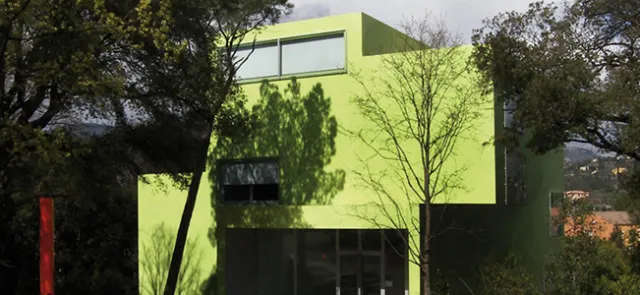 Math for everyoneN°175Mar 31, 2017
The Espace de l'art concret
In Mouans-Sartoux, in the Alpes-Maritimes, a strange apple-green cubic building catches the traveller's eye. Dedicated to concrete art, it gives pride of place to geometric abstraction. In particular, works by François Morellet and Josef Albers can be found there.
Read → History and CultureN°175Mar 29, 2017
Sociologists and mathematicians
Throughout the 20th century, mathematicians drew on their knowledge and developed statistical methods to gain a better understanding of sociology.
Read →