



Hervé Lehning
90 articles published in Tangente
 History and CultureN°180Jan 30, 2018
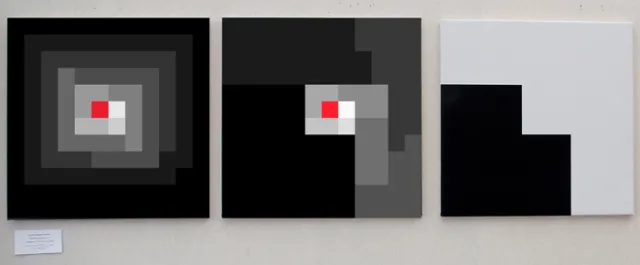
When Fibonacci meets concrete art
The famous Fibonacci sequence begins 1, 1, 2… and each term is the sum of the previous two. It abounds in surprising properties. Has it finally yielded all its secrets? That remains a mystery, as some artists are now working with it and exploring it from every angle.
Read → History and CultureN°180Jan 30, 2018
Cédric Villani at the height of his powers
Despite an extremely busy schedule, our most mathematically minded MP still pursues a few mathematics outreach activities...
Read → History and CultureN°180Jan 27, 2018
Intelligence agencies: the world's largest employers of mathematicians
In the popular imagination, intelligence agencies are staffed by muscle-bound spooks, not exactly refined intellectuals—and certainly not computer scientists sitting behind screens or fully trained mathematicians with degrees. In reality, precisely the opposite is true!
Read → History and CultureN°180Jan 27, 2018
Codebreaking in intelligence
Throughout history, decrypting coded messages has played a major—though often overlooked—role. From the first battle won through cryptography alone to the breaking of Enigma, examples abound, but they have often been kept hidden. That remains true today.
Read →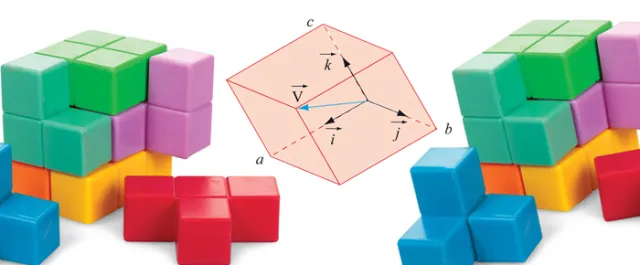 Math for everyoneN°65Jan 06, 2018
Polynomials... viewed as vectors
What could a quadratic polynomial possibly have in common with a vector in three-dimensional space? At first glance, nothing: they are different kinds of objects. Yet both have the same form—each is described by a triple of numbers. Better still, calculations with one correspond to calculations with the other!
Read → Math for everyoneN°65Jan 05, 2018
Collinearity, coplanarity, concurrency... it's all the same story!
Points and lines in the plane are dual notions: theorems about collinear points correspond to theorems about concurrent lines. This duality can be defined geometrically. It even extends to space, through coplanarity.
Read → History and CultureN°65Jan 03, 2018
“The” dimension: not such an obvious idea!
The notion of dimension can be glimpsed in Euclid, then takes clearer shape with Descartes before branching out according to the subject at hand: analytic geometry, vector spaces or topology. There is a whole host of “dimensions”! Here, the focus is on the dimension of vector spaces, due to Georg Hamel.
Read → Math for everyoneN°65Dec 30, 2017
The Gram–Schmidt method
Discover the celebrated Gram–Schmidt method for constructing orthonormal bases of vector spaces
Read → Math for everyoneN°65Dec 30, 2017
Translations and rotations
Translations and rotations have many applications—and not only in geometry!
Read →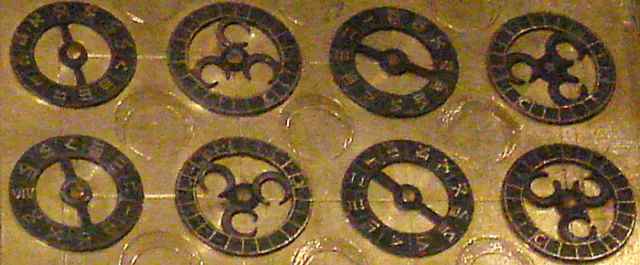 History and CultureN°179Nov 22, 2017
Exploring cryptographic machines
Since antiquity, people have sought to ensure the secrecy of their correspondence through encryption. Because simple methods were easily decrypted, more sophisticated ones were invented, but they were difficult to use by hand. Machines therefore became essential.
Read →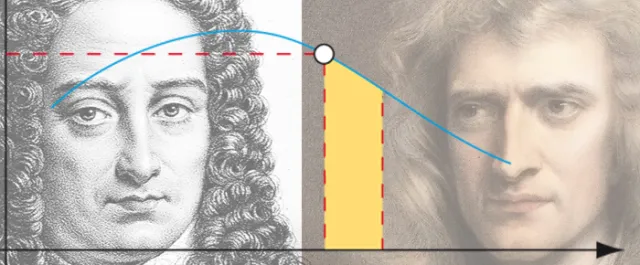 History and CultureN°178Sep 27, 2017
Areas and antiderivatives: a close connection
Areas and antiderivatives have been linked ever since the foundational work of Leibniz and Newton in the 17th century. This connection has simplified the calculation of the areas of many regions in the plane, but the relationship between area and the integral goes far deeper than this computational question.
Read → Math for everyoneN°178Sep 25, 2017
On inscribed angles
The inscribed angle theorem is one of the key results of elementary Euclidean geometry. It requires few tools to state—or even to prove—and has many consequences.
Read →