



History and Culture
History of mathematics and cultural connections

Beyond Lagrange's memoir
As a teenager, Galois read Legendre and Lagrange, followed by Gauss and Cauchy. He often cites the latter two, but rarely Lagrange. Galois was clearly influenced by Lagrange's ideas; he would, however, go much further, benefiting from all the advances made since 1771.

The school system in Galois's time | Tangente
In Évariste Galois's day, the school system was still somewhat different from ours. For example, students could choose to skip certain grades depending on their intended course of study.

Galois, an artistic inspiration: opera and maths | Tangente
Évariste Galois's eventful life has inspired many artists. He appears in several plays, a film and even... an opera!

Galois's last letter reconstructed | Tangente
In 2011, to celebrate the bicentenary of Évariste Galois's birth, a special issue of Tangente Sup (issue 60) was published with an ambitious guiding principle: to describe Galois theory not in today's terms, but using the knowledge available at the time!

René Taton’s historical studies of Galois | Tangente
René Taton (1915–2004) was a historian of science. A graduate of the École normale supérieure and holder of the agrégation in mathematics, he was best known for his research on Gaspard Monge (1746–1818) and Girard Desargues (1591–1661). He also took a keen interest in Galois, amassing a substantial body of documentation.

Galois: Dupuy's official biography | Tangente
The earliest comprehensive biography of Évariste Galois—and the one researchers recognize as "official"—was written by Paul Dupuy (1856–1948), a former student of the École normale supérieure who had passed the agrégation examination in history.

Évariste Galois: Previously unpublished accounts | Tangente
Do you know what Sophie Germain thought of Évariste Galois? What became of his loyal friend Auguste Chevalier? And who was Galois's opponent in his duel?

An essential issue on Galois and his era | Tangente
Présence d’Évariste Galois 1811–1832 (APMEP, 1982) is a special issue devoted entirely to the young algebraist, marking the 150th anniversary of his death.

Academic references on Galois for historians | Tangente
The Revue d’histoire des mathématiques—a leading journal for historians, published by the Société mathématique de France—devoted a special issue to Évariste Galois in 2011 (volume 17, no. 2).
Galois: from historical figure to legend | Tangente
The merging of two images, one scientific and the other political, gave rise to the image of Évariste Galois as an ill-fated mathematician—the image we have of him today. Galois did not become "famous" until the very last years of the 19th century.

Galois: unpublished archives and treasure hunters | Tangente
Alongside university and academic research, enthusiasts conduct genuine investigations into Galois's life

Galois and mathematics education | Tangente
Galois was highly critical of the teaching methods of his day, the school system and the role of examiners in competitive entrance examinations.

Galois's scientific writings: a guide | Tangente
Galois submitted his famous memoir to the Académie des sciences several times. At the same time, he published five articles in scientific journals.
Galois: Republican mathematician and activist | Tangente
Évariste Galois threw himself wholeheartedly into the political struggles of his time. His activism, republican convictions and bold acts would cost him more than ten months of his short life in prison.
Two geniuses, two approaches
Two methods are known for proving that the general quintic equation cannot be solved: Abel's method, presented in 1824 and refined in 1826, and Galois's method from 1829–1830. Galois theory is fairly well known, whereas Abel's ideas are less often discussed.

Some bold early attempts
Évariste Galois is known for his tragic fate, his trailblazing mathematical genius and his profound research in algebra. But before all that, he too was a high-school and university student. Some of Galois’s schoolwork has survived.
Galois's handwritten papers at Louis-le-Grand | Tangente
Although Galois's "complete" works were published in 1962, they can be "completed"—a kind of paradox of completeness—with his papers from the 1829 entrance examination for the École préparatoire. They are held in the Archives nationales. Let us open them! Some of them have never been published.

The entrance examination for the École préparatoire…
As a young student, Galois is known to have failed the École polytechnique entrance examination twice. Yet this was not the only entrance examination he sat: he was even admitted to the École préparatoire. Let's see how he tackled the first problem on the mathematics paper.
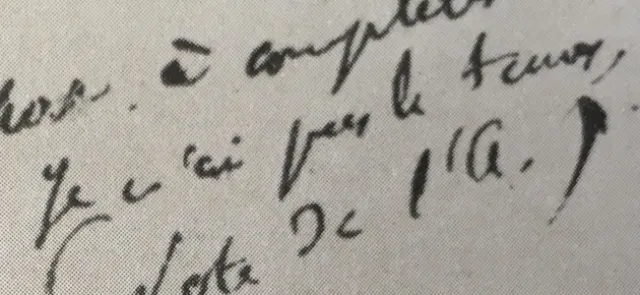
"I have no time"
Évariste Galois's name remains the symbol of precocious mathematical genius—misunderstood and tormented. Is he not sometimes called "the accursed mathematician" or "the Rimbaud of mathematics"? Retracing his all-too-short life allows us to place the young man in the context of his time.
Galois and the Restoration: historical context | Tangente
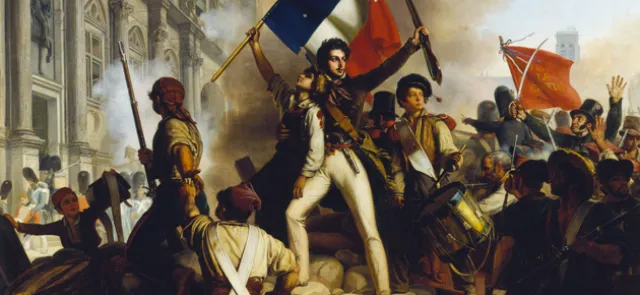
Évariste Galois's family was deeply committed to the gains of the Revolution. During the deeply reactionary Restoration, those values would bring tragedy upon the Galois family and leave Évariste with a lifelong scar.