



Math for everyone
Mathematical content accessible to everyone
The audioactive sequence
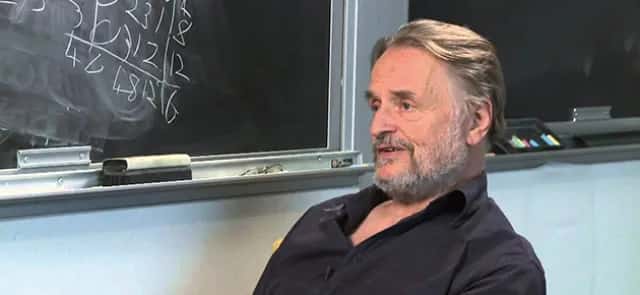
Self-describing sequences are fairly well known among mathematics enthusiasts, but their history often is not. Even less familiar, no doubt, is the work of the man who helped bring them into the mathematical mainstream: John Conway, who devoted his life to having fun with mathematics.
Self-referential word games | Tangente
Words, too, are fertile ground for self-referential curiosities. Here are a few.
Self-reference and fixed points in logic | Tangente
Self-reference is paradoxical and connected with the mathematical notion of a fixed point, the method of successive approximations, and recursive definitions. Together, these connections make this fundamental idea a natural subject for mathematics enthusiasts.
Divide and conquer: divisibility tests in action | Tangente
Many arithmetic problems can be solved using standard methods, whether elementary or advanced. But some puzzles call for a basic concept—divisibility—and a little ingenuity.

Magical divisibility tests: maths and conjuring | Tangente
The mathemagician sometimes uses divisibility to dazzle the audience. Before turning to the solutions, try to work out for yourself the mathematics behind the tricks that follow. Amaze your friends with magic while doing mathematics!
When 60 divides 9
Divisibility can be considered in sets of numbers other than the integers. One such set, introduced as early as fourth grade, lends itself perfectly to this generalization: the terminating decimals.

Tangente Awards 2019 winners | Tangente
The 2019 Tangente Awards were presented on Saturday, November 30, at the Palais du Luxembourg. As usual, they honored outstanding books and projects involving mathematics.
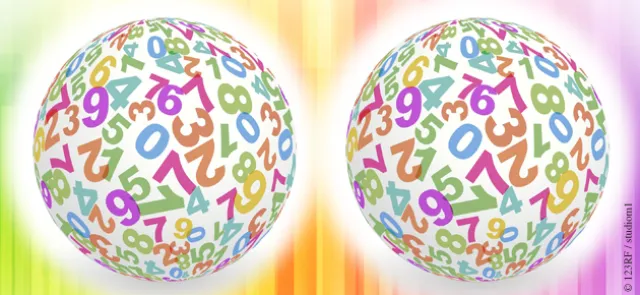
Playing with self-referential numbers | Tangente
Can the digits of a number, or the terms of a number sequence, themselves tell readers about their positions or properties? With a few ingenious constructions, they can!
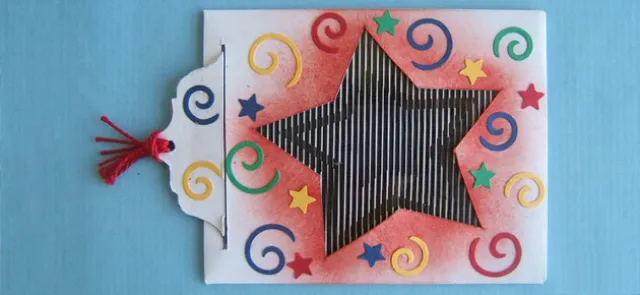
The mathematics of pop-up cards
A sheet of paper offers endless opportunities for mathematical play. Origami and paper folding immediately spring to mind. But allowing yourself to cut the paper produces equally interesting results, as pop-up cards show.

Become an Éditions PÔLE ambassador | Tangente
Founded 30 years ago, POLE publishes Tangente magazine, along with books on mathematical culture and intelligent games. Although it is financially sound, it must evolve to adapt to today's environment. What if you helped us achieve this goal by becoming one of our ambassadors?
Textual self-reference: Hofstadter | Tangente
Wordplay is fertile ground for self-reference. Examples can be found in Douglas Hofstadter's books (see Tangente 131, 2009, and Tangente 154, 2013), as well as in countless anonymous creations (found online, for instance), whether apocryphal or well documented. Here is a selection.
Paradoxes and self-contradictions in logic | Tangente
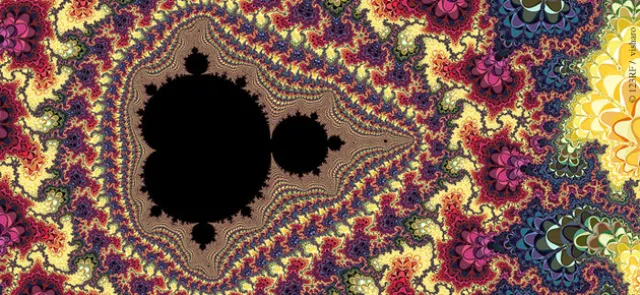
A source of amusement, self-reference also lies behind some famous and profound mathematical paradoxes. Logic, our senses and our certainties are all sorely tested. Reflection then takes over… and often leads to wonder!
Pascal's ribbons
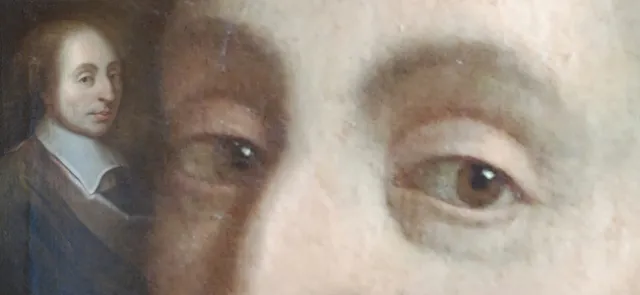
In the past, arithmetic mattered as much to merchants and accountants as it did to scholars. In the 17th century, Blaise Pascal devised a method for automatically testing whether one integer is divisible by another.
Finding divisors... without dividing
Telling almost at a glance whether one integer is divisible by another can sometimes be quite a challenge. Yet there are perfectly reliable ways to do so, even with fairly large numbers!
Simulated annealing
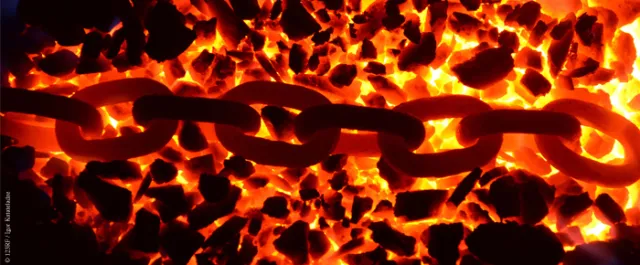
During an approximate computation, how can we distinguish a local minimum from a global one? Simulated annealing, based on a common practice in metallurgy, offers a subtle yet effective heuristic method for many applications.
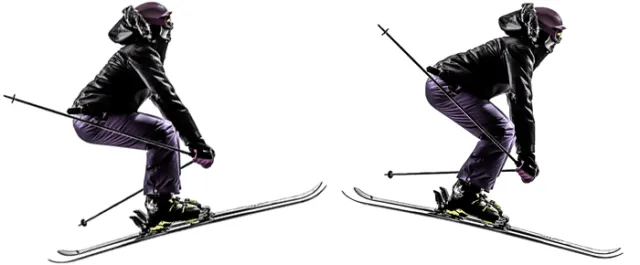
Gradient descent: skiing your way to a minimum
You are on a ski slope, surrounded by fog. Which route should you take to get all the way down? One approach is to follow the steepest slope—that is, the gradient. This idea yields both a numerical method and a way of finding optima.
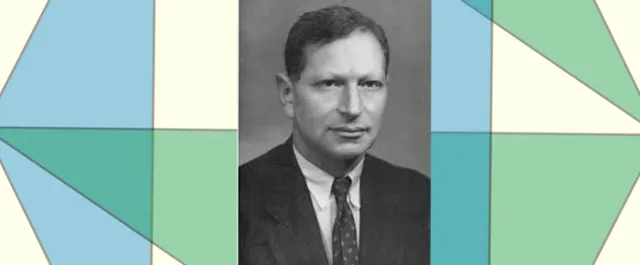
Heilbronn triangles
How should points be placed in a region of the plane to maximize the smallest area determined by any three of them? Despite the elementary nature of this geometry problem, no general solution is known even today!
D'Arcy Thompson and the geometry of nature
Can the forms we see in nature be explained mathematically? Physics has had its principle of least action since Maupertuis in the 18th century, but biology had to wait until the early 20th century for anyone to attempt a synthesis.

Optimizing welfare?
Is the welfare of a population simply the sum of its members' satisfaction scores? This is far from certain, especially since measuring, comparing and aggregating individual utilities is no straightforward matter. Italian economist Vilfredo Pareto proposed a novel approach.
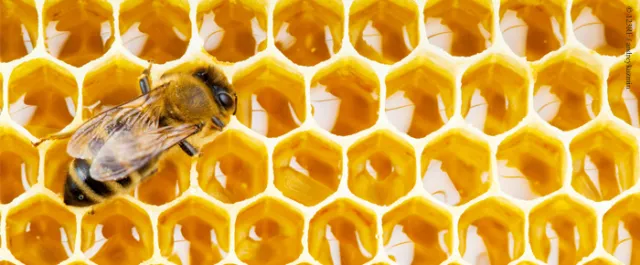
Thrifty bees
Optimize, optimize! That seems to be the bees' motto when they build their honeycombs. Let's take a closer look at their thrifty "methods." Geometry will prove invaluable in calculating the areas and angles of the cells.