



Knowledge
In-depth articles on mathematical knowledge and theories
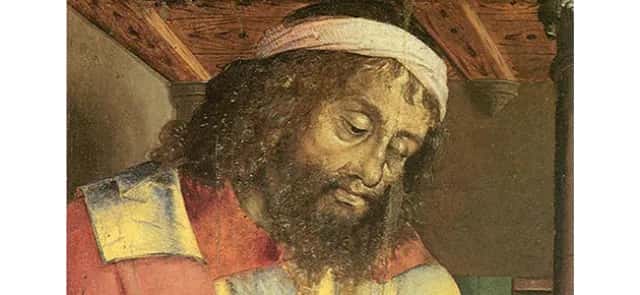
The multiplicity of infinities
Actual infinity is a mathematical fiction, useful in calculations and proofs alike. We may reject it and make do with potential infinity. But if we accept the notion of infinity, there must be more than one. Georg Cantor—him again!—proved it.

What exactly are axioms? — Geometry | Tangente
In mathematics, every proof starts from premises assumed to be true. What particular form must these premises take to become axioms, the foundation of all our current theories?
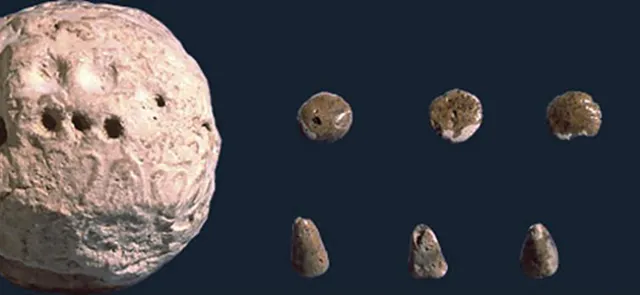
Constructing numbers: a long history
In the beginning was number... If we go back to the very origins, these objects were represented by pebbles before being encoded by symbols. In fact, there are numbers to suit every taste! As everyone knows, when you love something, you don't count the cost...

Dazzling binary relations
All people are born free and equal in rights. Yet someone like Coluche could add, not without mischief, that "some are more equal than others"! Defining an order, or an "equality" of some kind, requires us to establish precisely what these notions mean.

Naming the elements of a set
As David Hilbert famously remarked, assigning a name to a mathematical object is artificial. Identifying an object with its image under a bijection, however, so as to bring out its properties, can be decisive.

Relations and maps: structuring sets
A notion of relation between sets is essential if we are to begin doing mathematics. At the heart of the foundations of mathematics, the concept of a relation includes maps as a special case and gives sets structure.
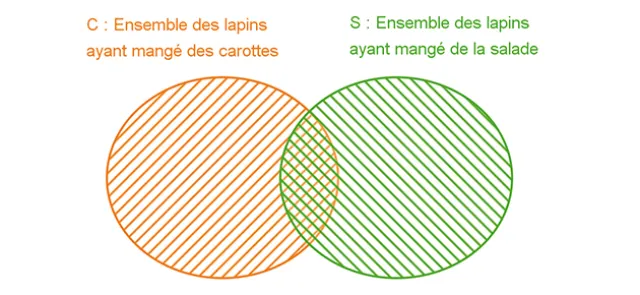
Potato diagrams: a chipper idea
When considering several subsets of the same set, it can be difficult to distinguish their various intersections. Representing these subsets as "potato-shaped blobs" often makes things clearer—and keeps us from looking like potatoes when faced with questions that are simpler than they seem.

The set and its subsets
Elementary operations on sets include inclusion, union, intersection and symmetric difference. The notion of a power set is equally natural and fruitful. How can we describe, count and structure the subsets of a set?

From a collection of objects to a set
A set can be defined extensionally or intensionally. Constructing the natural numbers then becomes an easy but instructive exercise. Yet beware the apparent simplicity of a set viewed as a mere collection of objects: paradoxes lurk...
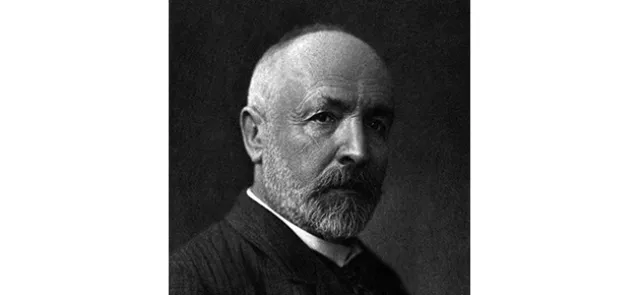
An unsettling approach to mathematics | Tangente
Set theory, iconoclastic in Cantor's day, has become universal. Nothing like it had been seen since Euclid: it provides a foundation for mathematics! That foundation seemed solid—until paradoxes emerged. So what is this highly controversial mathematical construction?

The axiom of choice
Being able to choose an element from a set seems natural. But it is truly natural only when the set is finite. Beyond that, an axiom is needed before we can choose! Some consequences of this axiom are surprising, so… should we accept it?
Join the groups!
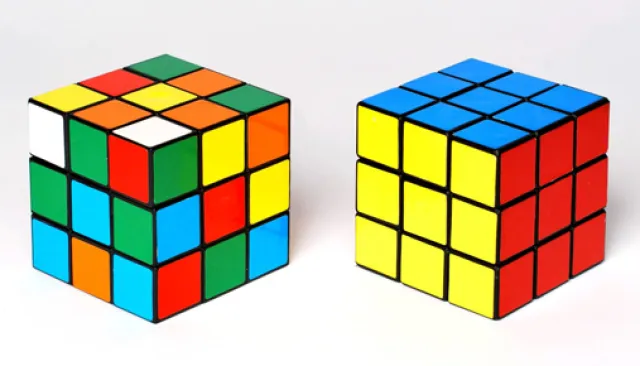
The concept of a group first emerged from efforts to solve equations in the 19th century and soon became indispensable, highlighting parallels between situations that at first seem quite different. Let's see why mathematicians are so group-minded.
Georg Cantor: from finite to infinite
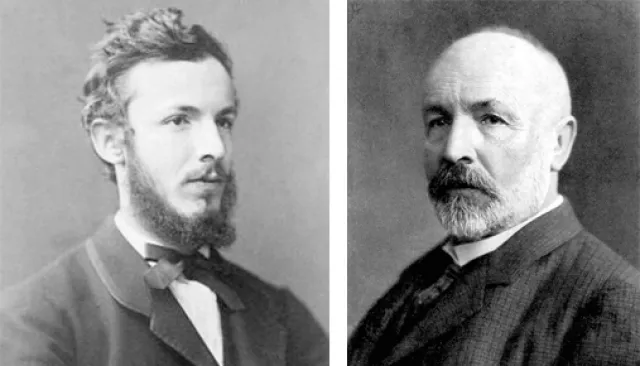
To extend useful results about finite sets to infinite sets, Cantor defined equality of cardinalities in terms of bijections, and hence inequality in terms of injections and surjections. Remarkably, this yields an order relation.
What if it were false?
Is Pythagoras' theorem really true? The question may seem strange, but in fact it all depends on the setting in which we wish to apply this geometric result.

Pythagoras without words: visual proofs | Tangente
How many students can prove the Pythagorean theorem? Yet there is certainly no shortage of proofs.
Pythagorean triples
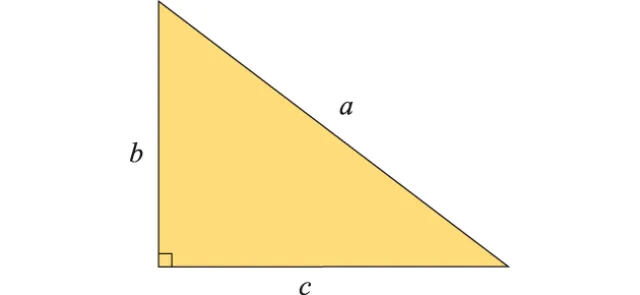
In a right triangle, the square of the hypotenuse equals the sum of the squares of the two sides forming the right angle. When three integers satisfy this relation, they are called a Pythagorean triple. What are these numbers, and how can they be characterized?
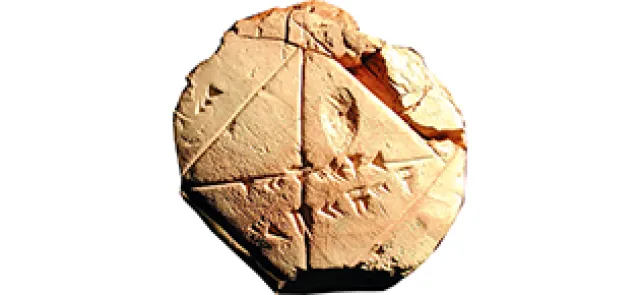
Proofs of the Pythagorean theorem through the ages
The Pythagorean theorem began as a result about squares constructed on the sides of a right triangle. Those geometric squares later became arithmetic squares, before the theorem ventured into abstract spaces. Would Pythagoras recognize his theorem if he came back to life today?
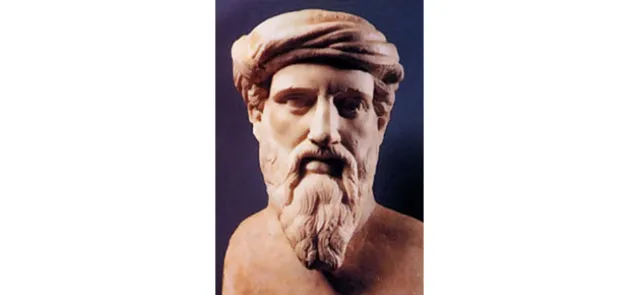
Pythagoras: much more than a theorem
Pythagoras is more than the name of a famous theorem: he inspired an entire philosophical tradition that would influence not only mathematics and astronomy but music itself. Beyond the sciences, history has not heard the last of the "long-haired Samian"!

A few classic paradoxes
Paradoxes are fun to explore and require no specialist knowledge. They help us better understand rationality, truth, probability, uncertainty and information… along with the many theories built around them. Prepare to be surprised by a few spectacular classics.
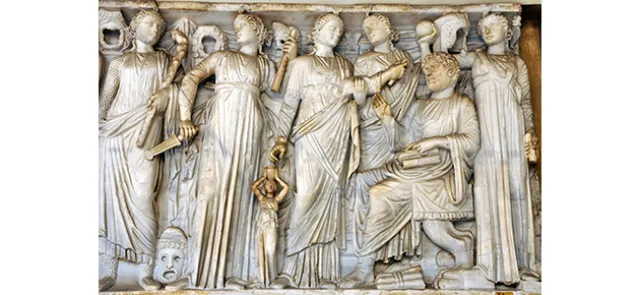
Deus ex machina: in mathematics too!
Looking for a simple, unexpected solution to a difficult problem? A deus ex machina can sometimes provide a surprise resolution to a desperate mathematical situation. Combinatorics, arithmetic and geometry are fertile ground for such an "aha!" moment.