



Describing the real
Statistics consists first of all in describing in a numerical and synthetic way a given situation. A first question is that of classification: can we, in an automatic way, group individuals into classes, into 'coherent' sets, while relying only on a simple description by a few statistical variables? The answer is yes, in several ways! The reconstitution of the real from the synthesis of data also makes it possible to make decisions: in medicine, for example, it will be a question of testing and measuring the effectiveness of one therapy compared to another, based on small samples. In biology, the large quantity and heterogeneity of 'omic' data (relating to molecules at different scales) require rethinking algorithms and imagining new statistical methods adapted to their characteristics.
All articles in this folder

Automated classification: K-means | Tangente
Your data collection has been highly effective: you now have a scatter plot revealing an impressive point cloud. How can these points be grouped into classes? How many classes will emerge? Today’s methods are advanced enough to automate the process.

Florence Nightingale and medical statistics | Tangente
Born in Florence, in the Grand Duchy of Tuscany, Florence Nightingale (1820–1910) came from a wealthy, upper-class British family. From an early age, she was deeply concerned about the living conditions of the poor and about healthcare.

Adolphe Quetelet and the average man in statistics | Tangente
Born in Ghent on February 22, 1796, French, then Dutch, and finally Belgian after 1830, Adolphe Quetelet (1796–1874) was the very model of a cultured polymath. After defending a thesis in geometry, he worked in scientific fields beyond pure mathematics.

Margaret Hogg, pioneer of random sampling | Tangente
Margaret Hope Hogg was born in Scotland on October 15, 1894. After studying statistics, she joined the London School of Economics, where she worked from 1919 to 1925 under Arthur Lyon Bowley (1869–1957), renowned for his research into surveys conducted by "representative sampling."

Karl Pearson and the Birth of Correlation | Tangente
The British mathematician Karl Pearson (1857–1936) was a socialist-leaning freethinker and feminist.

How is life expectancy calculated? | Tangente
Life expectancy is undoubtedly one of the most widely used statistical indicators. Yet how it is calculated sometimes remains a mystery.

Statistics comes into vogue: music and maths | Tangente
Largely independently of scientific development, a craze for statistics swept through France from 1827 onward.

How many tanks? Statistical estimation | Tangente
During the Second World War, the Allies used statistics to estimate German tank production.

How maths helps evaluate drug efficacy | Tangente
More than ten years. That is the time that elapses between the discovery of a new molecule and the marketing of a product. Proving a drug's efficacy is a lengthy process in which statistics play an essential role at every stage of development.

Bruno Falissard, biostatistician: interview | Tangente
Bruno Falissard is a psychiatrist, professor of biostatistics at Université Paris-Sud and director of the Centre for Research in Epidemiology and Population Health. He explains how statistics can help evaluate new therapies.
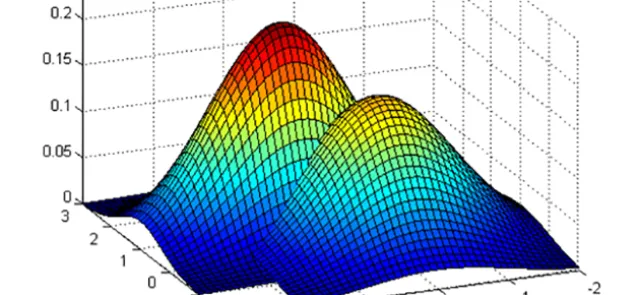
Omics data: genomics, statistics and Big Data | Tangente
Technological advances in high-throughput sequencing make it possible to produce large volumes of biological data at lower cost and at different scales of living systems. The resulting massive datasets are both high-dimensional and heterogeneous.