This research would lead to a celebrated report adopted in 1925 by the International Statistical Institute (ISI), which distinguished between random sampling (random sampling) and purposive sampling (purposive selection).
That same year saw the publication of Has Poverty Diminished? A sequel to Livelihood and Poverty (King & Son), a 236-page book by Bowley and Hogg. It was one of the earliest and most forceful pleas for the random selection of samples.
Margaret Hogg then left for the United States to work for the Russell Sage Foundation, where she published the findings of her first American studies in 1930. She urged statisticians to use rigorous sampling methods—which, she insisted, meant random ones. In her view, randomness ensured that each unit in the population had an "equal chance of inclusion" in the sample, and she argued that "one [can] move from representativeness that has been tested to representativeness for which testing is impossible only after ensuring that the sample is random". She fiercely championed randomness and launched a scathing attack on judgment sampling.
Bowley and the Russell Sage Foundation would both recognize Margaret Hogg as an outstanding researcher. She introduced random sampling to the United States shortly before 1930, a decade before agricultural statisticians rediscovered it and before Jerzy Neyman (1894–1981) published his famous 1934 paper in the Journal of the Royal Statistical Society, entitled On the Two Different Aspects of the Representative Method: the Method of Stratified Sampling and the Method of Purposive Selection.
Ill, she died during a voyage to England in 1935. And so Margaret Hogg's crucial role in the history of random sampling faded from view, while the field continued to develop without her.
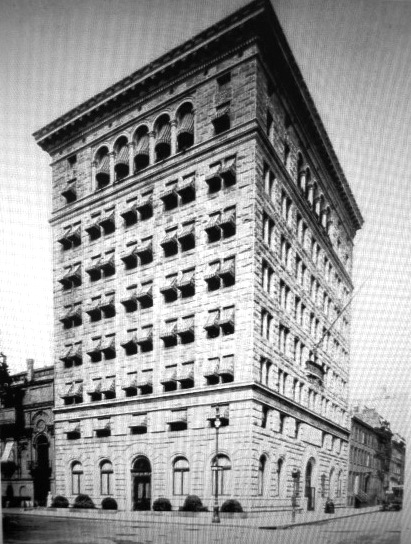
The former headquarters of the Russell Sage Foundation
on Lexington Avenue in Manhattan, New York City.