This issue is not fully translated into English yet; only translated content is shown.
Read the French versionAll folders in this issue

Statistics today
Statistics is neither a science of the past nor a science of the future: it is firmly rooted in the present! The diversity of its applications demonstrates its importance in today's world. A quick overview of current topics will convince you: demographics and pension financing, purchasing power, health and manufacturing of innovative drugs, social networks... There are many challenges that those who study it face today. Among them, that of statistical confidentiality is crucial: how to process sensitive data without it being disclosed? It is still statistics that is behind the advances in artificial intelligence, for example the famous conversational robot Chat-GPT.



Describing the real
Statistics consists first of all in describing in a numerical and synthetic way a given situation. A first question is that of classification: can we, in an automatic way, group individuals into classes, into 'coherent' sets, while relying only on a simple description by a few statistical variables? The answer is yes, in several ways! The reconstitution of the real from the synthesis of data also makes it possible to make decisions: in medicine, for example, it will be a question of testing and measuring the effectiveness of one therapy compared to another, based on small samples. In biology, the large quantity and heterogeneity of 'omic' data (relating to molecules at different scales) require rethinking algorithms and imagining new statistical methods adapted to their characteristics.

Serving Forecasting Models
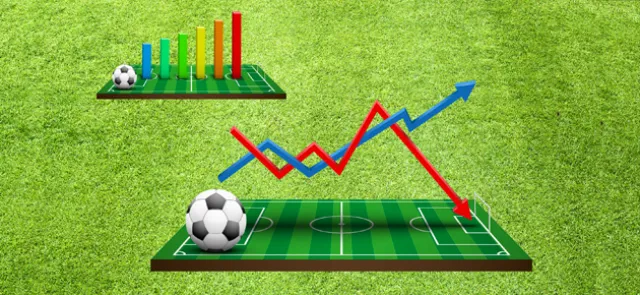
Beyond simply describing reality, statistics can also help, by modeling a situation using appropriate probabilistic formulas, to predict its plausible evolutions in the future. 'Mixture models' are a complex example that makes it possible to identify different classes within a population and... predict that of a new individual to, for example, offer them content or products that might interest them on provider platforms. In the field of health, forecasting models make it possible to improve patient care to the point of imagining personalized medicine. In sports, the analyses lead to dosing the quantity of training as well as possible that optimizes individual performance, and, in the collective context, progress goes as far as predicting the winner of the next FIFA World Cup from past performances!