



Manufacturing
Whether we build them, arrange them, knit them, whether it is a matter of making roofs or simply beautiful forms, the manufacturing of surfaces is an extraordinary bridge between mathematics and applications. Let us think of the making of a football. It is often practical questions that pose challenges to theorists, but sometimes, conversely, the abstract beauty of geometry that inspires creators or architects. The properties of surfaces have not finished surprising and raising new mathematical challenges.
All articles in this folder
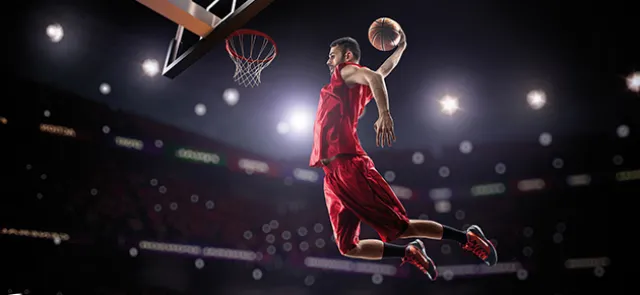
Round balls
Round, are they? It is not that simple! Each ball is made differently, depending on how it will be used. A survey of their construction offers an opportunity to revisit some lesser-known principles of geometry.

Ruled surfaces in architecture | Tangente
How can a surface made up of straight lines be curved? That is the paradox of ruled surfaces!
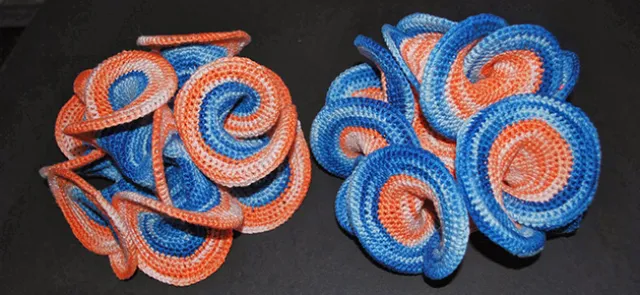
Knitting topological surfaces | Tangente
Knitting is generally used to make clothes. Mathematicians face no such limitations: they are interested in other kinds of surfaces that can be recreated with yarn and a needle. The result? Objects that are at once geometric, educational and… artistic!
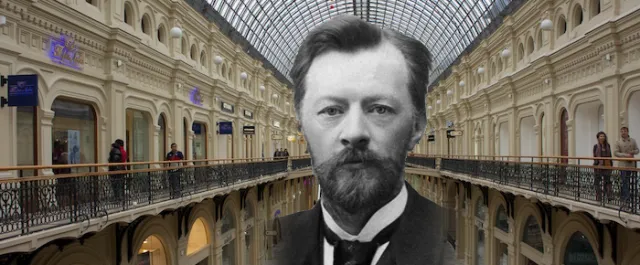
Vladimir Shukhov, Russia's Gustave Eiffel
A mathematician by training, Vladimir Shukhov was one of the leading figures in Russian architecture from 1890 to 1930 and was strongly influenced by Constructivism. His building designs made him a forerunner of contemporary architecture.
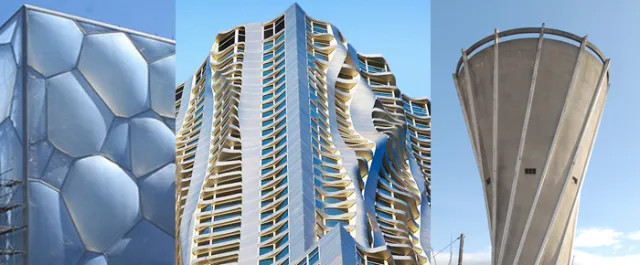
Exceptional surfaces in architecture
Architecture today combines practicality with spectacle. New digital techniques make it possible to design buildings with extraordinary forms.
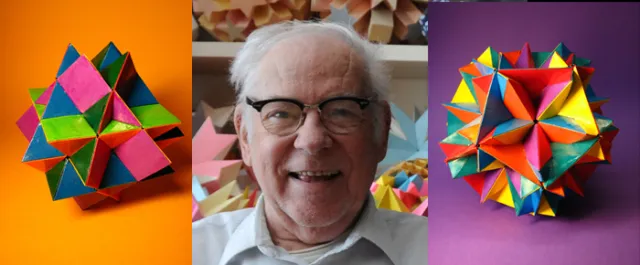
Magnus Wenninger, the "pope" of polyhedra
Building polyhedra is said to require the patience of a monk. Fittingly, the 20th century's greatest polyhedron builder was a Benedictine: Magnus Wenninger died in 2017 after a very long life devoted to God and geometry.