



Medical imaging
Mathematics is increasingly present in medicine, particularly for the needs of medical imaging. Thus, for over a century, non-invasive techniques have made it possible to see the invisible. From obtaining the image from the data provided by physics, through the various phases of its improvement, to its interpretation to aid in diagnosis, processing algorithms are constantly being improved. Everyone has heard of the scanner, which via tomographic reconstruction makes it possible to obtain cross-sections of objects. The mathematics of medical imaging are also used to simulate the functioning of an organ or to verify the design and placement of prostheses. And when it comes to studying a complex object like the brain, visualization proves to be particularly sophisticated.
All articles in this folder
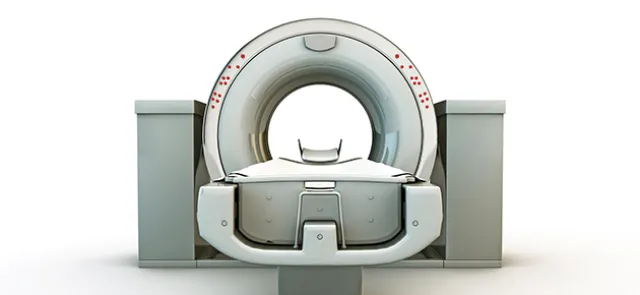
Tomographic reconstruction
How can we use computed tomography or magnetic resonance imaging (MRI) to see inside the human body without opening it up or cutting into it? That is the true mathematical challenge of tomographic reconstruction!

“A better understanding of how the brain works”
Dr Christophe Habas is a neuroradiologist. He heads the medical imaging department at the Quinze-Vingts Hospital in Paris. His work combines hospital practice, research and university teaching. He has an in-depth understanding of the role mathematics plays in medical techniques, which he kindly agreed to share with us.

The physics behind medical imaging
Physics gave rise to technologies that allow us to see inside the human body without surgery. Developed during the 20th century, these techniques rely on X-rays, particle emissions, ultrasound detection, or magnetic fields.
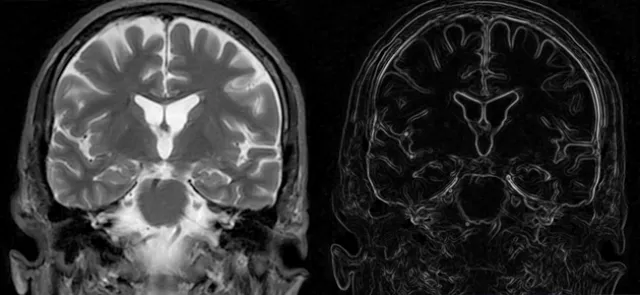
Image segmentation
Once a medical image has been obtained, an important step is to identify certain features within it, either to assist with diagnosis or to take measurements. The challenge is to partition the image into several regions. This is the realm of image segmentation.
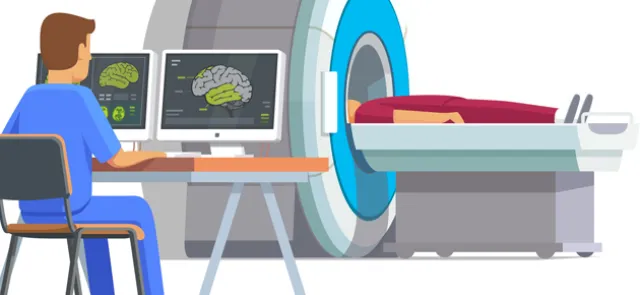
The mathematics of medical imaging
Medical imaging is an indispensable tool for physicians, whether for diagnosis, prognosis, or surgery. It provides anatomical or functional information about an organ or part of the human body while being either noninvasive or only minimally invasive.