



Study
For a mathematician, understanding surfaces generally means doing differential geometry or integral calculus. What progress has been made since the ancient Greeks, who had to resort to fearsome tricks adapted to each case encountered! For the practitioner dealing with a specific case, for example the study of the Earth's surface, the question is rather to find specific tools for the particular surface to be studied. From virology to soap bubbles, concrete cases are not lacking. Various questions arise, whose impacts are often unexpected, sometimes leading to considerable applications.
All articles in this folder
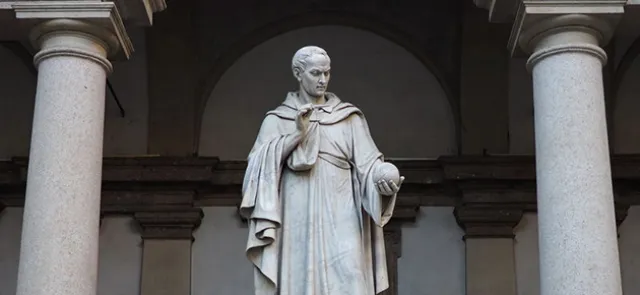
Measuring areas
As soon as we move beyond elementary figures, calculating area brings us up against the concept of infinity. After Archimedes and his skilful use of potential infinity, it was not until the Renaissance that this obstacle was finally overcome.
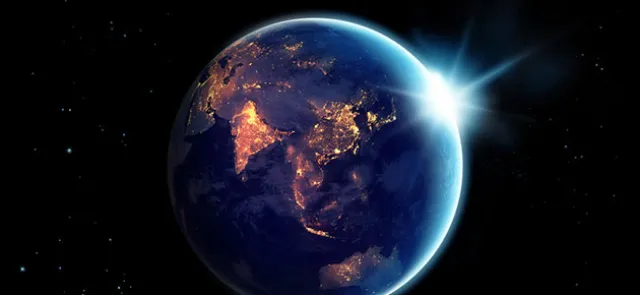
The geoid: the Earth's true shape | Tangente
The surface most familiar to us, the one we walk on every day, raises its fair share of questions: what exactly is the shape of the Earth? It is neither quite a sphere nor an ellipsoid. This irregular object, the geoid, has some subtle properties. We spoke with a specialist.
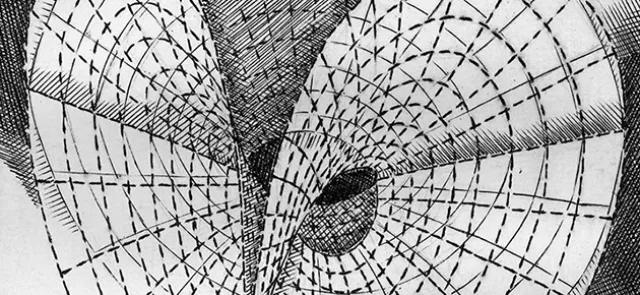
Exquisite minimal surfaces
A surface is minimal when, for a fixed boundary, its area is as small as possible. Soap bubbles provide a physical model of minimal surfaces.
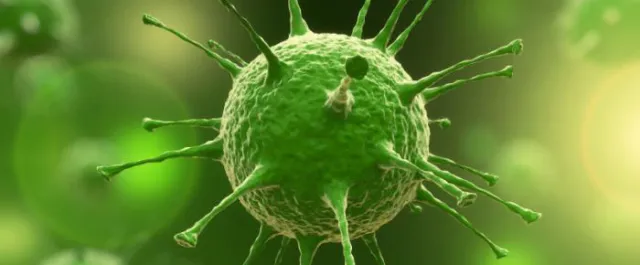
The conquering virus
Studying how viruses act also involves… geometry. In particular, determining the area conquered by a virus helps assess how dangerous it is. So let us grab a microscope! Off to the laboratory for some hands-on work…
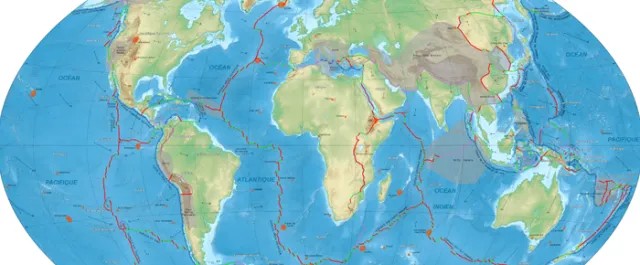
From plate tectonics to dressing a sphere
The surface of our planet seems to consist of a hard crust. But how can we picture a sphere being covered? Plate tectonics shows that the Earth's surface is made up of moving rigid plates that rub against one another.