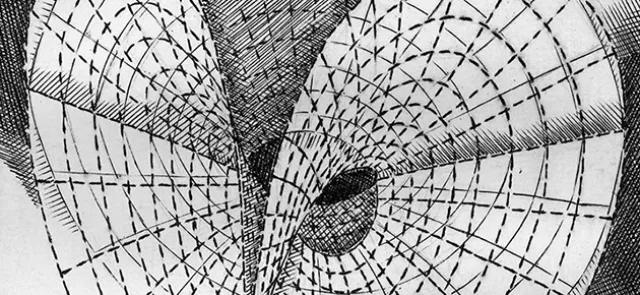
From the outset, representations of our planet were haunted by an obsession with perfection. Since the sphere was held to be the perfect form par excellence, the Earth could only be spherical. Yet this ideal of perfection ruled out motion, since any motion entails a change of state. It was not until the 20 th century that non-static models of the Earth finally began to be proposed.
Until then, some vertical movement of the Earth's crust had to be acknowledged, given the observation of earthquakes and the presence of volcanoes, but no horizontal movement was accepted.
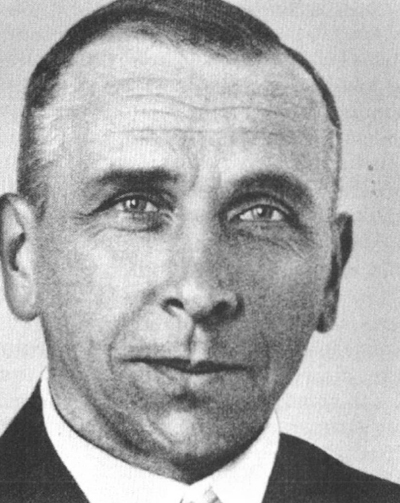
Alfred Lothar Wegener (1880–1930).
Yet as early as 1596, the Antwerp cartographer Abraham Ortelius (1527–1598) noted the striking similarity between the eastern coastlines of the Americas and the western coastlines of Africa. He then hypothesized that these continents might once have been joined. The hypothesis was revived several times, until the French geographer Antonio Snider-Pellegrini (1802–1885) proposed an early version of a theory of continental drift. Curiously, Snider-Pellegrini's model was framed within a biblical, firmly Christian framework, invoking the Flood in particular to explain the catastrophes that supposedly led to the continents' separation…