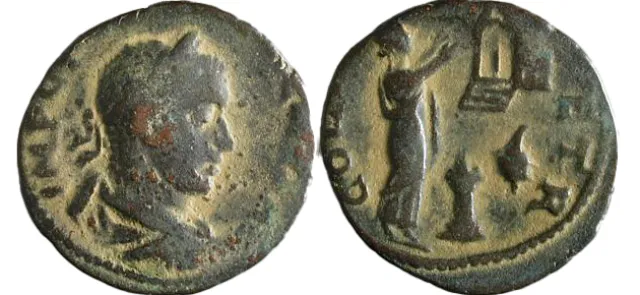
According to legend, the Phoenician princess Dido landed on the site of present-day Carthage around 800 BCE. The inhabitants agreed to grant her as much land as an ox hide could enclose. The resourceful princess cut the hide into thin strips to make a long cord, which she laid out in a circle to maximize the area of land enclosed (or perhaps a semicircle, bordered by the shore…). This is known as the isoperimetric problem: given a curve’s perimeter, which curve encloses the greatest possible area?
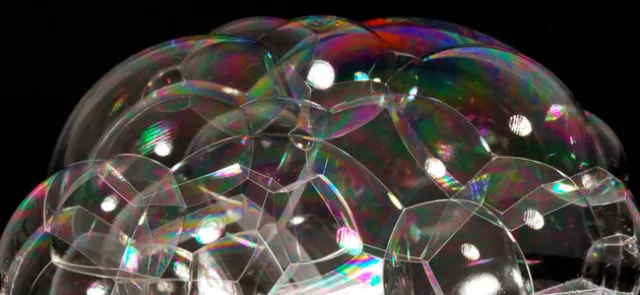
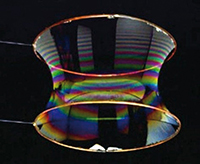
The question generalizes to higher dimensions: for a given surface area, a sphere encloses the greatest possible volume. This is one way to explain the spherical shape of a soap bubble: the film tends to minimize its energy, which is itself a function of its surface area.
**
**