




The operations over time
This issue is not fully translated into English yet; only translated content is shown.
Read the French versionAll folders in this issue
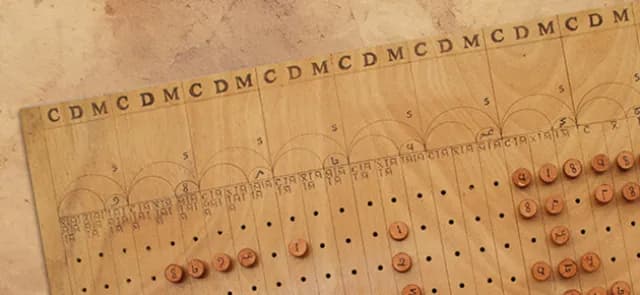
Operations over time
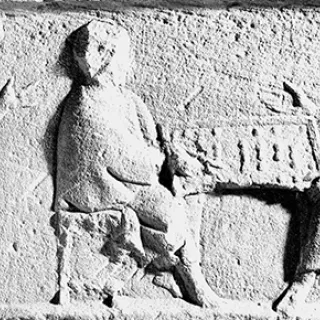
Today, schoolchildren still learn to perform calculations "by hand" by setting out their arithmetic operations on paper. These well-known algorithms are not the only ones that exist. Several techniques have evolved over time; the ones we are taught result from choices that may seem arbitrary. In Antiquity, it was abacuses that were used to represent numbers and add them. In the 17th century, John Napier developed his famous rods for performing multiplications. All these tools had to solve the same major problem: handling carries!


Taylor expansions
What better than a polynomial to approximate, near a point, a complicated function? Better yet: if the latter is "sufficiently regular", the coefficients of its Taylor expansion are its successive derivatives; this is the famous Taylor formula that teaches us this. Yet we get surprises: the adequacy between Taylor expansion at any order and Taylor development is sometimes called into question. Marvels of mathematics, and in particular of analysis, nobody can do without Taylor expansions. They are indeed indispensable in limits of functions, in the study of particular points of a curve, but also in probability calculations.


All articles in this issue

The centenary of Gustave Eiffel's death
Navigating the mathematical universe
Did you know that a list covering almost every current area of mathematical research was created to help classify publications? It runs to more than two hundred pages! No wonder it is hard for general readers who are simply curious about mathematics to find their way around.
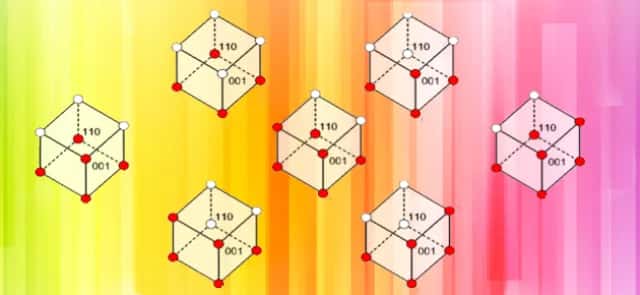
The ninth Dedekind number
Some well-known number sequences have thousands of terms, or even more, that can be calculated without the slightest difficulty. Others put up more resistance. Here is one whose ninth term mathematicians have only just managed to calculate!
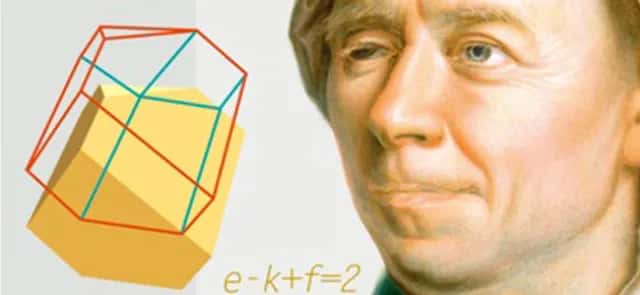
Geometric delights with Euler’s formula
Euler’s formula, a fundamental relation in mathematics, offers an opportunity to explore the properties of objects in three dimensions—and in higher dimensions as well. Along the way, we will encounter a classic of operations research: the simplex algorithm.