



The tools of optimization
This issue is not fully translated into English yet; only translated content is shown.
Read the French versionAll folders in this issue
Mathematics and languages
One of the great strengths of mathematics is the ability to question the language in which they are written: which word to choose to name an abstract concept? How to express an idea so that the vocabulary used does not slow down its assimilation? Better yet: mathematics can also take language itself as an object of study! From this approach stems the modern theory of information: formal languages, programming…
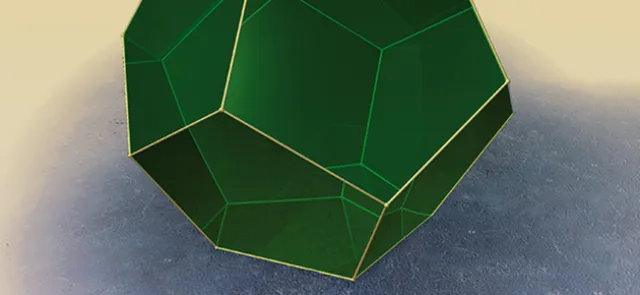
Euler's formula
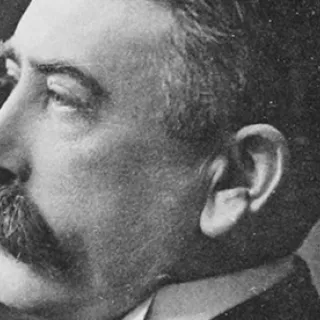
Visual, surprising and rich in applications (the structure of the football is the most well-known), it features in the pantheon of the most beautiful mathematical formulas: V + F = E + 2. While the study of polyhedra already fascinated Plato, the relationship connecting the number of its vertices, its faces and its edges had been anticipated by Descartes before being rigorously expressed by Euler, the Swiss mathematician who gave it his name (it's only fitting!). Poincaré undertook to generalize it, but it is still far from having revealed all its secrets.
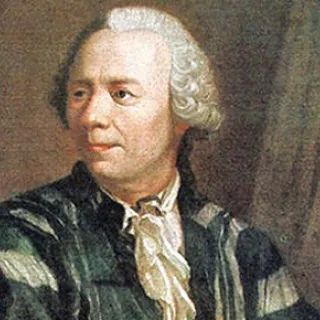
Optimization
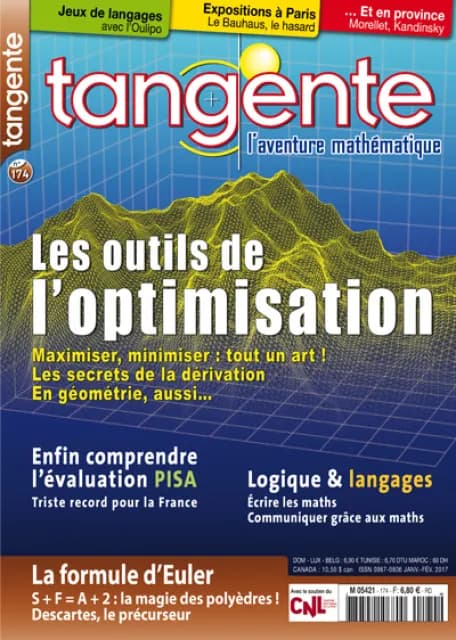
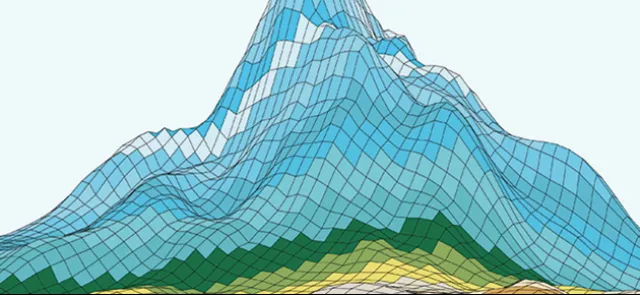
Human activity is subject to constraints of all kinds: material, human, financial, spatial, temporal… This limitation of resources explains why a large part of "applied mathematics" consists of optimizing a criterion under certain constraints. This targeted dossier proposes to explore a lesser-known and non-technical facet of optimization: yes, without sophisticated analytical machinery, with only a good understanding of simple algebraic or geometric concepts, one can already obtain astonishing results!

All articles in this issue
TIMSS and PISA: The latest developments in mathematics assessments
The recent publication of the PISA and TIMSS results unleashed a media storm, so poor were the scores of young people in France. But rather than settling for a few simplistic figures and reductive statistics, what if we took a closer look at what these assessments actually measure?

"A taste for maths": See what's on!
The City of Paris libraries are devoting their 2017 programme, particularly in January and February, to the world of mathematics

The Bauhaus, between art and science
Right now, several exhibitions in Paris and elsewhere in France are not to be missed