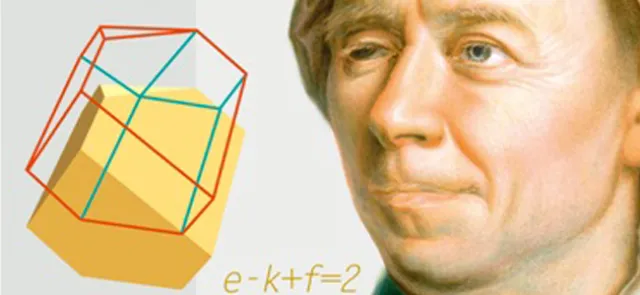
Its simplicity makes it very easy for even the youngest to use. Its unexpected nature never ceases to amaze: who would imagine that such a simple global relationship could exist between the components of a polyhedron? Finally, it turns problems in geometry into problems in arithmetic, building a wonderful bridge between two worlds. There is no doubt that Euler's formula is beautiful!
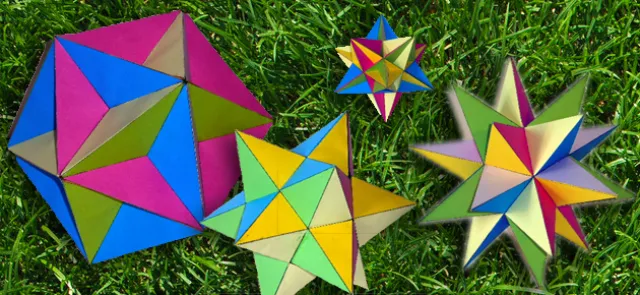
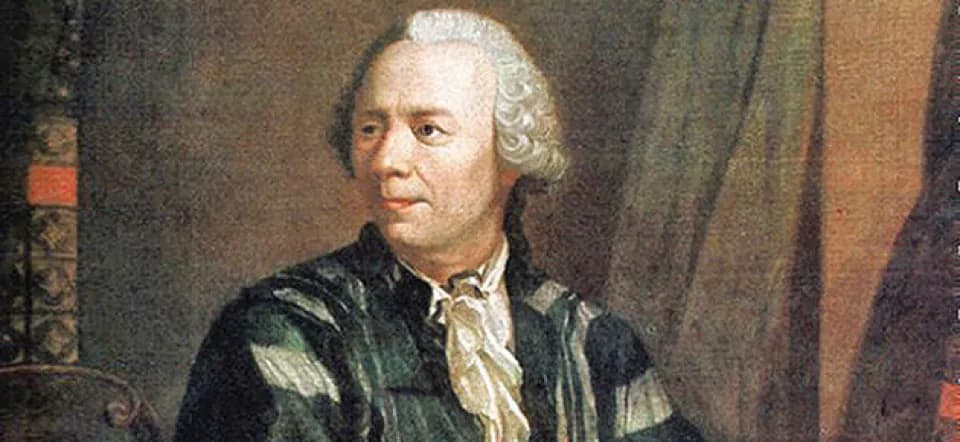
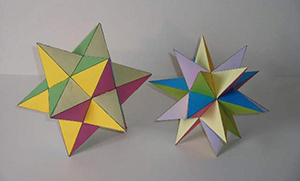
In fact, it is so simple that Euler himself was surprised it was not already known. Could Johannes Kepler (1571–1630), a great enthusiast of polyhedra with an interest in numerology, have failed to notice it? Perhaps, since two of his new polyhedra, the Kepler urchins, do not satisfy the magic formula... Yet Euler's intuition was correct: in France, Descartes had, if not discovered it, at least anticipated it.
Descartes, the forerunner
============================