A 125-year-old problem — and a giant's promise
In 1900, David Hilbert takes the podium at the International Congress of Mathematicians in Paris and throws down a challenge to an entire discipline: he presents 23 open problems that, in his view, will shape the mathematics of the coming century. The sixth is neither a conjecture about prime numbers nor a question of abstract geometry. It is something more ambitious, almost philosophical: can the fundamental laws of physics be formulated with the same rigor as a mathematical theorem? And in particular, can it be proved, beyond reproach, that the collective behavior of the molecules in a gas truly obeys the equations physicists have used for decades?
A hundred and twenty-five years later, Yu Deng, a professor at the University of Chicago, has delivered a decisive answer to that challenge — at least for the central part of the program. Together with Zaher Hani and Xiao Ma, both at the University of Michigan, he published a preprint on arXiv in August 2024 that electrified the mathematical community. Then, in March 2025, the trio drove the point home with a second paper. As reported by DongA Science, these two works are now hailed as a major breakthrough on the core of Hilbert's sixth problem.
Three ways of looking at the same gas
To understand what Deng and his collaborators proved, you must first accept a somewhat unsettling idea: the same gas can be described by completely different equations, depending on the scale at which it is observed.
Closest zoom: each molecule is a tiny ball bouncing off its neighbors according to Newton's laws. Position, velocity, trajectory — everything is deterministic. In principle, if you knew the exact state of every molecule at the initial instant, you could compute the future state of the system. In practice, a liter of air contains about 27 billion billion molecules. Which is to say the direct method is out of reach.
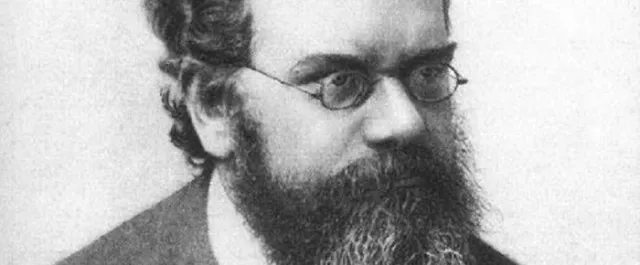
Intermediate zoom: we give up trying to track each molecule individually. Instead we look at the velocity distribution — how many molecules move roughly in a given direction at a given speed. This is the subject of the Boltzmann equation, formulated by Ludwig Boltzmann in the late 19th century. This equation describes how that distribution evolves over time under the effect of collisions. It is irreversible: it predicts that the gas tends toward equilibrium, that disorder increases. It is a mathematical version of the arrow of time.
Widest zoom: the gas is treated as a continuous fluid, described by its density, mean velocity, and pressure. This leads to the Navier-Stokes equations, the ones governing aerodynamics, weather, and the flow of blood through arteries.
Hilbert's program called for rigorously linking these three levels: proving that the equations at each higher level follow, mathematically, from those at the level below. The chain to be established: Newton → Boltzmann → Navier-Stokes.
The lock Lanford could not force
In 1975, the American mathematician Oscar Lanford takes a first step: he proves that the Boltzmann equation can indeed be derived from Newton's laws. Victory? Not quite. As Lanford himself writes in his foundational 1976 paper, the result holds only for times shorter than about one-fifth of the mean free time — the typical time between two collisions. In physics, that is the blink of an eye. Far too short to describe anything of interest.
Why this blockage? Because of recollisions. The Boltzmann equation rests on a crucial assumption: molecules that meet are statistically independent — they share no "common history." Over very short durations, this is reasonable: two molecules that have just crossed paths are unlikely to meet again. But let time pass, and the same particles eventually collide again, carrying with them the memory of their past interactions. Correlations accumulate, the independence assumption collapses, and the proof collapses with it.
For fifty years, mathematicians ran into this wall.
Sorting an infinite library of collision scenarios
The strategy of Deng, Hani, and Ma is, in principle, almost elegant: if recollisions are the problem, they must be classified and counted. Not ignored — tamed.
The authors themselves describe, in their explanatory notes, the heart of the proof as "a purely combinatorial splitting algorithm". Picture each collision history between particles as forming a graph — a tree of encounters. The proof turns the physical problem into a problem of counting these graphs. Scenarios are sorted, those containing too many recollisions are discarded (they are rare), and for the rest, their probability of occurring is estimated with precision. The result: the contributions of the problematic scenarios can be shown to be negligible, and the Boltzmann equation remains valid — no longer for a blink of an eye, but for arbitrarily long times, as long as the solution of the Boltzmann equation itself remains regular.
This combinatorial approach did not come out of nowhere. Deng and Hani had developed similar methods in a very different context: the study of wave turbulence. As Quanta Magazine recounts, the trio adapted these tools to the world of particles — a conceptual translation that is itself a major methodological contribution.
The first paper, now announced as "forthcoming" in the Annals of Mathematics — the most prestigious mathematics journal in the world —, deals with the case of a gas in infinite space. The second, available on arXiv, extends the proof to a gas confined in a box (technically, a torus in two and three dimensions) and completes the chain through to the Navier-Stokes and Euler equations. The authors write explicitly: "This resolves Hilbert's sixth problem, as it pertains to the program."
One caveat is worth raising. As a critical commentary by Shan Gao on the PhilSci-Archive points out, the proof operates in the so-called Boltzmann-Grad regime, where particles become smaller and more numerous, but where the fraction of space they occupy tends toward zero. This regime corresponds to a very dilute gas — not a dense fluid. Whether Hilbert's sixth problem in its most general sense is closed remains, according to this commentary, an open question. The mathematical result is robust within its scope; its universal physical interpretation is less so.
A paradox at the heart of the proof
There is something philosophically vertiginous about what Deng, Hani, and Ma have accomplished. Newton's laws are reversible: if you filmed the motion of every molecule and played the video backward, the film would be physically valid. The Boltzmann equation, by contrast, is irreversible: it predicts that entropy increases, that disorder grows, that there is no going back. How can an irreversible equation emerge from perfectly reversible dynamics?
The answer lies in the change of scale and in the statistical assumption about initial correlations. It is not physics that becomes irreversible — it is our description of the system, as information about individual correlations is lost. The arrow of time is not in Newton's equations; it emerges from the shift to a statistical viewpoint. As Laure Saint-Raymond notes, in a lecture devoted to this challenge, "Boltzmann's theory was controversial because it seemed to lead to paradoxes about the reversibility of motion".
Deng and his collaborators have not resolved this philosophical paradox — but they have shown, with a rigor Hilbert himself would have appreciated, that the mathematical transition between the two regimes is controllable, quantifiable, and valid over physically significant timescales.
The discreet mathematician who plays go
Yu Deng is 37 years old. He grew up in Shenzhen, represented China at the International Mathematical Olympiad in 2006 (gold medal), earned the title of Putnam Fellow in the North American university competition in 2010, and received his PhD from Princeton in 2015. Those who know him describe him as remarkably discreet. Rha Junhyun, a professor at the Korea Institute for Advanced Study, tells DongA Science: "It is hard to believe that someone so calm is the author of the most important result of our time." Outside of mathematics, Deng plays go, reads manga, and enjoys the poetry of the Tang-dynasty poet Li Shangyin.
His candidacy for the 2026 Fields Medal — whose winners will be announced at the International Congress of Mathematicians in Philadelphia from 23 to 30 July 2026 — is considered a serious contender. Princeton mathematician Alexandru Ionescu describes Deng's work as "among the most significant advances in many years". The awards keep piling up: the ICCM gold medal, the Clay Research Award, the American Mathematical Society's Leonard Eisenbud Prize. He has also been invited to give a lecture at ICM 2026 — a strong signal within the community.
The papers are still undergoing verification and formal publication. This is how science advances: slowly, meticulously, with the patience of a go player calculating moves dozens of steps ahead.