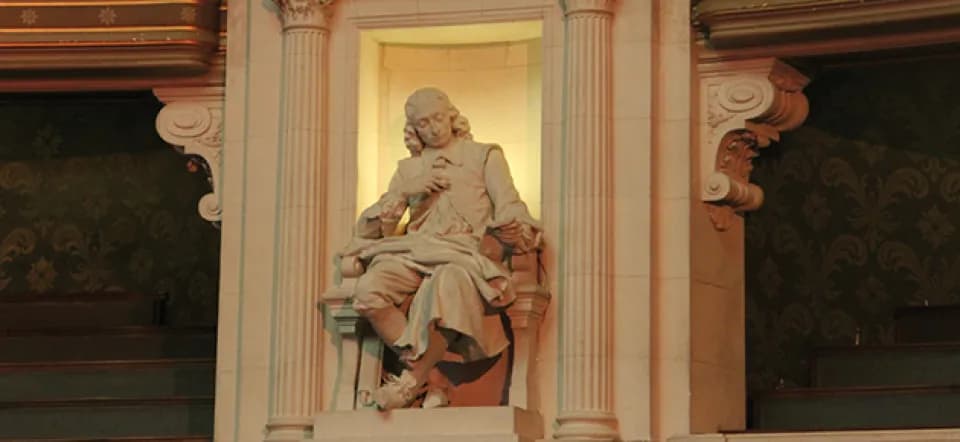
Blaise Pascal was born in Clermont in 1623 to an upper-middle-class family. His mother died when he was three. In 1631, his father, Étienne, resigned as second president of the Cour des aides in Montferrand and moved to Paris. Étienne Pascal took full responsibility for young Blaise's education, teaching him the classical languages, physics and mathematics. This doubtless explains Pascal's open-mindedness and his ability to "break free from the prevailing orthodoxy" at a time when Aristotle's thought still formed the basis of education. Étienne Pascal moved in the scientific circle that gathered around Marin Mersenne to discuss the latest advances. It included numerous scholars and philosophers, among them Descartes, Roberval and Gassendi. Blaise began accompanying his father to these gatherings while still a teenager.
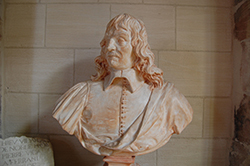
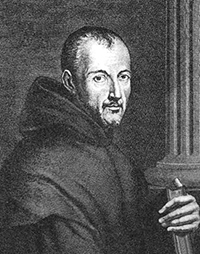
René Descartes (1596–1650).