Jean le Rond D'Alembert, one of the most eminent scientists of the 18th century, is renowned for co-editing, with Denis Diderot, a landmark encyclopedia. He is also known for his unusual—indeed singular—views on several probability problems. In particular, his article on the game of "Heads or Tails" drew almost universal criticism, usually muted (given his stature), but sometimes fierce. The mathematician Joseph Bertrand would later write: "D'Alembert's mind, ordinarily sound and subtle, was utterly irrational when it came to probability theory." Daniel Bernoulli is even said to have called his arguments "ridiculous". Even today, D'Alembert's argument is used in probability courses as an example of what not to do. But what if this great scientist simply had a different conception of probability, one just as relevant as that of the leading scientists of his day?
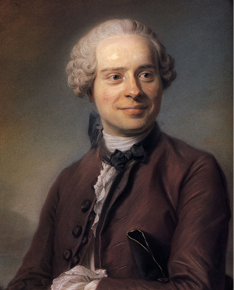
Jean le Rond D'Alembert (1717–1783), painted by Maurice-Quentin de La Tour.
A controversial article
--------------------
The article Cross or Heads, published in 1754 in volume 1 of the mathematics section of the Encyclopédie méthodique, became the focus of criticism. D'Alembert concluded by asking the "calculators" to give the matter serious thought.