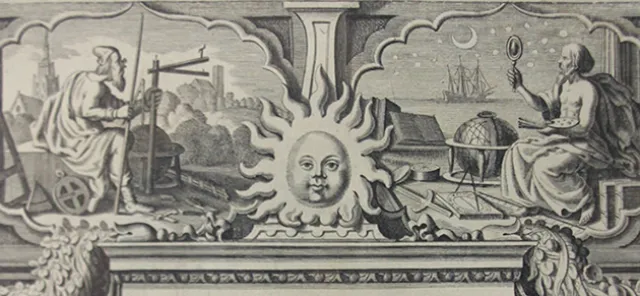
To keep things simple, we can call any representation of an object, living or otherwise, or of a concept an image. Such representations can take many forms; compiling an exhaustive list seems impossible, especially since an image may be mental, conceptual or even metaphorical.
####
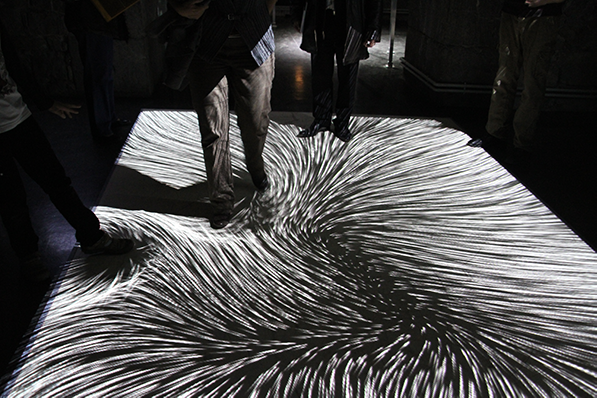
The digital grass in the exhibition "XYZT, abstract landscapes"
reacts as visitors pass by.
####
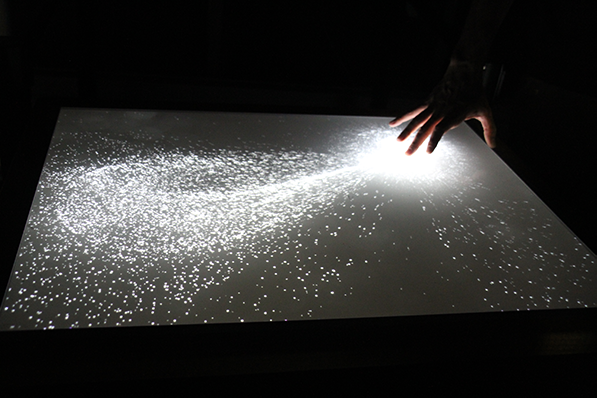
Digital model of a particle system.
From the shadow to the ghost of an ideal original
-----------------------------------------
Etymologically, the term "image" derives from the Latin imago, whose meaning has varied over the centuries. It incorporates the Indo-European root "im", also found in the verb "imitate". Cicero (106–43 BC) used the term in a sense very close to its current meaning, referring to any representation of a person or thing. But more than a century later, Pliny the Younger (c. 62–c. 114) also used it to mean a ghost, in a letter to Sura…
The concept of the image is explored in Plato's Republic (Books VI and VII). There, Socrates discusses images with his pupil Glaucon, a philosopher and musician, as copies (imitations) of an ideal original. The translator Léon Robin (Platon, œuvres complètes I, Pléiade) alternates between the two terms to capture Plato's thought more precisely: "By copies, I mean first of all cast shadows, and secondly images reflected on the surface of water or on that of any body that is at once compact, smooth and bright, along with everything else of the same kind."