On August 8, 1900, Paris was abuzz. David Hilbert, a 38-year-old German mathematician of international renown, was due to deliver an address for the dawning century at the second International Congress of Mathematicians. After the first congress (Zürich, 1897), where the French mathematician Henri Poincaré had spoken, an address worthy of the occasion was called for. For the brilliant young professor at the University of Göttingen, this would be an opportunity, in his own words, to "lift the veil behind which the future lies hidden" and determine "what new methods and new facts the dawning century will enable us to discover in the fertile field of mathematical thought". Thus was born the idea of presenting the mathematical world with a list of problems to guide future research.
The future of mathematics
============================================================================
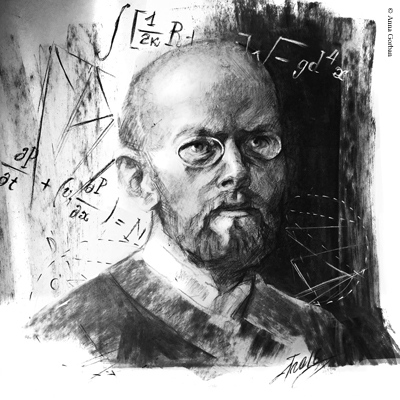
Opposite: David Hilbert (1862–1943).
Delivering his address at a joint session of two Congress sections, "History and Bibliography of Mathematics" and "Methodology and Teaching of Mathematics," Hilbert stressed the prominent role that solving problems plays in the development of mathematics.