Apply a computation to some data, then apply it again to the result: this is an age-old approach found throughout mathematics. Is multiplication itself not repeated addition? And exponentiation repeated multiplication? Soon after writing emerged, we already find evidence of approximate methods for solving problems, such as calculating a square root. The accuracy achieved without machines, and without a numeral system as convenient as our own, remains astonishing and suggests that effective iterative processes were already at work. Later, among Greek mathematicians, another leap in the art of repetition began to emerge: repetition was no longer confined to computation; reasoning and proofs themselves could also be repeated, yielding general truths about the infinite set of integers.
A way of thinking
-----------------
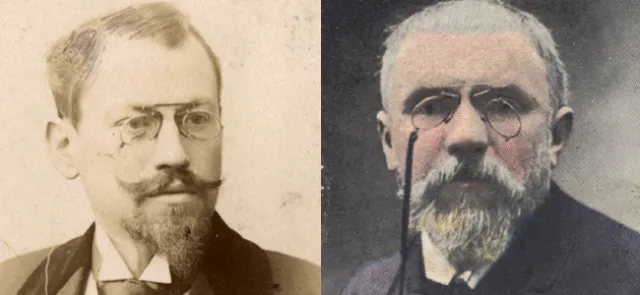
Some historians of science, including Jean Itard (1902–1979), regard certain proofs by Euclid as the earliest examples of mathematical induction. Blaise Pascal would later give a formalized account of the method that was both explicit and lucid (see *Blaise Pascal takes on mathematical induction*). By the late 19th century, mathematicians had explicitly linked mathematical induction to the fundamental nature of the integers and to their iterative axiomatic construction. Mathematical induction thus became the "pre-eminent form of mathematical reasoning", as Henri Poincaré explains in La Science et l’Hypothèse. The most famous scientist from Lorraine emphasizes in particular that "the essential feature of mathematical induction is that it contains, condensed, so to speak, into a single formula, infinitely many syllogisms […]; it is an instrument that enables us to pass from the finite to the infinite".