Iterative processes
All folders in this issue
Iterative processes and induction
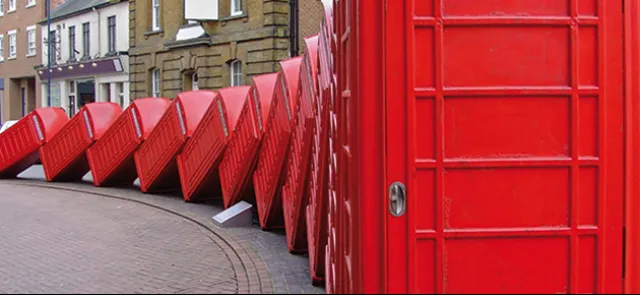
Clearly appearing in Pascal's writings on arithmetic and combinatorial questions (including Pascal's triangle), reasoning by induction finds a natural place in the study of sequences, making it possible to formalize, generalize and then improve approximate methods for solving equations known for centuries. Henri Poincaré will say that it is "mathematical reasoning par excellence". Induction allows for some of the most memorable constructions, from the Fibonacci sequence to Heron's algorithm (to approximate the square root of a positive number). While the iteration of a computational process addresses practical problems since Antiquity (often to improve the accuracy of a result or concretely solve a problem), iterating a reasoning makes it possible to access more theoretical considerations.

recursion
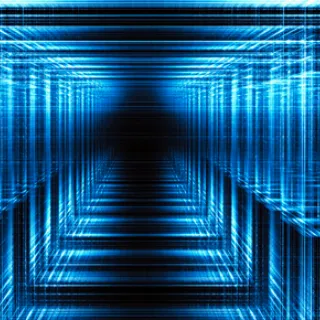
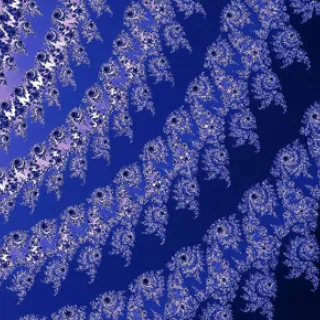
Applying iterative processes from the past could prove to be lengthy and tedious. With the advent of computer science, new avenues opened. Writing recursive programs, calling themselves, makes it easier to prove that an algorithm works correctly. From a practical standpoint, recursion offers an elegant and often clear alternative to loops. The (short) writing of these recursive programs, combined with increasing computing power, opens horizons in solving varied problems that still occupy mathematicians, in combinatorics, geometry or operations research. The development of fractals, so dear to Benoît Mandelbrot, also allows everyone to experiment today with this powerful concept of a function calling itself.
Applications and curiosities
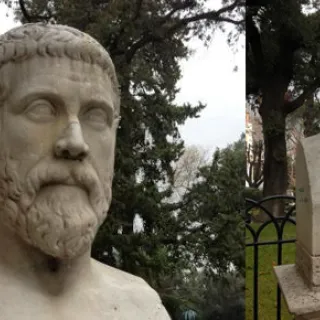
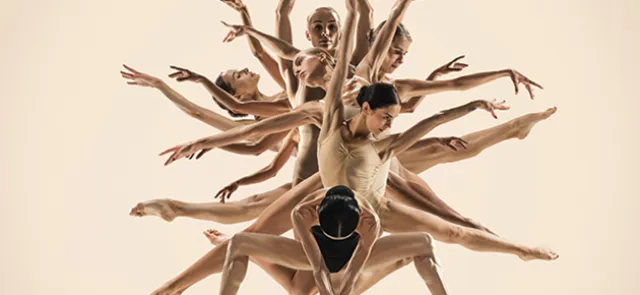
It would be quite reductive to think that iterative processes only contribute to solving mathematics or computer science problems. The idea of iterating a process is part of our daily life! Pythagoras himself followed an iterative process (the repetition of an interval, the fifth) to construct the notes of the musical scale, a scale used for centuries. The connections with music don't stop there. Two thousand five hundred years later, the notion of iteration creeps in, to the great delight of our ears, into modern composition techniques. Minimalist music, prime numbers... all inspirations are welcome. These recursive mise en abyme can even inspire writers and artists, or give rise to particularly aesthetic self-referential constructions. Indeed, even the most abstract mathematics invites itself everywhere to amaze us!