
The concept of a group emerged in the early 19th century to solve polynomial equations and very quickly spread to other fields, including those outside mathematics: it allows us to focus on relationships between objects rather than on the objects themselves.


Articles recommended for you.

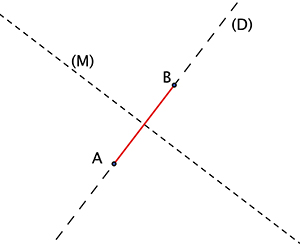
In geometry, what could be more natural than to seek, for each object, the transformations that leave it unchanged? This means dissecting those transformations and identifying the object's symmetries—and, surprise, groups emerge quite naturally...

A detailed analysis of the internal structure of finite groups is a formidable challenge. What can be said about an arbitrary group? The idea is to look within G for subgroups from which the whole of G can be reconstructed. Quotient structures are an unfailingly effective tool for this purpose.

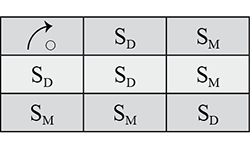
When we first start working with groups, we patiently draw up the tables for those with only a few elements. A one-element group consists solely of the identity element and is therefore unique. Similarly, groups with two or three elements are unambiguously determined. The surprises begin with four elements...

Because Augustin-Louis Cauchy did not take a direct interest in solving algebraic equations, he is an overlooked figure in the history of group theory. Yet his research on permutations provided valuable tools for those who worked on Galois theory.
Discussion
Sign in to post a comment and talk with other readers.
No comments yet. Be the first to respond.