"Yet I can reckon neither with counters nor with pen," Montaigne confessed in his Essais in 1580. In doing so, he indirectly emphasized that, in the 16th century, reckoning with counters or written figures remained the preserve of certain groups, particularly merchants, scholars and accountants. During the French Revolution, the push to broaden computational skills went hand in hand with socioeconomic change. Thus, in his first report on public education (1791), Condorcet wrote that "the man who knows the rules of arithmetic needed in everyday life is not dependent on the scholar who possesses mathematical genius to the highest degree, and whose talent will be of very real use to him without ever hindering him in the enjoyment of his rights".
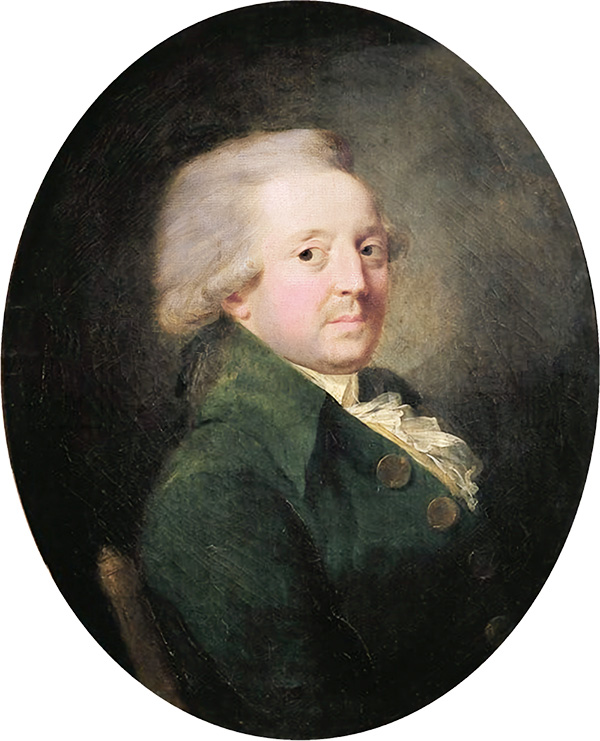
Mathematician, philosopher and politician Nicolas de Condorcet (1743–1794)
was among those who, during the French Revolution, proposed reforming
the education system to make it more inclusive of working-class children
and of both girls and boys.
As this skill spread over the course of the 19th century, arithmetic became a prominent part of the "reading, writing and arithmetic" taught in compulsory education. In this setting, mental arithmetic became associated with the familiar image of schoolchildren holding up their slates to the teacher after he had asked them a question.