



JEAN AYMES
20 articles published in Tangente
 History and CultureN°226Oct 07, 2025
A shaky proof revolutionizes arithmetic
Euler rescued from oblivion Fermat's proposition that it is impossible for the sum of two cubes to be a cube. Though the explanation he provided for it was shaky, it opened up a new framework for arithmetic.
Read →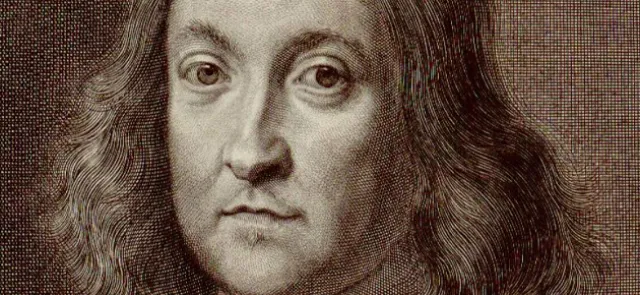 History and CultureN°226Oct 07, 2025
Fermat's false theorem
Fermat formulated many theorems, but one of them proved false: he conjectured that all "Fermat numbers" were prime, an error exposed by Euler. This notably illustrates how induction can lead us astray.
Read → Math for everyoneN°95Aug 21, 2025
Number sense
For a time, electronic tools seemed to have consigned mental arithmetic to history. Yet in recent years it has made a strong comeback among educational priorities. Far from being merely a set of automatic procedures, mental arithmetic is an irreplaceable way to explore numerical structures and deepen our understanding of certain concepts.
Read → History and CultureN°94May 06, 2025
The weaver mathematician
Fostering mathematical collaboration like no one else at a time when doing so was not as easy as it is today, Paul Erdős prompted a new way of looking at publications: first as a marker of ties to him, then as a subject of study in its own right.
Read → History and CultureN°223Apr 14, 2025
The origin of rationality
Formalization originated in ancient Greece with the project of constructing a coherent mathematical edifice, of which Euclid is the foremost representative.
Read →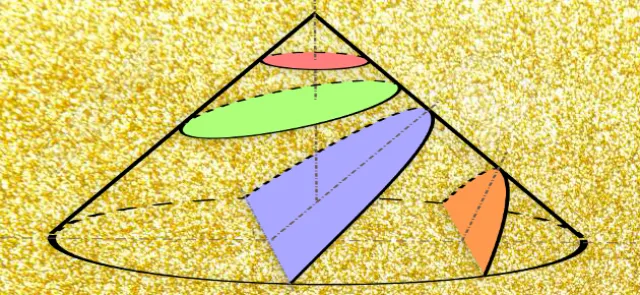 Math for everyoneN°221Dec 17, 2024
A little something missing
The term "ellipse" differs from the names of the other two conics, the parabola and the hyperbola. In fact, it means "something missing". Behind this surprising etymology lies a mathematical revolution: Apollonius of Perga's theory of conics.
Read →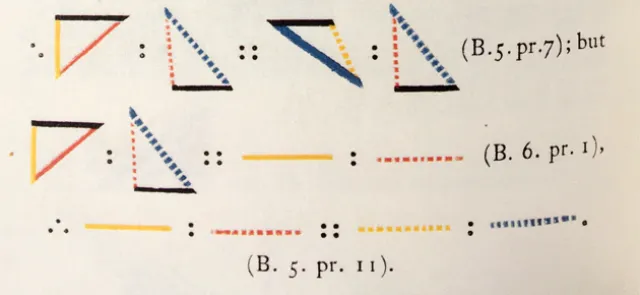 History and CultureN°220Oct 15, 2024
In Euclid's work
Ancient geometers struggled to handle ratios of lengths or areas that were not necessarily commensurable, because they could not conceive of irrational numbers. The definition found in Euclid's Elements remained in use until the 19th century.
Read →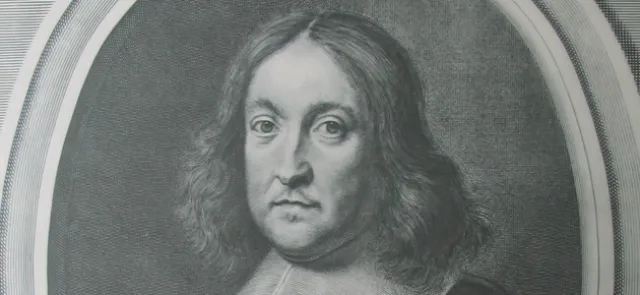 Math for everyoneN°217Apr 09, 2024
A historical example featuring Fermat
Through his marginal notes in Bachet's edition of Diophantus's books on arithmetic and through his correspondence, the mathematician Pierre de Fermat spurred the study of integers with new results and methods. He both transmitted ideas and drove the subject forward.
Read → Math for everyoneN°89Feb 19, 2024
One problem, four approaches
Line and Maurice are keen gardeners. Line takes two hours to complete a particular task, while Maurice takes three. How long will it take them if they work together? This problem can be solved in many ways. Here is a small selection…
Read → Math for everyoneN°89Feb 16, 2024
Proportionality: so crucial, so difficult
Proportionality arises in problems involving multiplication, division, and combinations of the two. Because it is difficult to learn, it poses challenges for teaching and has prompted extensive research in mathematics education.
Read → Math for everyoneN°215Feb 01, 2024
The culture of Tangente
From the outset, Tangente envisioned a whole world of worlds: mathematics linked to literature and poetry, to music; a publication opening the door to the wonderful world of logical puzzles; mathematics as a whole world in itself, extraordinarily vibrant and fully in tune with the latest technological advances. Above all, it stood for openness to the world, through writing that aimed to be accessible to everyone.
Read →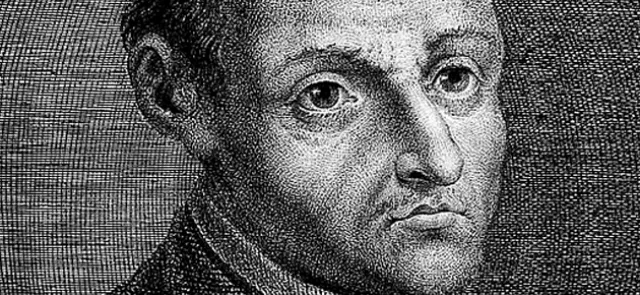 Math for everyoneN°215Dec 21, 2023
Francesco Maurolico's extensions
A member of a Greek family that emigrated to Sicily after the fall of Constantinople, Francesco Maurolico was born in Messina in 1494 and died there in 1575. He entered the Church at the age of 27, proposed an extension of figurate numbers, and established many of their arithmetic properties.
Read →