A shaky proof revolutionizes arithmetic
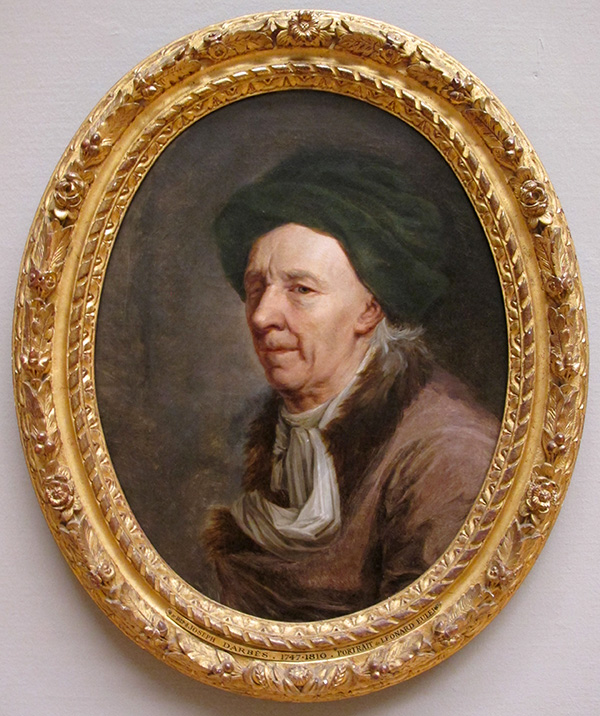
Euler rescued from oblivion Fermat's proposition that it is impossible for the sum of two cubes to be a cube. Though the explanation he provided for it was shaky, it opened up a new framework for arithmetic.


Euler rescued from oblivion Fermat's proposition that it is impossible for the sum of two cubes to be a cube. Though the explanation he provided for it was shaky, it opened up a new framework for arithmetic.


Articles recommended for you.

Even the greatest mathematicians sometimes make mistakes. It is only human! It even happened to one of mathematics’ legendary figures, the great Leonhard Euler, in connection with sums of powers.

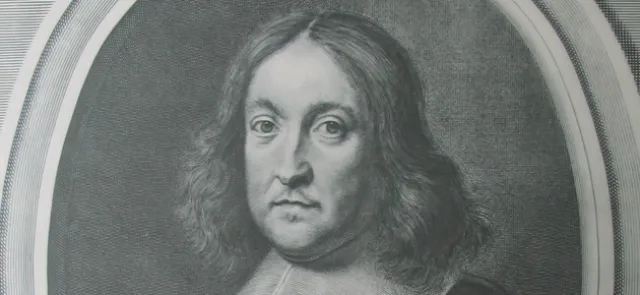
Through his marginal notes in Bachet's edition of Diophantus's books on arithmetic and through his correspondence, the mathematician Pierre de Fermat spurred the study of integers with new results and methods. He both transmitted ideas and drove the subject forward.

From Fermat's Last Theorem to cryptography, Sophie Germain primes have played a part in many scientific adventures over the past two centuries. These prime numbers have earned their place in the pantheon of arithmetic, yet we still do not know whether infinitely many exist.

Starting with two distinct points in the plane and performing only finitely many ruler-and-compass constructions, can we obtain any point in the plane? If not, which points can we obtain in this way?
Discussion
Sign in to post a comment and talk with other readers.
No comments yet. Be the first to respond.