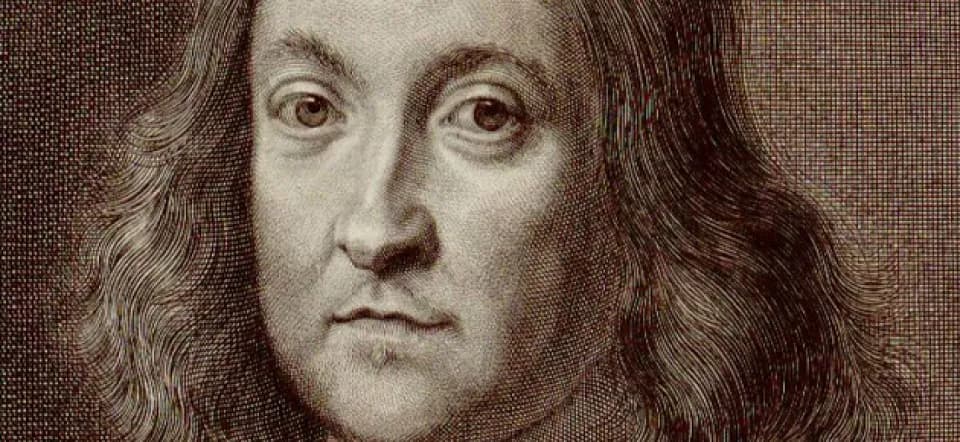
Pierre de Fermat (1601–1665) advanced the study of integers with groundbreaking theorems, often left without proof. All these theorems, which Fermat left as conjectures, were subsequently proved, sometimes much later, as with his "last theorem." Almost all of them—one proved false!
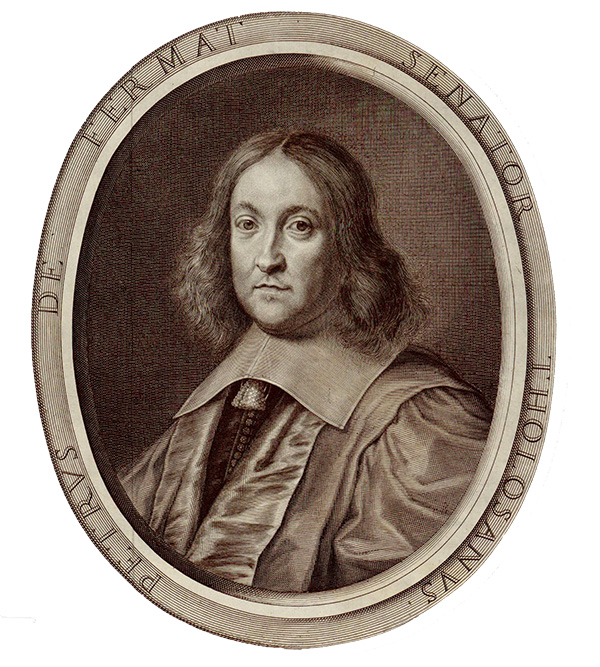
Pierre de Fermat, engraving by François Poilly at the beginning of his Varia Opera Mathematica, 1679.
Fermat numbers
---------------------
In August 1640, Fermat wrote to the mathematician Bernard Frénicle de Bessy (c. 1605–1674): "Here is what I find most remarkable: I am almost convinced that all the numbers obtained by adding one to successive powers of 2 whose exponents double each time are prime—such as 3, 5, 17, 257, 65,537, 4,294,967,297, and the next, with 20 digits, 18,446,744,073,709,551,617, and so on. I do not have an exact proof, but by infallible arguments I have ruled out so many divisors, and I have such compelling insights supporting my belief, that I would find it difficult to recant."