



All articles
Dive into the fascinating world of mathematics with our captivating articles, written by passionate experts. Whether you are a curious amateur or a seasoned mathematician, our articles cover a wide range of topics, from fundamental concepts to the latest discoveries, including practical applications and philosophical reflections.

Conquering spaces
Sequences and functions can have limits. But the need arose to define these ideas abstractly. The emergence of set theory and algebraic structures led, in the early 20th century, to the concepts of metric, topological and normed spaces. Here is their fascinating story.
Structuring randomness
Bringing order to the unpredictable is the aim of the concept of a probability space. By gathering the possible outcomes of a random experiment and their chances of occurring into a coherent structure, we can turn probability into an exact science.

The world of functions
Many problems are tackled in function spaces, particularly those involving approximation.

Working environments for mathematicians
The abstract notion of space in mathematics is very different from what intuition suggests. Depending on the type of structure available, we can work with concepts from algebra, analysis, or geometry.
The curiosities of antiparallelism
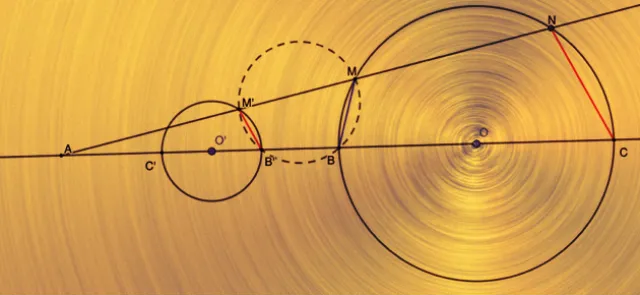
In elementary geometry, proportionality often involves parallel lines, through the intercept theorem. But there are also antiparallel lines. Might there likewise be such a thing as "antiproportionality"?
Thales’ children
Many proofs in elementary geometry rely on proportionality. Almost all of geometry’s classic theorems involve it: Thales, Ptolemy, Menelaus, Ceva, Pappus… Here is a brief tour of these great problems.
In Euclid's work
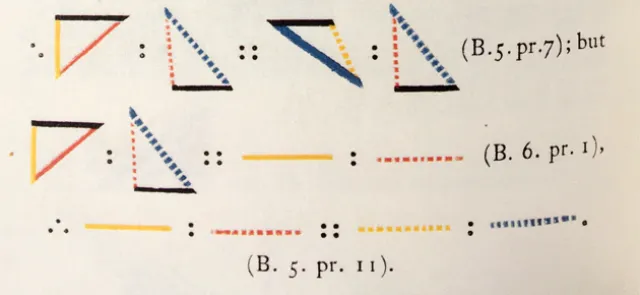
Ancient geometers struggled to handle ratios of lengths or areas that were not necessarily commensurable, because they could not conceive of irrational numbers. The definition found in Euclid's Elements remained in use until the 19th century.
Integer polygons
The discovery that so simple a figure as a square cannot have both sides and diagonals of integer length troubled several great scholars of antiquity. Can polygons with this property nevertheless be found? This seemingly innocent question continues to open up new avenues of research today.
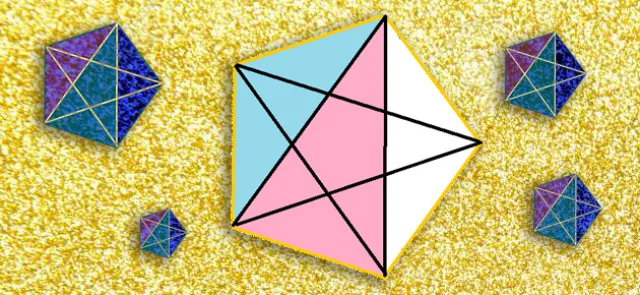
Rediscovering proportionality
Proportionality often brings to mind the rule of three—in other words, a method of calculation. Yet the concept first emerged in geometry, through the study of similar figures, a cornerstone of many theorems that gave rise to the idea of incommensurable quantities.

Grothendieck: mathematics' rebel legend | Tangente
On the Radio France website, the programme "Les grandes traversées" explores the lives of people who embarked on momentous journeys, whether literal, political or intellectual.

Pierre Cartier (1932–2024): a tribute | Tangente
Nicolas Bourbaki himself announced it in "Le Carnet" in the September 1–2 issue of Le Monde: the group "pays tribute to Pierre Cartier, who died on August 17 and was a contributor to and voice of the group for many years. A wide-ranging, voluble and mischievous mathematician (he announced Bourbaki's death forty years ago), he leaves behind a rich and varied legacy."
How Cauchy saw the world: science and faith | Tangente
In a series of lectures, Cauchy reveals his vision of the real world through the science of his day. They reveal a scholar wrestling with his religious convictions.

Complex analysis in fluid mechanics | Tangente
When Cauchy, ever the theoretician, developed complex analysis, he could hardly have imagined that his results would lead to so many powerful methods for designing aircraft wings or studying fracture mechanics.
Origins of group theory: Cauchy and Galois | Tangente
Cauchy the analyst is well known; Cauchy the algebraist, much less so. Cauchy's contribution to group theory long went unrecognized, even though his research on algebraic structures was highly influential.
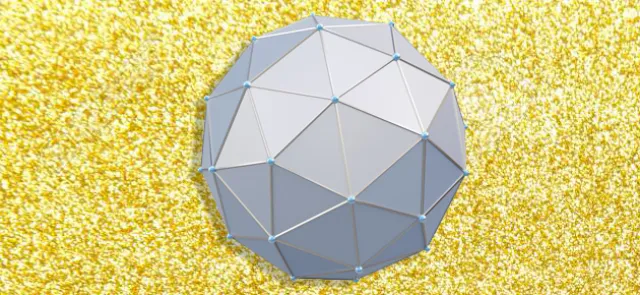
Inflating polyhedra
In his early work, Cauchy revived the study of polyhedra. Ever since his results on the rigidity of convex polyhedra, mathematicians have sought to learn more about more general cases. The quest has produced a new concept, the flexahedron, and a fascinating property: the bellows theorem.
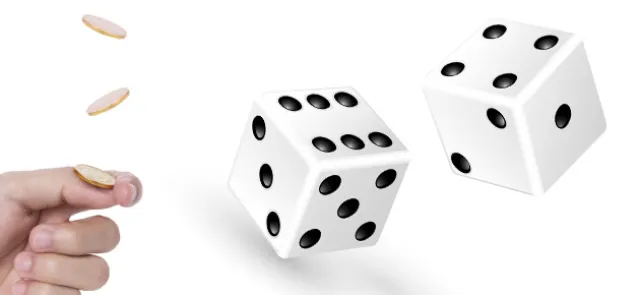
A distribution like no other
Standard probability distributions can sometimes be far removed from what is observed. When extreme cases occur too often, the Cauchy distribution comes into its own.

The battle over infinity: Cauchy and limits | Tangente
For more than two centuries, scholars and mathematicians debated infinitesimals: could they be handled safely, or were the paradoxes they generated insoluble? Amid this debate, Cauchy ushered analysis into the modern era while maintaining a nuanced position.

Geometry and philology: Cauchy's limits | Tangente
The mathematician Olry Terquem's review of Cauchy's paper on polyhedra ends in a most curious fashion.

A mathematical password: sin x in 1830 | Tangente
In their 1894 book on the slang of the École polytechnique, Albert Lévy and Gaston Pinet recount an anecdote illustrating the atmosphere that could prevail in Paris during the revolutions of 1830 and 1848.
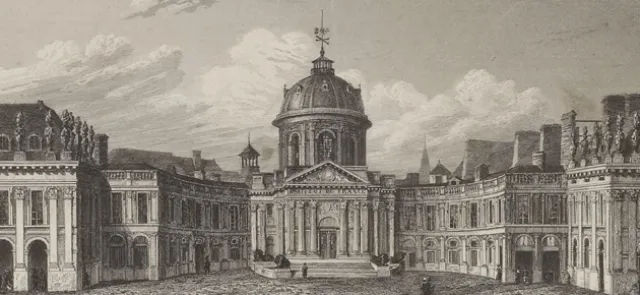
Cauchy: Conviction, maths and politics | Tangente
Cauchy's century was a veritable political laboratory: France passed through a succession of radically different regimes. Amid this constant change, Cauchy, a Legitimist, showed no lack of courage in defending his beliefs. Yet he remained steadfastly devoted to science, even when it meant helping regimes for which he had little sympathy.