



All articles
Dive into the fascinating world of mathematics with our captivating articles, written by passionate experts. Whether you are a curious amateur or a seasoned mathematician, our articles cover a wide range of topics, from fundamental concepts to the latest discoveries, including practical applications and philosophical reflections.

From political arithmetic to social mathematics | Tangente
Condorcet is not the first to seek to apply mathematics to public life. Yet he sets himself radically apart from his predecessors—and lays claim to that distinction—by coining the phrase "social mathematics."
Condorcet judged by his peers | Tangente
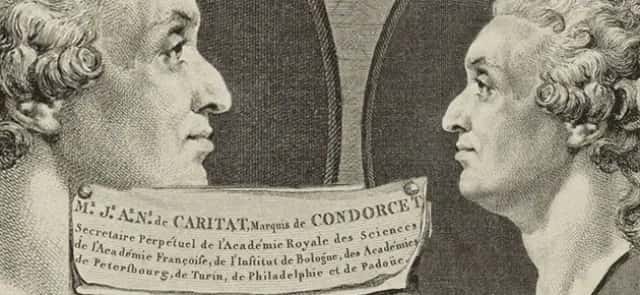
Condorcet always took an interest in analysis, but accounts and assessments of his mathematical work varied widely. Although he bounced back after the Académie’s unfavorable judgment of his first paper, the 19th century proved much harsher.

Condorcet’s project for a numeral system | Tangente
During the French Revolution, the National Constituent Assembly decided to standardize weights and measures and entrusted several scientists, including Condorcet, with determining the length of what would become the metre. In the same spirit of rationalization and simplification, Condorcet turned his attention to the education of young children.

Condorcet: mathematics for citizenship | Tangente
Condorcet embraced the ideals of the French Revolution and played an active part in the educational reforms set in motion by the Revolution.
Condorcet, pioneer of scientific skepticism | Tangente
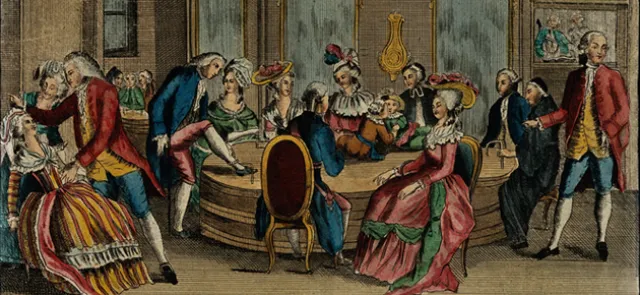
Responding to the vogue for Mesmerism—what we would now call a pseudoscience—Condorcet may be regarded as a pioneer of scientific skepticism. His analyses remain as relevant and timely as ever.

Sophie de Condorcet, a figure of the Enlightenment | Tangente
Born around 1763, Sophie de Grouchy married Condorcet, whom she had met at the home of her uncle and mentor, President Mercier du Paty.

Condorcet and the transmission of knowledge | Tangente
At the end of the preface to his Essais d’Analyse, Condorcet includes the Latin quotation "vice fungar cotis, acutem reddere quae ferrum valet, exsors ipsa secandi," from Horace’s Ars Poetica (line 305).

Julie de Lespinasse and d'Alembert's salon | Tangente
Julie de Lespinasse, a highly cultured woman and close friend of d’Alembert, opened a salon in 1764 at the corner of rue de Bellechasse and rue Saint-Dominique.
Condorcet: a true Enlightenment mathematician | Tangente
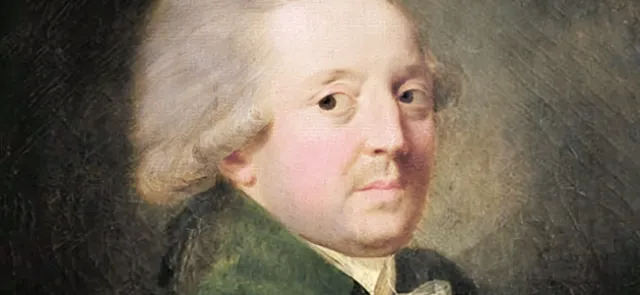
Although Condorcet is best known today as a philosopher, he began his career as a mathematician. A precocious polymath, mathematics also led him to politics and philosophy.

Polygonizing a number: histonumbers and Theodorus' spiral | Tangente
Several methods can be used to associate a polygon with a given number.

Vertex figures: duality and Platonic solids | Tangente
A polyhedron is an assembly of polygons with vertices, edges and faces, arranged so that every edge is shared by two faces.

Jolygons: iterative polygonal spirals | Tangente
This is not a polygon

The one-cut theorem: any polygon in a single cut | Tangente
Can a polygon be cut from a sheet of paper with a single straight cut? Surprisingly, the answer is yes! More surprisingly still, this also applies to other objects.

Pentagonal architecture: towers, castles and the Pentagon | Tangente
The pentagonal tower has stood since the 14th century in Castellane, a fortified town and subprefecture of Alpes-de-Haute-Provence.

Squaring polygons
Archimedes' Stomachion, the world's oldest puzzle, can produce thousands of shapes from fourteen polygonal tiles. But what about the inverse problem? Under what conditions do two given polygons have a common polygonal dissection, and how can one be found?

Maulnes Castle: Renaissance architecture on a pentagonal plan | Tangente
Few people know that less than 200 km from Paris stands a Renaissance castle built to a pentagonal design. Only a handful of such buildings can be found anywhere in the world...
When polygons form numbers
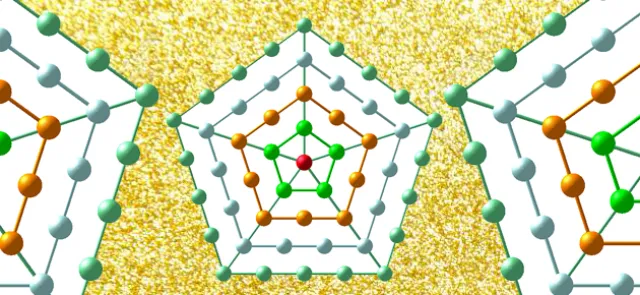
All is number! The Pythagorean school established many properties of numbers from their geometric representations. First developed for triangles and squares, this way of arranging numbers was later extended to all kinds of polygons.
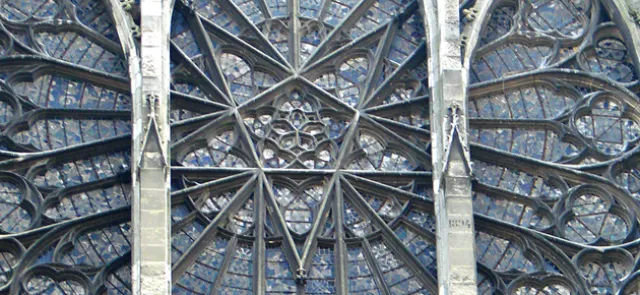
Pentacles and pentagrams: symbols and mathematics | Tangente
The pentagram, also known as the star pentagon, is a non-convex pentagon formed by joining every other vertex of a regular pentagon. It has journeyed through the ages and across civilizations, always shrouded in mystery.

Largest small polygon: max area at fixed diameter | Tangente
Let us consider polygons of diameter at most one—that is, polygons in which the distance between any two points is no greater than one—and determine which has the greatest area.

A little gem from Gauss
Triangles and quadrilaterals have inspired a wealth of mathematical literature. Yet few people seem to have taken a close interest in pentagons before a certain Carl Friedrich Gauss, who gave us a little gem for calculating their areas.