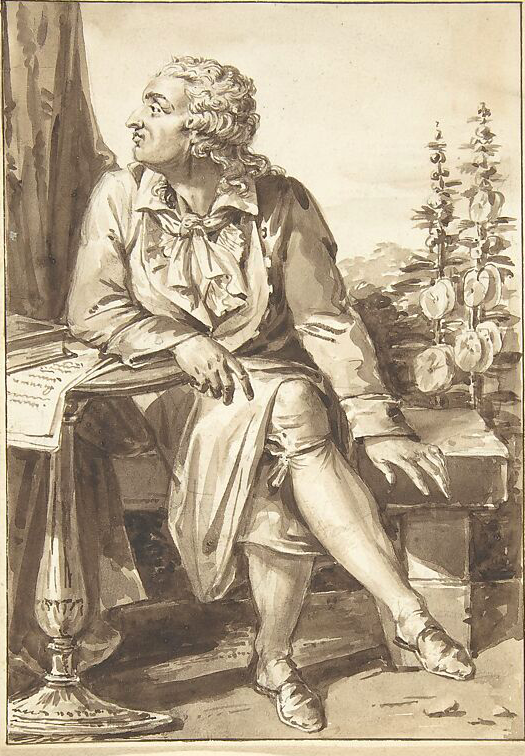
He then wrote a book, published posthumously, Moyens d’apprendre à compter sûrement et avec facilité, in which he wrote: "It seemed necessary to me to make spoken number names conform to written numerals." By this, he meant that he wanted to eliminate the irregularities in the language, each of which presented an obstacle to young students. He explained: "I have therefore changed those number names that break the pattern. The change will even be convenient for very young children who do not yet know how to count; it cannot have any drawbacks for the others."
In practice, he proposed continuing the counting sequence after dix with dix-un, dix-deux, dix-trois, and so on until reaching the familiar dix-sept, then replacing vingt with duante, to match trente, quarante, and so forth. Furthermore, trente-et-un becomes trente-un, while septante, octante, and nonante are naturally preferred to the more exotic forms soixante-dix, quatre-vingts, and quatre-vingt-dix!
Condorcet’s proposal did not achieve the hoped-for success, probably because he had no time to champion it and because such deeply rooted habits are difficult to overcome. Still, let us keep his suggestions in mind for our children—and note that, even for fractions, we could likewise use deuxièmes, troisièmes, or quatrièmes rather than demis, tiers, and quarts!