



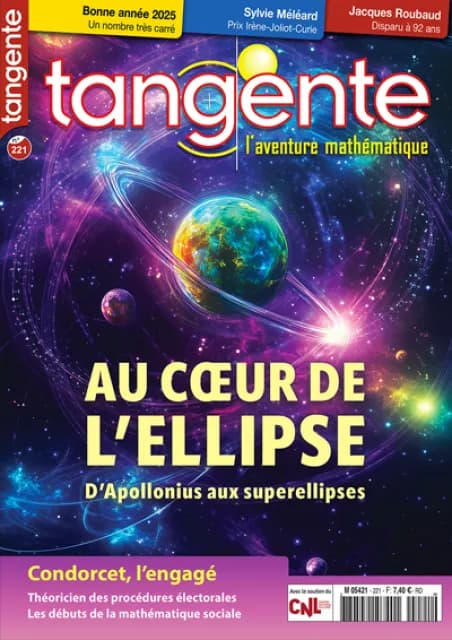
At the heart of the ellipse
This issue is not fully translated into English yet; only translated content is shown.
Read the French versionAll folders in this issue
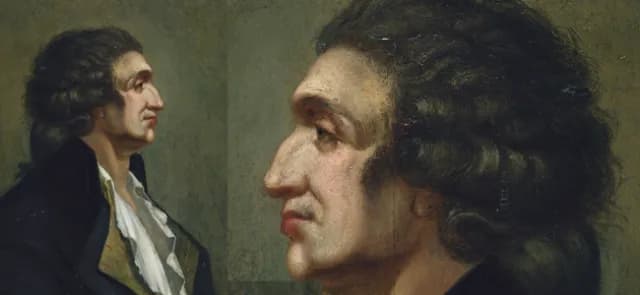
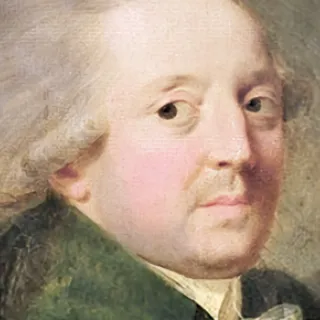
Condorcet, a Committed Mathematician
If Condorcet is known as the great defender of public education, we often forget that he was first and foremost a mathematician. His work in analysis was praised by the Academy of Sciences, even if it must be acknowledged that judgments on his mathematical work were sometimes rather negative. This is undoubtedly largely due to his attempt to found a social mathematics, that is, to apply probabilities to human questions, particularly electoral ones. This stems from a desire to use mathematics to eliminate reasoning errors and prejudices from our actions. It was also from this perspective that he advocated for popular mathematics education just as he opposed the magical thinking surrounding Mesmer's experiments. In the same way, he was politically engaged for women's suffrage and for the abolition of slavery. Condorcet is the author of a rich body of thought where mathematics always serves as a substrate.


At the heart of the ellipse
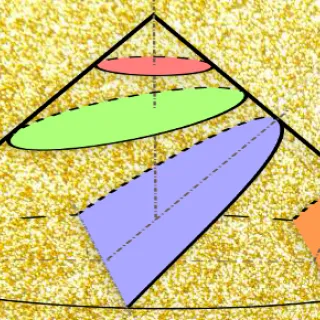
With the parabola and the hyperbola, the ellipse is one of the three conic sections. First examined in the context of solving problems requiring tools beyond the straightedge and compass, such as the duplication of the cube, they were later unified by their geometric definition as the intersection of a plane and a cone. The ellipse, which may seem to be merely a flattened circle, exhibits surprising properties, whether concerning the calculation of its perimeter, various construction methods one might devise, or the practical properties allowed by its focal definition, one of which is the proof of heliocentrism.
All articles in this issue

Jacques Roubaud has passed away
Following Oulipo's time-honored formula, Jacques Roubaud is now excused from its meetings on account of his death, which occurred this past December 5, his 92nd birthday.

The Irène-Joliot-Curie Prize honors Sylvie Méléard
A specialist in probability theory, particularly stochastic processes, Sylvie Méléard has spent the past twenty years applying mathematical models to living systems: changes in population size over time (such as bacterial growth), the proportion of an allele in a population, and genetic evolution (such as antibiotic resistance).

Curious stories of mathematics
For almost a year, Noëlle Krajcman has been running a TikTok and Instagram channel devoted to mathematical anecdotes.

2025: a very square number!
What better way to celebrate the new year than with some delightful mathematical properties of the number 2025? Tangente wishes all its readers a wonderful 2025.