Thanks to d’Alembert, who was captivated by the young woman, many intellectuals gathered there regularly, particularly contributors to the Encyclopédie. Julie de Lespinasse had also taken d’Alembert in when he became seriously ill, sparing him from having to remain in the attic room where he was then living.
At the salon, guests listen to music, discuss politics in the spirit of the Enlightenment and rail against royal absolutism, while the Church sees it as the antechamber of unbelief.
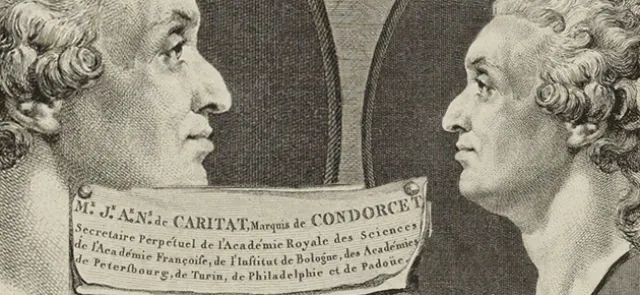
Through d’Alembert, Condorcet gains admission after the publication of his first scientific work. In this way, he builds a network of contacts extending far beyond the scientific world, and it is probably here that his political thought and socially progressive ideas take shape. Some called the salon the antechamber to the Coupole; this no doubt helped Condorcet enter the Académie des sciences at such a young age. Julie de Lespinasse, who had already contracted smallpox in 1764, later develops tuberculosis and is forced to close her salon in 1773, three years before her death at the age of forty-four.
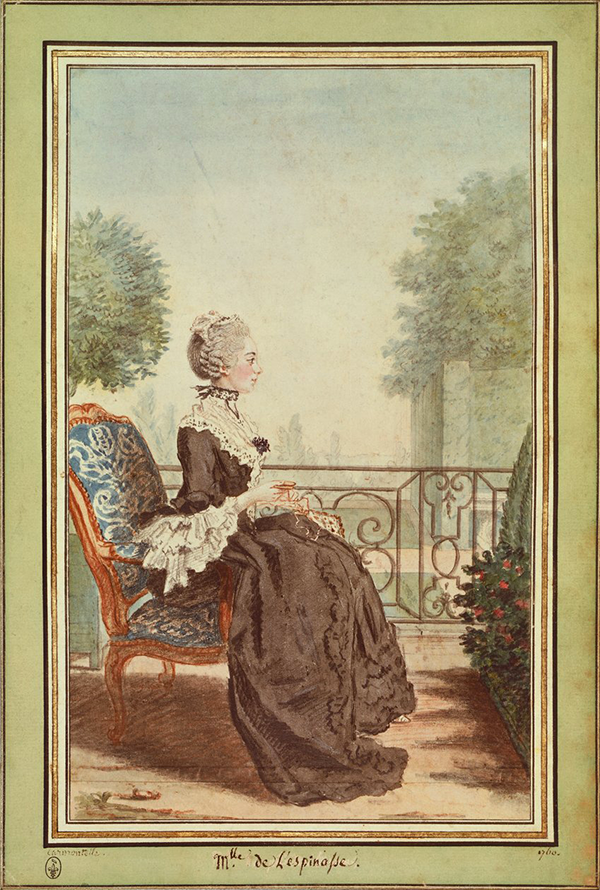
Julie de Lespinasse by Carmontelle, 1760.