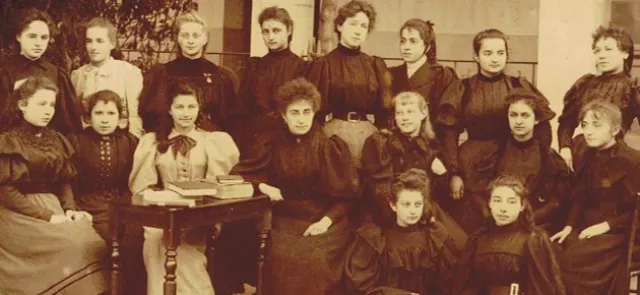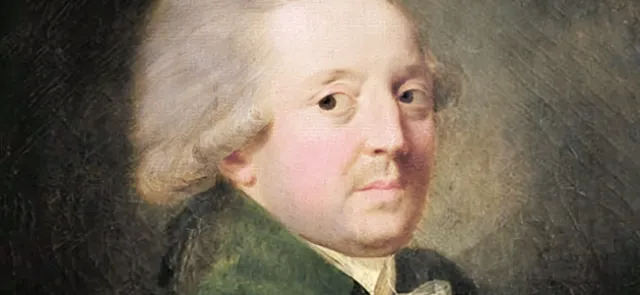
A mathematician and committed philosopher, he is remembered in particular for championing education for girls and seeking to put learning at the service of freedom. In the first of his Cinq Mémoires sur l’Instruction Publique (Five Memoirs on Public Education), he writes: "A man who knows the rules of arithmetic needed in everyday life is not dependent on the scholar who possesses the genius of mathematical science to the highest degree." He was convinced that mathematics could both enable citizens to solve practical problems—the purpose of his "social mathematics"—and develop their logical thinking.
Condorcet drew a sharp distinction between upbringing, which he believed should take place within the family, and instruction, provided at school. He wanted teaching to be grounded in science and mathematics. In his Discours sur les sciences mathématiques (Discourse on Mathematical Sciences), he goes even further, including mathematics in a child's upbringing: "How fortunate for [the child] if, during those early years when he must submit to the duty—so arduous at that age—of focusing his attention, that duty could be eased by the care that maternal tenderness knows how to bestow so gently! The first principles of knowledge would lose all their dryness and austerity if he received them from so dear a voice. The first notions of mathematics must form part of a child's upbringing. Numbers and lines speak more powerfully than one might think to a child's nascent imagination, and provide a sure way of exercising it without leading it astray."
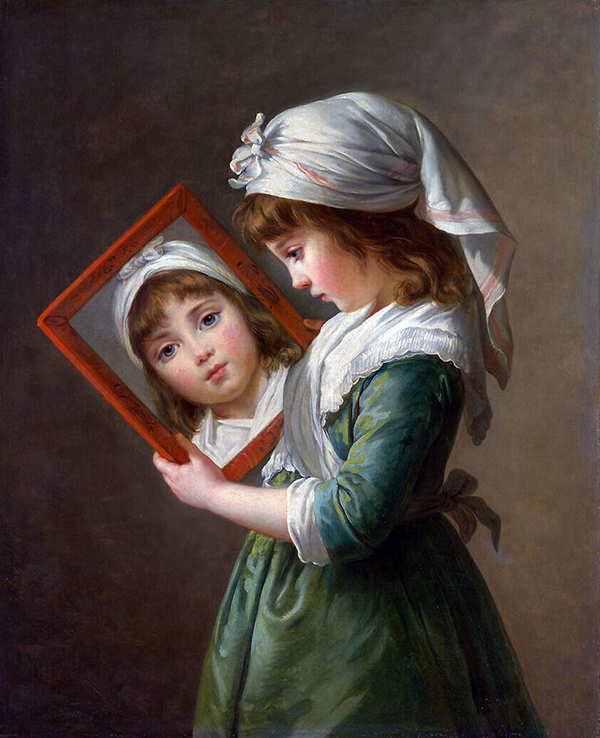
Élisabeth Vigée-Lebrun portrays her daughter
in the form of a geometry lesson (1787).