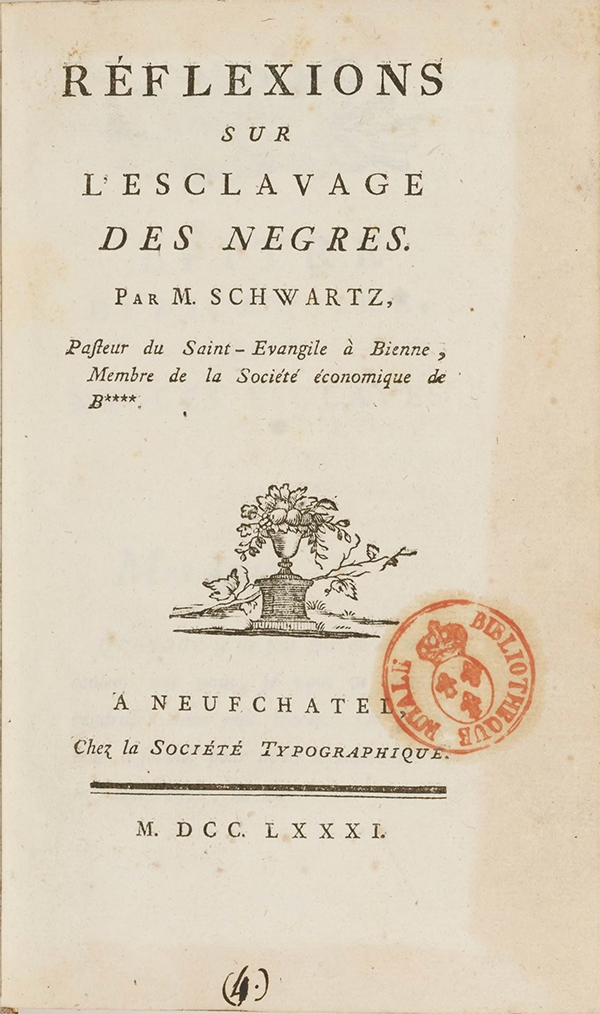
In response to the economic arguments advanced by slavery’s defenders, he wrote: "The abolition of slavery would ruin neither the colonies nor trade; […] humanity as a whole would benefit, while a few individuals would lose only the advantage of being able to commit, with impunity, a crime that served their interests."
Aware that sudden abolition would be difficult, Condorcet proposed gradual measures, such as requiring that children born into slavery be freed at the age of 35. He also wished to protect enslaved people through regular inspections by doctors, which could lead to their immediate emancipation in cases of ill-treatment.
He thus belonged to a movement that would succeed in abolishing slavery on February 4, 1794, before Bonaparte reinstated it in 1802, sparking the revolt in Haiti that would lead to the country’s independence.
Against racism
-----------------
Beyond its opposition to slavery, Condorcet’s text is imbued with a strong anti-racist outlook: he already foresaw that "after a few generations, it is true, Black people will blend completely with white people, and the only remaining difference will be color."
The opening lines of the book are deliberately provocative in their defense of equality between Black and white people: "Although I am not the same color as you, I have always regarded you as my brothers. Nature endowed you with the same intellect, the same reason, and the same virtues as white people. Here I speak only of those in Europe, for as to the white people in the colonies, I would not insult you by comparing them with you."