



All articles
Dive into the fascinating world of mathematics with our captivating articles, written by passionate experts. Whether you are a curious amateur or a seasoned mathematician, our articles cover a wide range of topics, from fundamental concepts to the latest discoveries, including practical applications and philosophical reflections.
My thesis in Tangente
Geometric shapes can be associated with different pieces of music to shed light on their structure. This can be done by defining a distance between musical events using the discrete Fourier transform applied to the bars of a score.
Animath turns 25: mathematics news brief | Tangente
On March 16 this year, the Animath association celebrated its 25th anniversary at the Institut Henri-Poincaré.

Billiards and water-pouring problems
One facet of mathematical creativity is finding an original representation of a problem that makes it easy to solve. Thus, an elementary Diophantine equation can be solved by studying trajectories on a billiard table, turning billiards into an effective tool.
A historical example involving Fermat: article by m… | Tangente
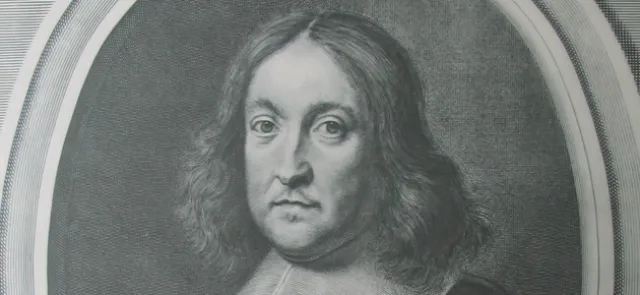
Through his marginal notes in Bachet's edition of Diophantus's books on arithmetic and through his correspondence, the mathematician Pierre de Fermat spurred the study of integers with new results and methods. He both transmitted ideas and drove the subject forward.
Diophantus of Alexandria, the unknown: article by… | Tangente
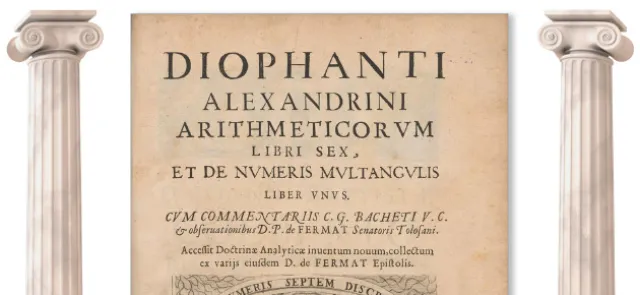
As noted on www.diophante.fr, which has just celebrated its 20th anniversary, the Greek mathematician Diophantus left us some remarkable works on arithmetic. A journey into history will reveal his extraordinary talent.
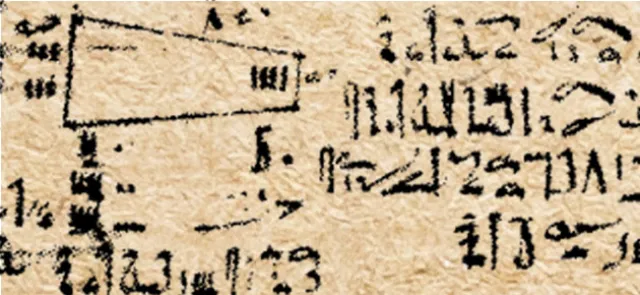
Integers: stars of equations: article by… | Tangente
In ancient Egypt, puzzles and problems were already being framed in terms of equations over the integers. Although the methods used to solve them have changed, the underlying question remains the same. These equations would go on to transform mathematics.

Sport and longevity
Age is, of course, a predominant factor in athletic (and intellectual!) performance. This nonlinear decline can be modeled using an exponential model, which seems to hold at every physiological scale: cellular, skeletal, pulmonary…

The weight of social inequalities in mathematics | Tangente
While gender inequalities in mathematics are now widely recognized, other forms of exclusion remain less studied: people from the working classes are also notably absent. This finding challenges the idea that mathematics is socially neutral and open to everyone, as it is often assumed to be.
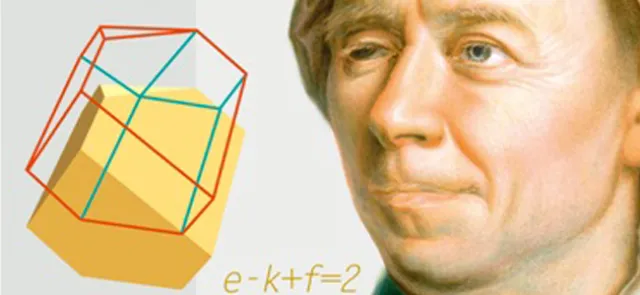
Geometric delights with Euler’s formula
Euler’s formula, a fundamental relation in mathematics, offers an opportunity to explore the properties of objects in three dimensions—and in higher dimensions as well. Along the way, we will encounter a classic of operations research: the simplex algorithm.

In the service of curves
Through the magic of analytic geometry, the properties of an algebraic formula find visual expression in the corresponding curves. Taylor expansions play an absolutely crucial role in this constant interplay.

A fine remainder
Replacing the function itself with a Taylor expansion is justified only if this approximation does not alter the calculation of the properties being studied, whether a limit, an upper bound, or something else. The behavior of the remainder is therefore important.
The origins of function expansions
The first power-series expansions of functions emerged alongside the development of differential and integral calculus in the late 17th century. Truncating them produces Taylor polynomials!

Equivalent functions: a tool for calculating limits
Why go to the trouble of finding equivalents for seemingly well-behaved functions? To gain detailed insight into local or asymptotic behavior—and for applications, too! Without these techniques, even spreadsheets would be unable to perform seemingly innocuous calculations.

Some troubling counterexamples
Think you know everything about asymptotic expansions? Here are a few perplexing counterexamples...

The limits of the pie chart
To represent the fraction 5/6 graphically or geometrically, it is tempting to draw a pie chart with six slices, five of them shaded, as shown opposite. This solution is often described as "taking five out of six equal slices."

Geopolitics of fractions in 19th-century China | Tangente
Is mathematics really immune to human passions? The introduction of fractional notation in China shows that things can be more complicated, as national sentiment comes into conflict with the need for scientific development.

The people of the rational numbers
A brief imaginary, non-chronological history that attempts to answer a question less straightforward than it seems: are fractions numbers?

Fractions: word origins and history | Tangente
The word fraction seems to have appeared in its modern sense in 1549, in an arithmetic book published that year by the mathematician and Pléiade poet Jacques Peletier du Mans (1517–1582).
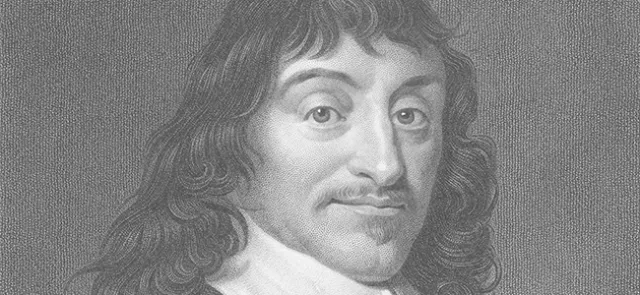
Descartes' way
How can fractions be handled geometrically? At the beginning of his most famous work, Descartes shows us how.

Old-time fraction puzzles to solve | Tangente
Thirds, quarters and other fractions have long provided the basis for puzzles in a wide range of settings. Here are three from centuries past.