



All articles
Dive into the fascinating world of mathematics with our captivating articles, written by passionate experts. Whether you are a curious amateur or a seasoned mathematician, our articles cover a wide range of topics, from fundamental concepts to the latest discoveries, including practical applications and philosophical reflections.

Let's grapple with division | Tangente
The four arithmetic operations that we all learn to set out so conscientiously in our school notebooks are “elementary,” aren’t they? Yet the methods of addition, subtraction, multiplication and division have not always been presented as they are today in Western countries!
The ninth Dedekind number
Some well-known number sequences have thousands of terms, or even more, that can be calculated without the slightest difficulty. Others put up more resistance. Here is one whose ninth term mathematicians have only just managed to calculate!

Navigating the mathematical universe | Tangente
Did you know that a list covering almost every current area of mathematical research was created to help classify publications? It runs to more than two hundred pages! No wonder it is hard for general readers who are simply curious about mathematics to find their way around.

A genealogy of fractions
A beautiful construction due to Calkin and Wilf, foreshadowed a century earlier, provides an elegant and deep way to list all fractions. Beginning with 1 / 1, each fraction in this construction gives birth to two new ones.

Denominators without end
Continued fractions—stacks of fractions that never end—have been studied by some of the greatest mathematicians, including Euler and Lagrange, as well as Galois. Let's take a closer look at these fractions and their strange denominators.
Fractions of fractions, full speed ahead
A very simple way of constructing a sequence of fractions can lead to surprisingly deep mathematical tools. Here is an example that leads to the famous Prouhet–Thue–Morse sequence and its many applications.

Endless sums
Adding several fractions always produces another fraction. But when the sum continues indefinitely, things are very different. If chosen carefully, such sums can approximate numbers like π and yield a wealth of fascinating, unexpected results.

One problem, four approaches
Line and Maurice are keen gardeners. Line takes two hours to complete a particular task, while Maurice takes three. How long will it take them if they work together? This problem can be solved in many ways. Here is a small selection…

An unhurried journey to infinity
The harmonic numbers form a sequence that tends to infinity, but very slowly. That does not stop them from playing a role in several important problems.
When fractions fail
Fractions cannot do everything! The existence of irrational numbers forces us to accept that the concept of number extends beyond quotients of two integers. The reward is a new world to explore, full of surprises.
Coming to grips with decimal expansions
Like any real number—for example, pi—a fraction can be written as a finite or infinite decimal expansion. Remarkably, the resulting decimal expansion is always eventually periodic.
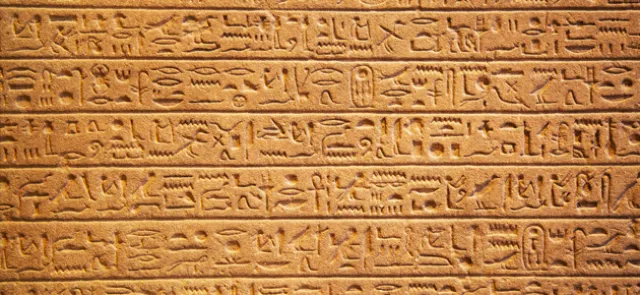
The Egyptian way
Although the general concept of a fraction was absent from the mathematics of early antiquity, Egyptian scribes made extensive use of what we call unit fractions, or reciprocals of integers. Further developed by Fibonacci, this so-called "elementary" mathematics remains an active subject of research in number theory.

Gears
How can a ratio be approximated by a simpler one? Crucial to clockmakers and engineers, this problem can be solved with a healthy dose of arithmetic and algorithms dating back to antiquity.
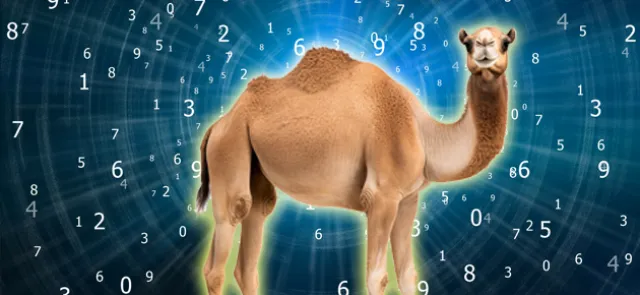
The case of the camels
Seventeen camels: an inheritance that seems impossible to divide? This slightly paradoxical Eastern puzzle has a mathematical answer.

Fractions and music: when 3/4 is not equivalent to 6/8
Octaves, fifths, triplets… The rhythms and pitches of Western music were built on fractions.

Proportionality: so crucial, so difficult
Proportionality arises in problems involving multiplication, division, and combinations of the two. Because it is difficult to learn, it poses challenges for teaching and has prompted extensive research in mathematics education.

Fractions in the temple of integers?
As its name suggests, Neil Sloane's On-Line Encyclopedia of Integer Sequences contains only integers. Yet there is a roundabout way to introduce fractions into it…

Japanese multiplication | Tangente
How can you multiply without a calculator—or even knowing your multiplication tables?
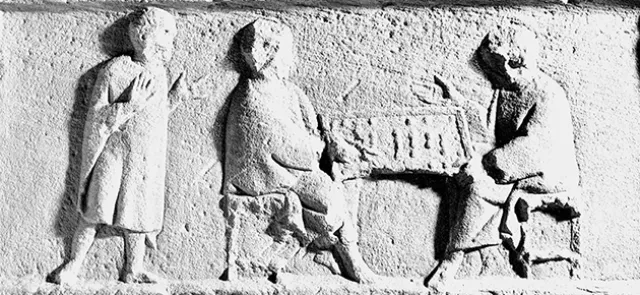
Calculating? With calculi, of course! | Tangente
It is hard to believe that the multiplication and division methods we learn at school did not become universally adopted in the West until the 18th century. So how did people calculate before then? They used calculation aids such as counting boards.
Multiplying with rods | Tangente
Before the advent of modern technology, techniques or tools had to be devised to perform the basic calculations required by craftspeople, engineers and everyone else! From John Napier to Édouard Lucas, mathematicians distinguished themselves in this pursuit.