Fractions of fractions, full speed ahead
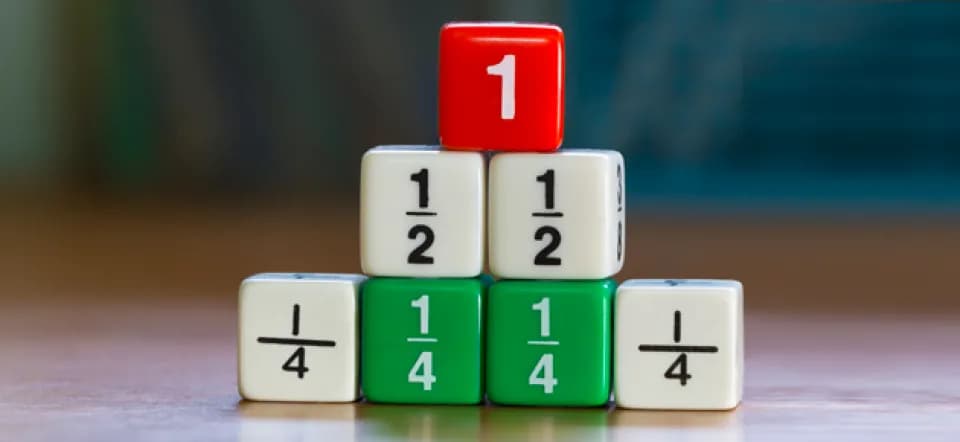
A very simple way of constructing a sequence of fractions can lead to surprisingly deep mathematical tools. Here is an example that leads to the famous Prouhet–Thue–Morse sequence and its many applications.

A very simple way of constructing a sequence of fractions can lead to surprisingly deep mathematical tools. Here is an example that leads to the famous Prouhet–Thue–Morse sequence and its many applications.

Articles recommended for you.

The Morse word, or Prouhet–Thue–Morse sequence, is an easy-to-construct mathematical object with plenty of surprises in store. Join us in exploring a combinatorial sequence that would certainly deserve to be every bit as famous as Fibonacci's!

Beyond the "classical" convergence of numerical series, many methods—some particularly powerful—can accelerate the convergence of a series or even assign a value to the "sum of a divergent series." Here are a few notable examples.

The harmonic numbers form a sequence that tends to infinity, but very slowly. That does not stop them from playing a role in several important problems.

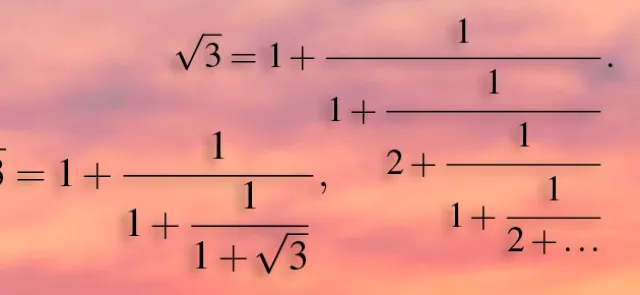
There are other ways to represent real numbers besides our decimal notation! One of the best known is to write a number as a continued fraction. The resulting representations, even when truncated, very quickly provide "good" approximations of the original number.
Discussion
Sign in to post a comment and talk with other readers.
No comments yet. Be the first to respond.