Fractions in the temple of integers?
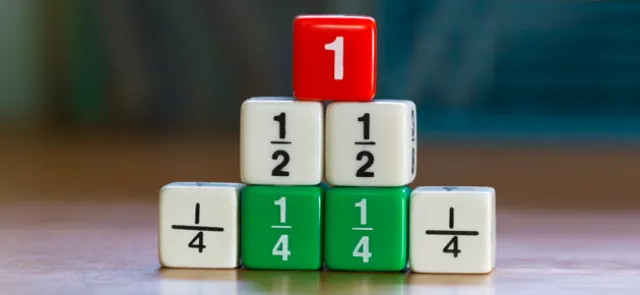
As its name suggests, Neil Sloane's On-Line Encyclopedia of Integer Sequences contains only integers. Yet there is a roundabout way to introduce fractions into it…

As its name suggests, Neil Sloane's On-Line Encyclopedia of Integer Sequences contains only integers. Yet there is a roundabout way to introduce fractions into it…

Articles recommended for you.

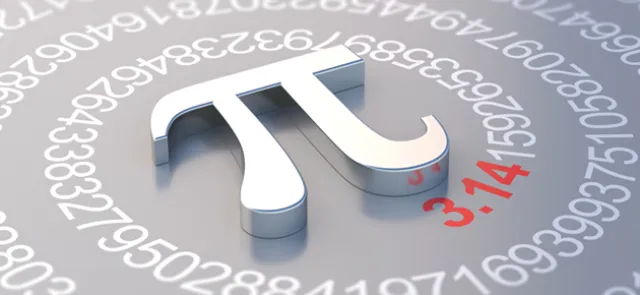
Like any real number—for example, pi—a fraction can be written as a finite or infinite decimal expansion. Remarkably, the resulting decimal expansion is always eventually periodic.

A very simple way of constructing a sequence of fractions can lead to surprisingly deep mathematical tools. Here is an example that leads to the famous Prouhet–Thue–Morse sequence and its many applications.

Sometimes, a concept that is relatively simple to define leads us into a world we dare not imagine, where our common sense struggles to find its bearings. Such is the case with universal numbers, which remain today as elusive as they are fascinating.

Although the general concept of a fraction was absent from the mathematics of early antiquity, Egyptian scribes made extensive use of what we call unit fractions, or reciprocals of integers. Further developed by Fibonacci, this so-called "elementary" mathematics remains an active subject of research in number theory.
Discussion
Sign in to post a comment and talk with other readers.
No comments yet. Be the first to respond.