Fractions
This issue is not fully translated into English yet; only translated content is shown.
Read the French versionAll folders in this issue




Old-fashioned fractions
When discussing fractions, we often begin by evoking the idea of fair sharing. Yet, even when sticking to their common definition, this approach does not do justice to the richness and variety of uses one can make of them, ranging from the definition of our musical notes to the handling of gears. For its part, Thales' theorem makes geometry equally fond of fractions. The so-called Egyptian fractions, that is to say those with numerator 1, seem to have been the first to have been considered. Their name alone indicates that their age is counted in millennia, and we may explain this by the fact that in a sense a third, a quarter, a fifth, and more generally an nth are the prime fractions, from which all others are derived by simple multiplication by an integer.

Fractions to observe
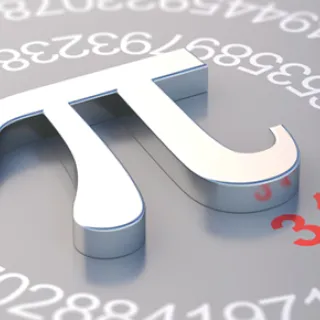
A frequent tendency regarding the value 1/2 is to want at all costs to write it as 0.5. The value 1/3, whose decimal expression has no end (0.333…), nevertheless offers a simple example of the superiority of fractional notation over decimal notation, at least in a mathematical context. Decimal expansion has not had its last word, however, since that of a fraction is always periodic, therefore also expressed in a finite form, even if in its own way. On the other hand, there exists a vast set of numbers, such as √2 or π, that cannot be expressed in the form a/b (with a and b integers). Despite this failure to represent all real numbers, fractions nevertheless remain a crucial tool for exploring the fundamental concept of proportionality, in which mathematical notions and school pedagogy intertwine.

When fractions continue
They continue, the fractions! Fundamentally confined to the set of rational numbers, they nevertheless manage to escape it when we let them continue to infinity. On this topic, there are multiple ways to do it. One of them consists in adding them again and again, to get closer and closer to irrational numbers like π. A second possibility consists in arranging fractions in a binary tree to obtain them all. Finally, a major method, algebraic or arithmetic techniques make it possible to construct fractions of fractions, which continue to infinity and thus define... continued fractions.