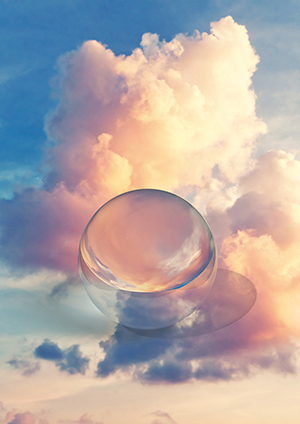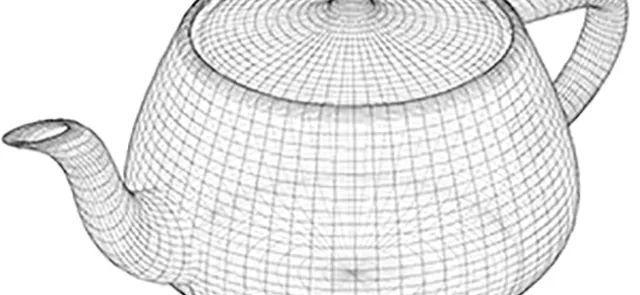
The components of the image are geometric objects defined by their equations. More elaborate shapes can be created by combining elementary geometric forms—for example, through intersections, unions or subtractions. The software manages the textures of the various objects (opaque, transparent, mirrored, chrome-plated…), their positions relative to one another, and the locations of the observer and one or more light sources within the scene.
Next, calculate the paths of virtual rays cast from the observer's assumed position. For each ray, we consider the objects it encounters, in accordance with the laws of optics (reflection, refraction…). This determines the brightness and color of the corresponding visible pixel. It is this construction of shadows and reflections that makes the scene realistic. Here, the path considered for the ray is the reverse of what happens in reality, where light travels from the source to the eye after being reflected by the object.