-
A brilliant but solitary student, he entered the École normale supérieure on rue d’Ulm and came first in the mathematics agrégation examination in 1939. Mobilized in September 1939, he was taken prisoner of war in June 1940, then released on health grounds in August 1941.
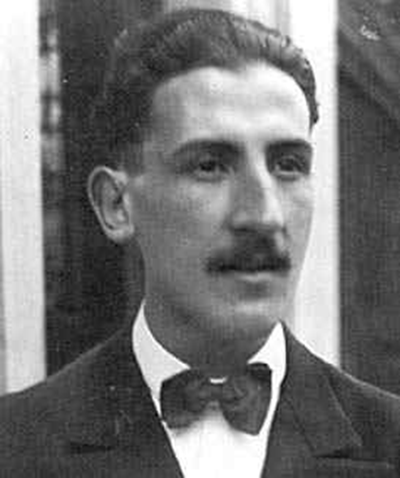
With Élie Cartan’s help, Apéry obtained a position as an assistant at the Sorbonne. An anticlerical, he continued the political activity he had begun in 1937 within the Radical Party of the time and joined the Resistance, in which he played an important role. Uncompromising and strong-willed, he remained politically active until the late 1960s.
In mathematics, after completing a thesis in algebraic geometry and conducting extensive research in the field, he gradually moved towards number theory, as he had not followed the path of scheme theory introduced by Alexandre Grothendieck and the ensuing "upheaval." He was a professor at the University of Caen (Calvados) from 1949 until his retirement in 1986. His view of mathematics was individualistic and resistant to all orthodoxy. He was a constructivist and believed that Hilbert-style formalism did not reflect the work of mathematicians. In the 1970s, he attacked the reform that introduced so-called "modern mathematics" into mathematics education.