The coffee cup at 300 dpi.

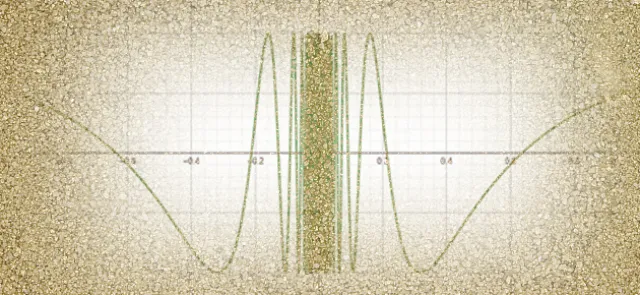
When an image is compressed, it not only becomes slightly blurred: wherever there is strong contrast, its discontinuities are accentuated. This is known as the Gibbs phenomenon, and understanding it requires knowing how a wave can be decomposed into harmonics.


Articles recommended for you.

The introduction of series of functions, followed by theorems establishing when continuity or differentiability is preserved in the limit, made it possible to construct objects with unusual, counterintuitive properties. Some famous mathematicians had tremendous fun with them!

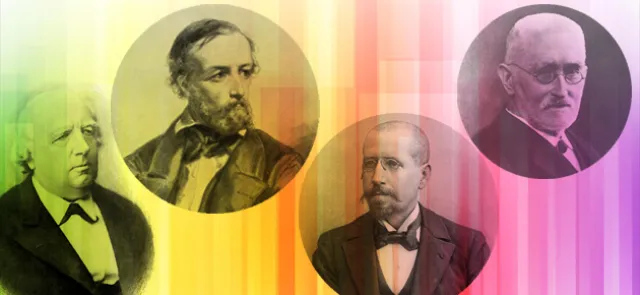
Until the early 19th century, everything seemed continuous. Trigonometric series brought discontinuous functions onto the scene. They prompted Riemann to generalize the notion of the integral, led Weierstrass to clarify the notion of continuity, and spurred Darboux to study derivatives.

In practice, finding an optimal value often involves computing demanding integrals. How can this be done? Physicists developed the Monte Carlo method, whose complexity does not increase with the dimension of the integrals involved.

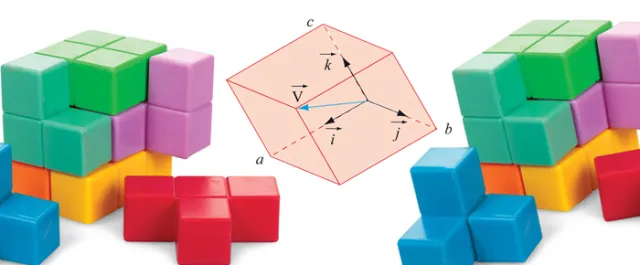
What could a quadratic polynomial possibly have in common with a vector in three-dimensional space? At first glance, nothing: they are different kinds of objects. Yet both have the same form—each is described by a triple of numbers. Better still, calculations with one correspond to calculations with the other!
Discussion
Sign in to post a comment and talk with other readers.
No comments yet. Be the first to respond.