The birth of a prize
---------------------------
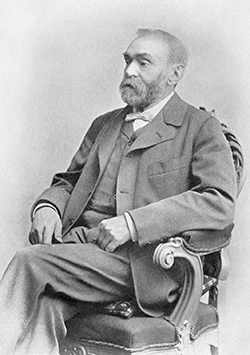
Alfred Nobel (1833–1896)
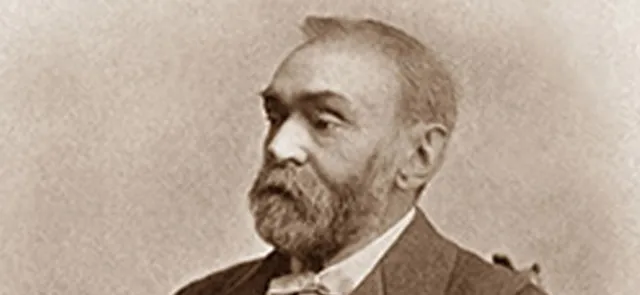
Alfred Nobel, the Swedish inventor of dynamite, left a considerable sum in his will to establish an institution responsible for awarding an international prize to individuals "who have brought the greatest benefit to humankind through outstanding work". Created in 1901, the prize is awarded each October and presented on December 10, the anniversary of its benefactor's death. It covers five fields: physics, chemistry, medicine, literature and peace. The first two prizes are awarded by the Royal Swedish Academy of Sciences, the third by the Karolinska Institute and the fourth by the Swedish Academy; they are presented by the King of Sweden.
The Nobel Peace Prize is awarded by a committee appointed by the Norwegian Parliament under the chairmanship of the King of Norway. From 1814 to 1905, the kingdoms of Sweden and Norway formed a "personal union" of two sovereign states under the same king. When the countries separated in 1905, the Nobel Prizes were divided between them.
The prize has not always honored researchers for the right reasons. Ivan Petrovich Pavlov (1849–1936), who discovered the fundamental laws governing the acquisition and loss of "conditioned reflexes" (such as salivation), was awarded the 1904 Nobel Prize in Physiology or Medicine "in recognition of his work on the physiology of digestion". Published in 1879, this research led him to conclude that the secretion of the digestive glands was controlled exclusively by nervous mechanisms. We now know that it is also—and above all—under hormonal control…
-
Why not mathematics?
--------------------------
**
**
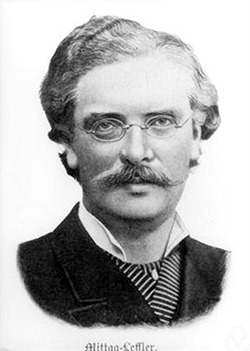
Gösta Mittag-Leffler (1846–1927)
There is no Nobel Prize in geographical sciences or mathematics. This omission is sometimes explained by a romantic tale: Nobel supposedly took against mathematics because he was jealous of the Swedish mathematician Gösta Mittag-Leffler. Both men are said to have loved a young Viennese woman, Sophie Hess, whose heart the mathematician allegedly stole from the chemist.
But according to Garding and Hörmander (Why is there no Nobel Prize in Mathematics?, Mathematical Intelligencer, 7, 1985), this anecdote appears to be nothing more than an unfounded legend. Alfred Nobel never married and seems to have shown little interest in starting a family. In any event, mathematicians hoping to receive the prestigious prize must turn to related disciplines instead. And they have certainly done so!
-
Economics: the Sveriges Riksbank Prize
---------------------------------------------
Strictly speaking, there is no Nobel Prize in Economics. In 1968, to mark its 300th anniversary, Sveriges Riksbank decided to honor economists with an annual award officially called the Sveriges Riksbank Prize in Economic Sciences in Memory of Alfred Nobel. Administered by the Nobel Foundation, it follows the same rules as the "real" Nobel Prizes. It is commonly (and improperly) called the "Nobel Prize in Economics." Since 1969, the prize has been awarded each year to individuals who are still alive when the awards are announced.
Alfred Nobel made no provision in his will for such a prize in economics. Indeed, the idea would probably have run counter to his philosophical convictions, and he would very likely have rejected it, refusing to honor theories that promoted financial speculation and profit.
Many recipients of the Sveriges Riksbank Prize are economists who make use of mathematics or mathematicians working in economics.