

ANTOINE HOULOU-GARCIA
62 articles published in Tangente
 Math for everyoneN°218Jun 12, 2024
Did the Greeks use zero?
It is commonly thought that the Greeks did not know about zero. That is not entirely true: Greek astronomers had a positional zero, and Iamblichus even invented an arithmetical zero before it was consigned to oblivion.
Read → History and CultureN°89Feb 20, 2024
The geopolitics of fractions in China
Is mathematics really immune to human passions? The introduction of fractional notation in China shows that things can be more complicated, as national sentiment comes into conflict with the need for scientific development.
Read → History and CultureN°215Dec 21, 2023
A form of harmony between geometry and arithmetic
Many mathematicians have taken an interest in figurate numbers. But their concerns have not always been the same! In ancient times, people sought to construct and represent numbers using counters. The resulting shapes illustrate a host of arithmetic relationships.
Read → History and CultureN°215Dec 21, 2023
A new life for figurate numbers
Figurate numbers entered Arabic mathematics through Thabit ibn Qurra’s translation of the work of the mathematician and philosopher Nicomachus of Gerasa. Thabit’s name is associated with Thebit numbers (the "e" replacing the "a" in medieval Latin transcription).
Read → History and CultureN°214Oct 16, 2023
Reading ancient and medieval mathematicians
In 2018, the British publisher Routledge launched a series entitled "Scientific Writings from the Ancient and Medieval World" with a Babylonian astronomical handbook.
Read → Math for everyoneN°213Aug 25, 2023
Counting to exist: the political uses of quipus
Counting seems straightforward enough: you count what is there. Nothing could be more childlike... or so it seems. Yet counting entails highly significant political choices and can serve extremely important economic, social and even identity-related purposes.
Read → History and CultureN°212Jun 22, 2023
The Pythagorean theorem… before Pythagoras!
Pythagoras would never have accepted this result being named after him: he knew perfectly well that he had learned it on his journeys of study. As we shall see, it already existed in Babylon and India!
Read →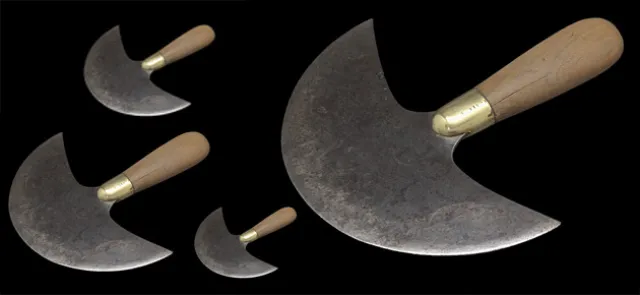 History and CultureN°84Nov 16, 2022
The arbelos
The properties of the arbelos, this fascinating geometric object studied since antiquity, are countless. How did the Greeks go about establishing such results? Let's look at a few clues, drawing on the texts handed down to us by Archimedes and Pappus.
Read → Math for everyoneN°200Jun 14, 2021
Collective decision-making under mathematical scrutiny
Arrow's classic impossibility theorem has often been invoked in political theory to demonstrate the irrationality of democracy. But is this result truly relevant to political science? Let's also revisit some of the mathematical arguments used in the epistemic theory of democracy.
Read →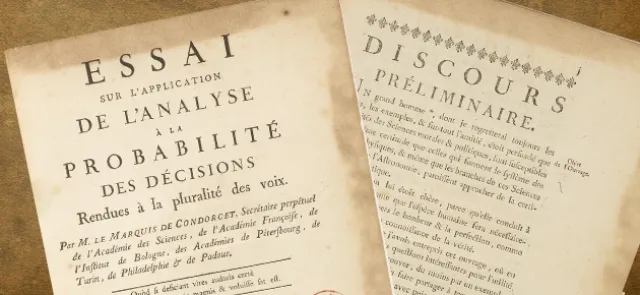 Everyday MathN°198Feb 02, 2021
The rationality of political action in the face of calculation
Public policies are often supported by rational, even mathematical arguments. Philosophers such as Leibniz, Condorcet and Bentham sought, through a variety of approaches, to put both economic and social behavior on a mathematical footing. Yet they all came up against the fact that combining individual rationalities does not necessarily serve the common good.
Read →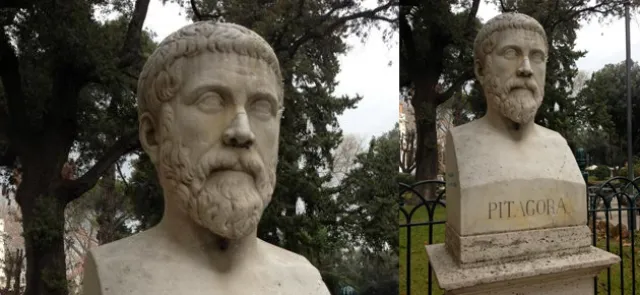 History and CultureN°76Nov 05, 2020
The Pythagorean scale
Pythagoras is often credited with the idea that everything is number. Less well known is that his view of mathematics was closely bound up with musical harmony—not only the "harmony of the spheres," but the actual construction of a musical scale using numbers.
Read → History and CultureN°195Jul 14, 2020
How Archimedes squared his spiral
Archimedes is admired for his great discoveries. Less well known is how his proofs unfolded. Without effective mathematical notation, reasoning was fraught with difficulty and demanded considerable ingenuity…
Read →