



Amazing Math
Surprising or counterintuitive mathematical results and proofs
Antarctica: a still-mysterious continent | Tangente
Unlike in the Arctic, where the area covered by winter sea ice is shrinking, Antarctica's ice-covered area is growing. How can this paradox be explained when temperatures are rising?

Greenhouse gases: the paradoxes of transport
Greenhouse gas emissions continue to rise. Quantifying the share attributable to road transport is no simple matter—and reducing it is harder still!
Joseph Bertrand's probability paradoxes
Joseph Louis François Bertrand (1822–1900) is known for his research in analysis. Less well known is the remarkable book on probability that he published in 1889 (see
Crop circles and mathematics: Fibonacci in the fields
Another form of optical art is found in the famous crop circles, or "crop formations" (technically known as agroglyphs). These geometric patterns, most often created in cereal fields, range in size from a few square metres to several hectares. They are made by cutting, twisting or bending stalks of grain, usually at night and in record time.
The tippe top: a mystery of mechanics
In playgrounds, the tippe top is often called a "magic top" because it flips itself over, turning upside down. Its counterintuitive behavior is subtle...

The ever-surprising curiosities of the harmonic series
The harmonic series is one of the few divergent series that frequently arises in science. In mathematics, naturally, but not only there: it also turns up in a theater, in the guise of an absent-minded spectator who has forgotten his seat number, and in problems involving stacks of sugar cubes.
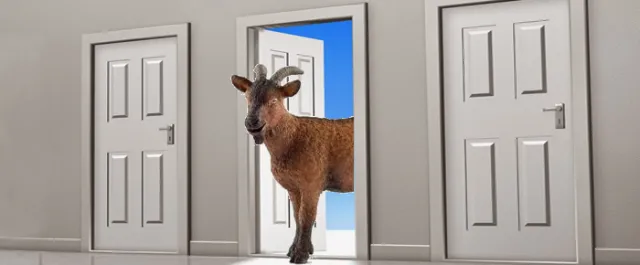
The Monty Hall paradox
Who has never dreamed of hitting the jackpot, of beating the odds? Games of chance such as roulette and Loto leave considerable uncertainty over whether you will win. Probability helps us understand these games and make the best decision as they unfold.
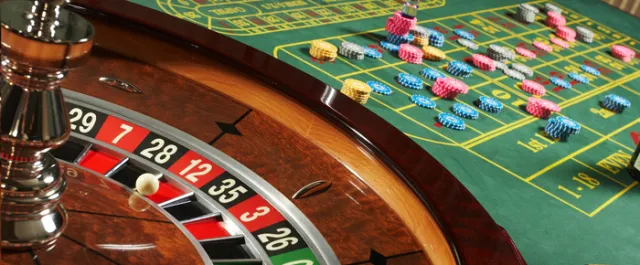
Expected value and its surprising paradoxes
Expected payoff is essential to rational decision-making, but tricky to use. Many paradoxes arise from misinterpreting what it represents. Casinos—and the unscrupulous people who encourage you to wager your money—understand this only too well...
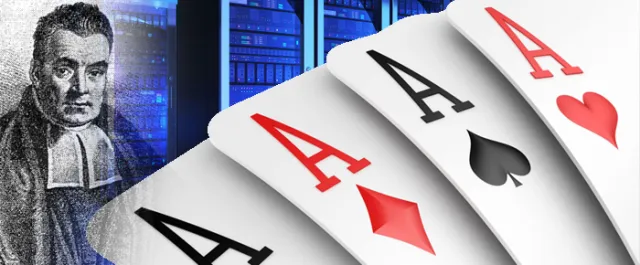
Bayes' theorem: the star of web algorithms
If the Internet can now suggest books or holiday plans to you with remarkable accuracy, it is thanks to yesterday's researchers, who envisioned computing when computers barely existed. One remarkable figure stood out, though he remains far too little known: Thomas Bayes.
The very delicate principle of indifference
The principle of indifference invites us to reflect on the subtle blend of knowledge and ignorance. The probabilities it generates are sometimes surprising, but always consistent. By analyzing a problem's data, it dictates the probabilities that should rationally be assigned.
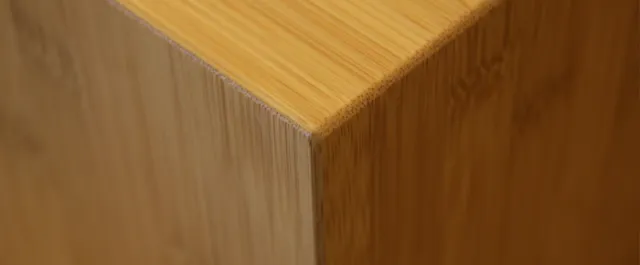
The cube’s geometric tricks: cross-sections and symmetries
The cube is such a familiar object that few people know its formal name: the regular hexahedron. Yet that familiarity is deceptive... To see why, let’s slice a cube into sections: this old familiar shape still has a few surprises in store!
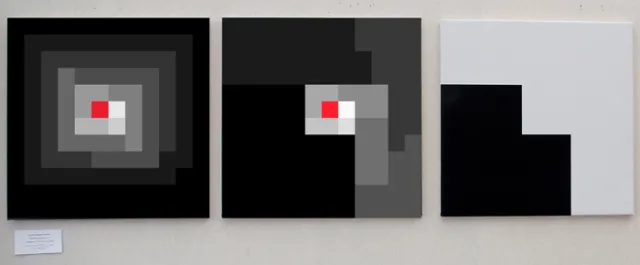
Fibonacci in concrete art: mathematics and aesthetics
The famous Fibonacci sequence begins 1, 1, 2… and each term is the sum of the previous two. It abounds in surprising properties. Has it finally yielded all its secrets? That remains a mystery, as some artists are now working with it and exploring it from every angle.
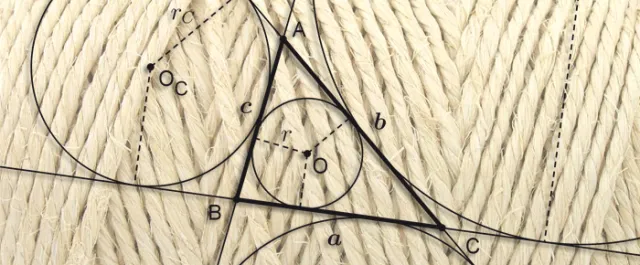
A nest of theorems
Heron's formula is strikingly simple. All the more remarkably, it provides a highly effective way to prove other, equally elegant results. It even leads to more fascinating problems in geometry!
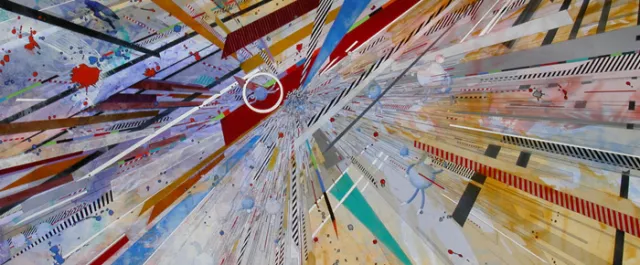
Linear equations and linear recurrences are one and the same!
One of a mathematician's skills is recognizing the same structures in different guises. A similarity in the calculations used in two ostensibly separate areas is often an early sign of this… Let's look at certain differential equations and sequences.
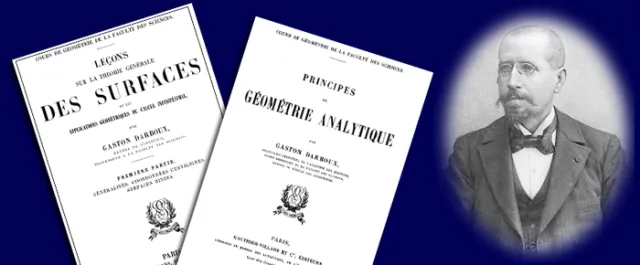
Gaston Darboux: geometer and artist
Gaston Darboux, whom we commemorate this year, died a century ago. Throughout his life, he remained "a young man of the rarest learning and the highest promise," and he left behind a considerable body of work. His geometric results on orthogonal surfaces are spectacular.
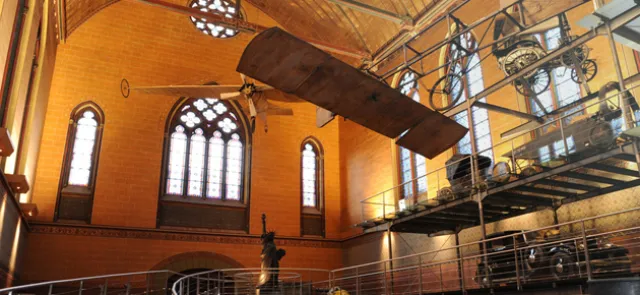
A tour of the Museum of Machines: mathematics and mechanisms at the CNAM
Mathematics isn't visual? You can't really represent it "in the real world," let alone make it tangible? Think again! The Musée des arts et métiers (60 rue Réaumur, 75003 Paris) invites you to revisit its collections… through the surprising lens of mathematics.
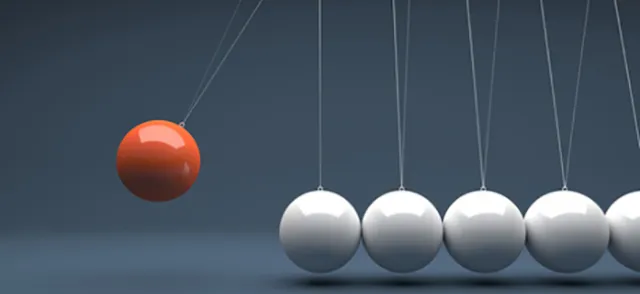
A world of oscillations: from Huygens's clock to quantum physics
Huygens's invention of the first pendulum clocks in 1650 helped shape modern differential geometry—with unexpected repercussions for a very recent problem in quantum mathematical physics.
Tangente at 30: lectures on surprising mathematics
For Tangente's 30th anniversary, on Sunday, December 3, renowned experts will talk about the mathematics they love. Here are the summaries.
The Earth in a ping-pong ball: Nash–Kuiper
Nothing is mathematically impossible! Although, back in the 1950s, the Dutch mathematician Nicolaas Kuiper and the American John Nash had already proved the existence of a vast class of paradoxical mathematical objects (flat tori in 3D, shrunken spheres…), they lacked the tools to visualize them
2018 Championship
The 32nd Mathematical and Logical Games Championship, organized by the Fédération française des jeux mathématiques, is under way. Tangente brings you an exclusive look at the eighteen problems from the individual quarterfinals.