



Amazing Math
Surprising or counterintuitive mathematical results and proofs
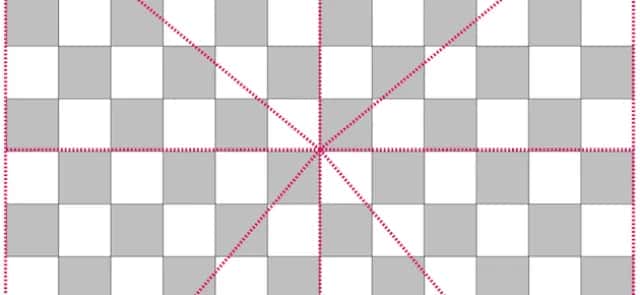
Paradoxes in the world of dissections | Tangente
Tilings and geometric dissections gave rise to equidissection puzzles, which have kept our brains buzzing since the 18th century.
The mysteries of the Ishango bone | Tangente Magazine
The mysterious Ishango bone has not yet given up all its secrets

Paul Erdős and the probabilistic view of arithmetic
With the development of probability theory in the early 20th century, a new field of inquiry opened up in arithmetic: the statistical study of integers. Paul Erdős was among the first mathematicians to grasp the significance of this new approach.
Applying the Chinese remainder theorem to RSA cryptography
The Chinese remainder theorem finds, among other things, applications in cryptography

Chinese remainder theorem: history and applications | Tangente
The Chinese remainder theorem owes its name to ancient Chinese mathematicians’ interest in the arrangement problems it describes. Originally a source of puzzles, it has since found more practical applications, particularly in cryptography.
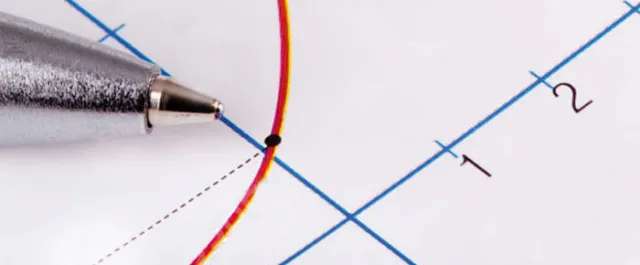
The inverse of the exponential function
The introduction of logarithms can be traced back to the Renaissance, when they were used to solve computational problems. They have since found more theoretical applications and today even lie at the heart of some cryptographic systems—and hence of our computers.
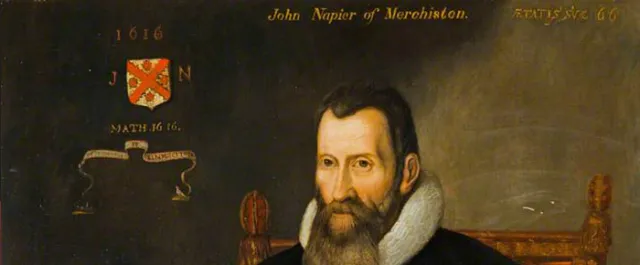
John Napier's astonishing inventions
John Napier of Merchiston, the Scottish gentleman whose death four centuries ago is being commemorated this year, was no revolutionary. Yet his wondrous invention of logarithms made him one, opening up a new world for mathematics far beyond computation.
A detour through complex numbers
Taking a detour, part way through a proof, by way of complex numbers can lead to one of those redeeming "mathematical surprises".
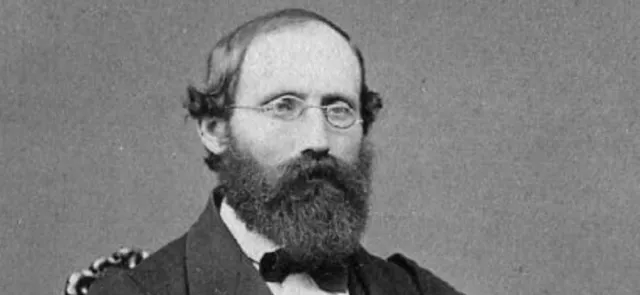
The zeta function and the Riemann hypothesis
The most important problem in contemporary mathematics can be stated in entirely elementary terms, requiring only a rudimentary knowledge of complex analysis. Despite mathematicians' titanic efforts, the Riemann hypothesis remains stubbornly out of reach.
Logjam flaw in the HTTPS protocol | Tangente
A Franco-American team of researchers has just cheated… but for a good cause! Their goal? To verify the cryptographic mechanisms used to secure communications on the Internet.
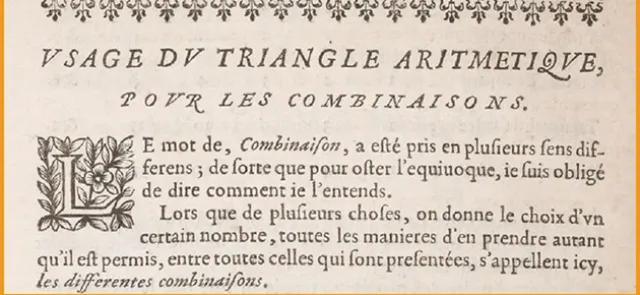
Journey into the heart of a mathematical classic
If you know how to fill in Pascal's triangle, you may be less aware of the treasures it contains. Arithmetic, geometric, combinatorial: it has no shortage of astonishing mathematical properties! And there are undoubtedly many more still to be discovered…

Pascal's triangle: a thousand-year history | Tangente
"Pascal's triangle" may have been discovered by Indians more than two thousand years ago. It reached the Arab-Muslim world and China as early as the 11th century. It did not appear in Europe until the 16th century, when Blaise Pascal began to study it rigorously.
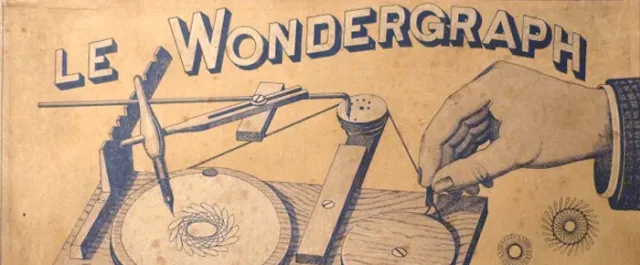
Astounding strophoids: curves and loci
Studied for nearly two centuries before acquiring their final name, strophoids have many interesting properties arising from their similarity under a particular type of transformation. They therefore appear as loci in several classic problems.
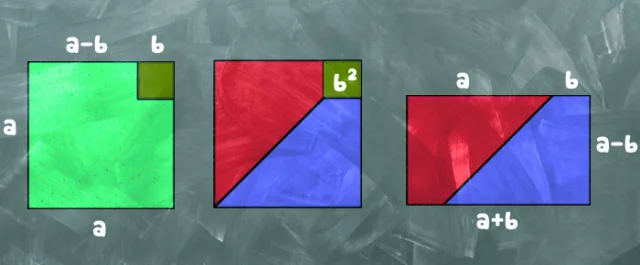
Algebraic identities in the classroom
"Find two numbers given their sum and product." This problem, already posed by the Babylonians four thousand years ago, marked a milestone in the history of mathematics and paved the way for an entire teaching tradition: that of algebraic identities.
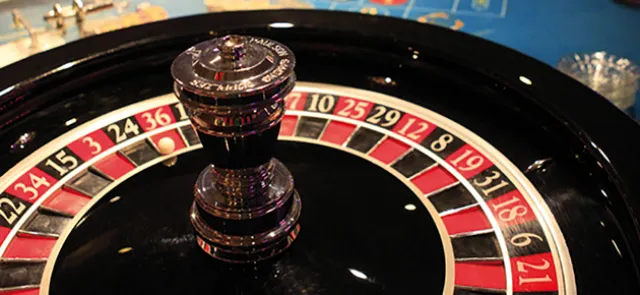
Pascal's wager applied to presidential elections | Tangente
Throughout history and across civilizations, chance has fascinated people. Although betting was not conceptualized until the 15th and 16th centuries, it had already attracted many enthusiasts. Strategies were devised. But can they be adapted to presidential elections?
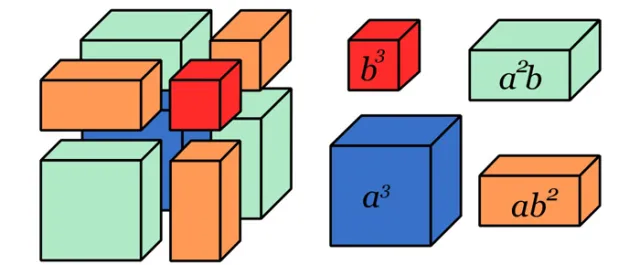
From algebraic identities to useful applications
The standard identities studied in middle school (and now at the start of high school…) can prove very useful in finding the solutions to certain equations, including quadratics. The trick is knowing where these mysterious identities are hiding!
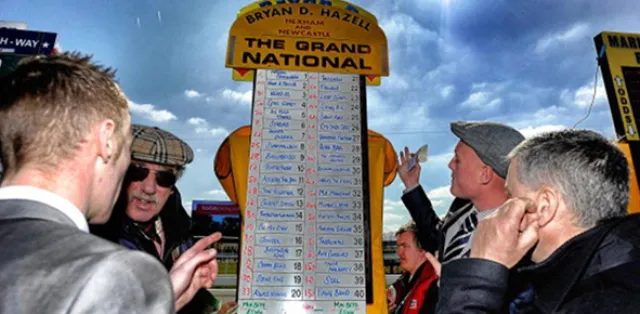
Bookmakers don't like probabilities
Since bookmakers try to assess the outcomes of horse races, it is easy to imagine that they rely on probability. Rather surprisingly, they do not! This paradox can be explained by a mathematical property of probabilities.
Famous paradoxes: Pascal's wager & St. Petersburg | Tangente
Let's rediscover the famous Pascal's wager, a line of reasoning as questionable mathematically as it is theologically!
Algebraic identities in series
What happens if we try to calculate sums containing an ever-increasing number of terms? That is the challenge tackled by the study of sequences and series.
What is an algebraic identity? | Tangente
Algebraic identities are a great classic of the high-school curriculum. Here's a quick refresher, in pictures…