



Amazing Math
Surprising or counterintuitive mathematical results and proofs
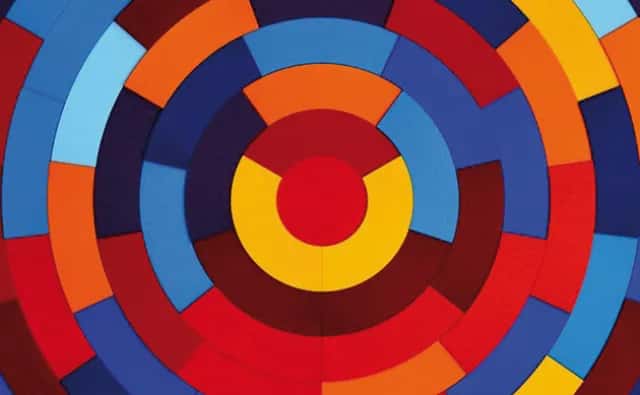
Philippe Leblanc,
Visual artist Philippe Leblanc describes his artistic development this way: "Discovering Op Art, kinetic art and the abstract geometry of the 1960s and 1970s had a decisive influence on my artistic direction." Mathematical concepts and emblematic numbers are recurring features of his work.
The endless quest for decimal places
Visitors to the Palais de la découverte cannot help being fascinated by the sequence of π's decimal digits in the rotunda devoted to it. The digits seem to occur in no apparent order. Yet they are the result of a calculation!

An astonishing coincidence!
The Borwein brothers, Jonathan (1951–2016) and David (1953–2020), worked extensively on—and published widely about—the number π.

It's everywhere!
π turns up almost everywhere, sometimes even in the most fanciful fields. In mathematics, of course, we encounter it in geometry, analysis and number theory… As a result of this omnipresence, it appears throughout the other sciences too!

In search of the universal number: Champernowne and Borel | Tangente
Sometimes, a concept that is relatively simple to define leads us into a world we dare not imagine, where our common sense struggles to find its bearings. Such is the case with universal numbers, which remain today as elusive as they are fascinating.
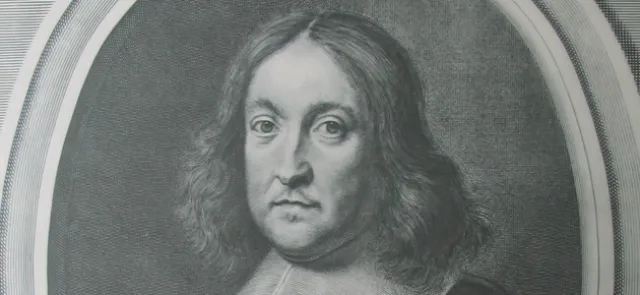
A historical example involving Fermat: article by m… | Tangente
Through his marginal notes in Bachet's edition of Diophantus's books on arithmetic and through his correspondence, the mathematician Pierre de Fermat spurred the study of integers with new results and methods. He both transmitted ideas and drove the subject forward.
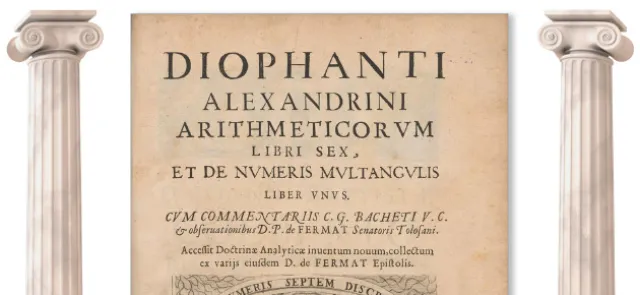
Diophantus of Alexandria, the unknown: article by… | Tangente
As noted on www.diophante.fr, which has just celebrated its 20th anniversary, the Greek mathematician Diophantus left us some remarkable works on arithmetic. A journey into history will reveal his extraordinary talent.
Integers: stars of equations: article by… | Tangente
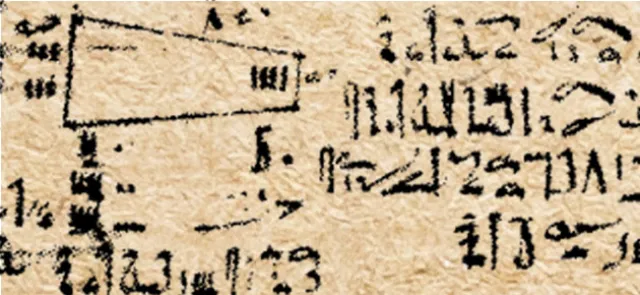
In ancient Egypt, puzzles and problems were already being framed in terms of equations over the integers. Although the methods used to solve them have changed, the underlying question remains the same. These equations would go on to transform mathematics.
A genealogy of fractions
A beautiful construction due to Calkin and Wilf, foreshadowed a century earlier, provides an elegant and deep way to list all fractions. Beginning with 1 / 1, each fraction in this construction gives birth to two new ones.
Endless sums
Adding several fractions always produces another fraction. But when the sum continues indefinitely, things are very different. If chosen carefully, such sums can approximate numbers like π and yield a wealth of fascinating, unexpected results.
An unhurried journey to infinity
The harmonic numbers form a sequence that tends to infinity, but very slowly. That does not stop them from playing a role in several important problems.
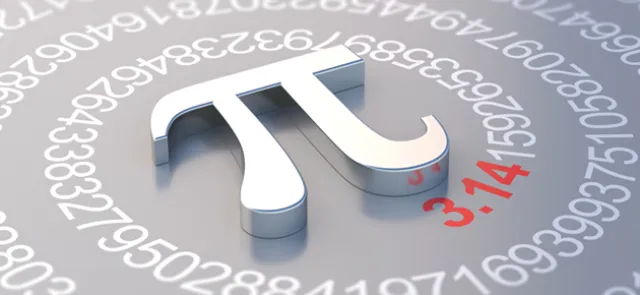
Coming to grips with decimal expansions
Like any real number—for example, pi—a fraction can be written as a finite or infinite decimal expansion. Remarkably, the resulting decimal expansion is always eventually periodic.

Gears
How can a ratio be approximated by a simpler one? Crucial to clockmakers and engineers, this problem can be solved with a healthy dose of arithmetic and algorithms dating back to antiquity.

The culture of Tangente | Tangente
From the outset, Tangente envisioned a whole world of worlds: mathematics linked to literature and poetry, to music; a publication opening the door to the wonderful world of logical puzzles; mathematics as a whole world in itself, extraordinarily vibrant and fully in tune with the latest technological advances. Above all, it stood for openness to the world, through writing that aimed to be accessible to everyone.

2024: a new year with many properties
What spectacular mathematical advances, major scientific discoveries and gains in knowledge does the new year have in store for us? It is hard to say! What is certain is that the natural number 2024 abounds in wonderful arithmetic and combinatorial properties…
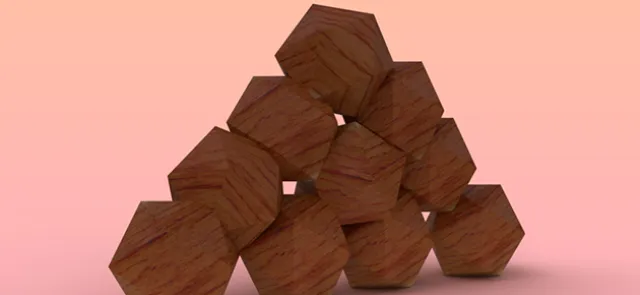
A form of harmony between geometry and arithmetic
Many mathematicians have taken an interest in figurate numbers. But their concerns have not always been the same! In ancient times, people sought to construct and represent numbers using counters. The resulting shapes illustrate a host of arithmetic relationships.
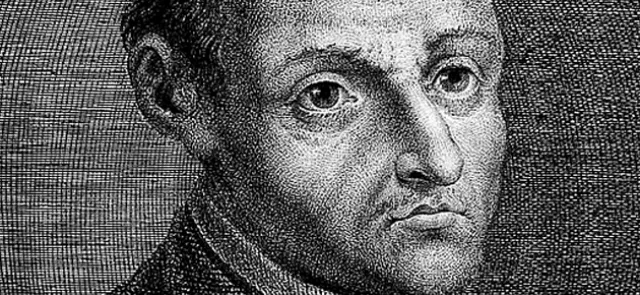
Francesco Maurolico's extensions
A member of a Greek family that emigrated to Sicily after the fall of Constantinople, Francesco Maurolico was born in Messina in 1494 and died there in 1575. He entered the Church at the age of 27, proposed an extension of figurate numbers, and established many of their arithmetic properties.

An inventory of arithmetic puzzles | Tangente
Figurate numbers, which provide a visual representation of integers, form a wonderful bridge between geometry and arithmetic. Some properties in either field can be reformulated in the other, and vice versa! New questions naturally arise…

A new life for figurate numbers
Figurate numbers entered Arabic mathematics through Thabit ibn Qurra’s translation of the work of the mathematician and philosopher Nicomachus of Gerasa. Thabit’s name is associated with Thebit numbers (the "e" replacing the "a" in medieval Latin transcription).
2023 Tangente Awards winners | Tangente
Since 2010, the Tangente Club has used the Tangente Awards to honor creative works that showcase mathematics. The winners receive a work of art. The awards ceremony took place at the Musée des Arts et Métiers in Paris on December 3, 2023, during Tangente Day.