



Famous figures
Portraits of famous mathematicians, historical and contemporary

Laure Saint-Raymond: 2020 Bôcher Prize | Tangente
The American Mathematical Society (AMS) has just awarded the 2020 Bôcher Prize to French mathematician Laure Saint-Raymond, a professor at ENS Lyon and a member of the Académie des sciences, for her "transformative contributions to kinetic theory, fluid dynamics and Hilbert's sixth problem."

Gödel's incompleteness theorems
In mathematics, although there are many conjectures and hypotheses, it is generally assumed that any well-formed statement must have either a proof or a refutation. Kurt Gödel showed that this is not so. His proof uses self-reference.

Disputes and paradoxes | Tangente
Even the greatest mathematicians have fallen into the traps laid by logic and its paradoxes.
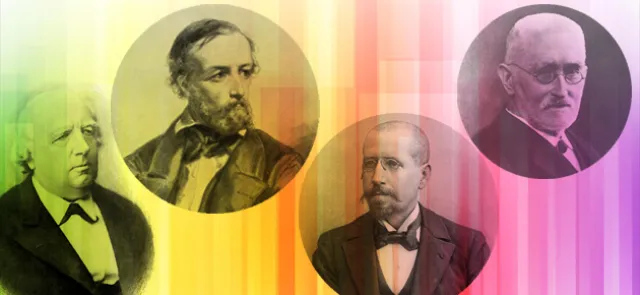
The emergence of discontinuous functions
Until the early 19th century, everything seemed continuous. Trigonometric series brought discontinuous functions onto the scene. They prompted Riemann to generalize the notion of the integral, led Weierstrass to clarify the notion of continuity, and spurred Darboux to study derivatives.

The mathematics of 5G | Tangente
Large companies are beginning to understand that they cannot survive in the long term without funding fundamental research. A career as a mathematician in the private sector is therefore possible, provided you have some understanding of technological challenges.
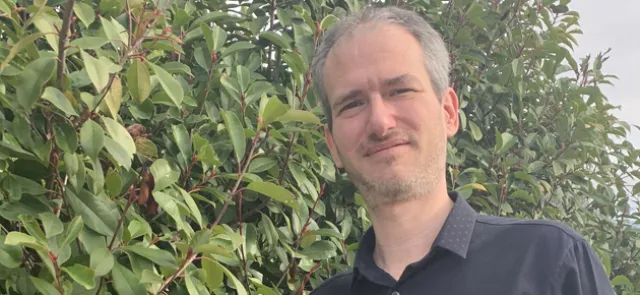
Mathematics: research–industry partnerships | Tangente
Since September 2019, Frédéric Bertrand has been a professor at the Université de Technologie de Troyes, specializing in modeling and statistical decision-making. Previously an associate professor at the Institut de recherche en mathématique avancée at the Université de Strasbourg, he is actively involved in research while forging close ties with businesses.

D'Arcy Thompson and the geometry of nature
Can the forms we see in nature be explained mathematically? Physics has had its principle of least action since Maupertuis in the 18th century, but biology had to wait until the early 20th century for anyone to attempt a synthesis.
Plane coloring and the minimum chromatic number | Tangente
In 1950, American mathematician Edward Nelson (1932–2014) proposed an entertaining coloring problem.

Brachistochrone:
Is the shortest path always the fastest? Mathematicians have known since the 17th century that it is not. Skateboarders, too, have learned this through experience, ever since the profiles of their half-pipes began to follow the shape of a "brachistochrone" curve.

The art of avoiding crossings
Artists using mathematics: nothing new there. But artists posing optimization problems that mathematicians still cannot solve: now that is surprising! One seemingly innocuous conjecture about drawing graphs has resisted all attempts at proof for fifty years.
Jean-Paul Benzécri, the father of correspondence analysis
Initially a mathematician, Jean-Paul Benzécri (born in 1932) turned to multivariate statistics.

Waves of settlement
Mathematical models developed by mathematician Albert Ammerman and geneticist Luca Cavalli-Sforza, combining human genetics and archaeology, have challenged prevailing views of population expansion and the myth of great invasions.

A dive into a strange world of numbers
At the beginning of the 20th century, the German mathematician Kurt Hensel "invented" new numbers, written with infinitely many digits, as in the decimal system, but based on a very different notion of proximity. This curious theory proved very fruitful in arithmetic!
10-adic numbers
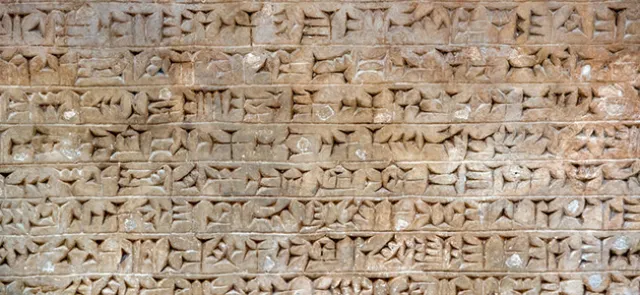
Some mathematicians, tired of manipulating objects according to established procedures, begin to play with the rules themselves. What seems to be nothing more than pure intellectual pleasure often finds unexpected applications. Such is the case with 10-adic numbers...
Alexandre Grothendieck, mathematician of extremes
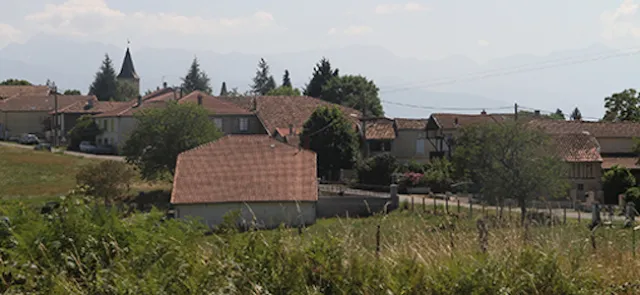
Newly opened to the public, Alexandre Grothendieck's archives evoke the career and extraordinary discoveries of one of mathematics' last great geniuses. An enormous task awaits specialists in algebraic geometry and historians of mathematics!

Tangente Prize 2019: vote (and get others voting)!
As they do every year, our readers are invited to read books about mathematics published for a general readership over the past eighteen months and vote for their favorite. The five books receiving the most votes will become the "nominees," from which the jury will select the 2019 winner of the Tangente Book Prize.
Grothendieck archives: an enigmatic treasure | Tangente
One hundred thousand pages of archives is no small matter! That is the scale of the legacy left by Alexandre Grothendieck, who withdrew from the world in 1991 to live in a remote village in Ariège, where he died in 2014.
Michel Serres: tribute to a learned philosopher | Tangente
Michel Serres, philosopher and member of the Académie française, died on June 1 at the age of 88.
Mathematical humor: jokes and anecdotes | Tangente
Mathematicians are quick to poke fun at their physicist colleagues’ failings, real or imagined… and the physicists return the favor.

Let’s multiply in quasi-linear time!
The news broke in late March: mathematicians David Harvey and Joris van der Hoeven showed that large integers can be multiplied in "quasi-linear" time, confirming a conjecture that dates back to 1971, when Volker Strassen first suggested it. Let's revisit one of arithmetic's basic operations!