



Famous figures
Portraits of famous mathematicians, historical and contemporary

How Archimedes squared his spiral
Archimedes is admired for his great discoveries. Less well known is how his proofs unfolded. Without effective mathematical notation, reasoning was fraught with difficulty and demanded considerable ingenuity…
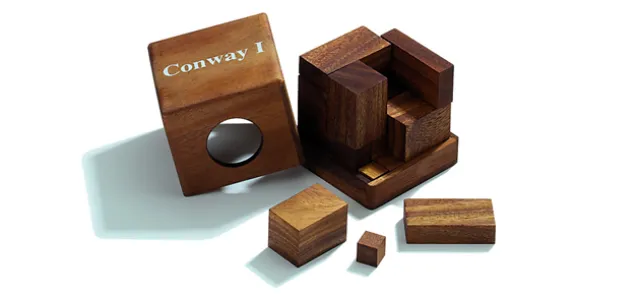
Games as a source of inspiration
Games were an inexhaustible source of inspiration for Conway—both studying the classics and creating new puzzles.

Tilings: Conway's criterion | Tangente
You have probably heard of tilings, but do you know this simple criterion for determining whether a polygon can tile the plane?

Conway's sequences and conjectures | Tangente
Conway loved playing with number sequences. His explorations led him to formulate conjectures that are elementary to state but formidable to tackle.

Reference books on Conway | Tangente
Guided by his passions and discoveries, John Conway wrote many fascinating books, regrettably few of which have been translated.
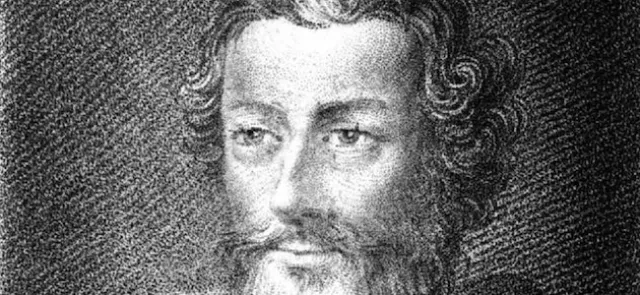
Viète's new algebra | Tangente
François Viète ranks among those scholars celebrated for their considerable contribution to mathematics. He did not invent algebra, but his work propelled the discipline forward spectacularly.

Conway and quantum free will | Tangente
John Conway joined forces with Simon Kochen to prove the free will theorem. This result calls for a reassessment of quantum mechanics, without necessarily tying it to probability. It casts new light on a paradox highlighted by Einstein.

Mind-boggling surreal numbers!
By combining Dedekind cuts with von Neumann's construction of the natural numbers, John Conway constructed the largest possible collection of numbers: the class of surreal numbers, which he endowed with the structure of a field.
An irresistible geometer
Finding fruitful connections between two mathematical objects that, at first sight, have no reason to meet: this was the essence of Conway's approach. How did he uncover such connections? By playing around, as these examples from geometry show!

Wonders of Conway's Game of Life | Tangente
One of John Conway's best-known creations is the Game of Life, which he devised in 1970. It is a particular kind of cellular automaton, made up of virtual beings that develop in the cells of a regular grid, living, dying and being born according to predetermined rules.
Conway, the game-playing mathematician | Tangente
John Conway advanced finite group theory, number theory, topology, theoretical physics, combinatorial game theory and geometry. His originality, creativity and extraordinary personality made him popular with mathematical game enthusiasts everywhere, especially after he created the Game of Life in the 1970s.

Conway and group theory | Tangente
Conway developed a passion for groups—and sporadic groups in particular—at an early age.
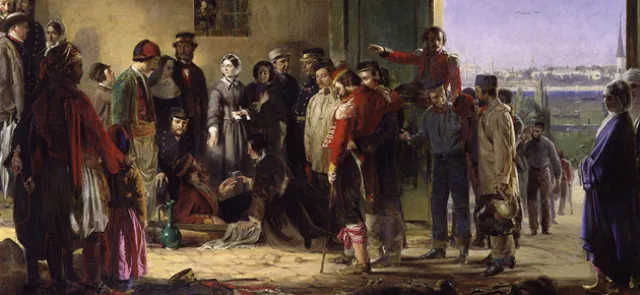
The birth of epidemiology | Tangente
For more than three centuries, major pandemics have prompted statisticians to quantify mortality data and produce death forecasts. How has this helped reduce the impact of such disasters?

New women members of the Académie des sciences | Tangente
Of the eighteen newly elected members of the Académie des sciences, eight are women, including two in the mathematics section: Nalini Anantharaman and Mireille Bousquet-Mélou.

The emergence of probability theory
In the second half of the 17th century, Blaise Pascal and Pierre de Fermat exchanged letters on the development of a mathematical theory of probability that went beyond the elementary observations one might make about rolling a die. Christian Huygens would take their ideas further.

Degree 45: François Viète rises to the challenge! | Tangente
Reconstructing a historic mathematical challenge.

Leonardo da Vinci and mathematics | Tangente
Everything you need to know about Leonardo da Vinci
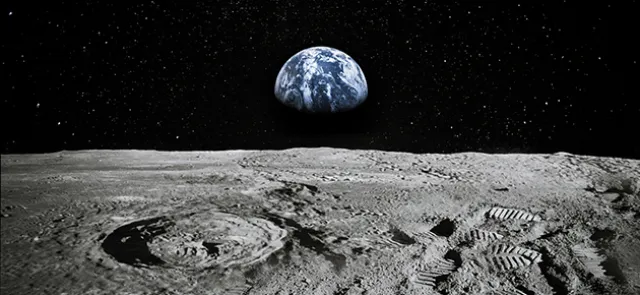
Katherine Johnson, NASA mathematician | Tangente
Mathematician Katherine Johnson died at the age of 101. She was one of the scientists who helped derive the equations describing the trajectory of an orbital spaceflight—essential to bringing the first astronauts to land on the Moon back to Earth!

Adelard of Bath | Tangente
Adelard of Bath was one of the translators of Euclid into Latin. He also translated many other mathematical texts from Arabic
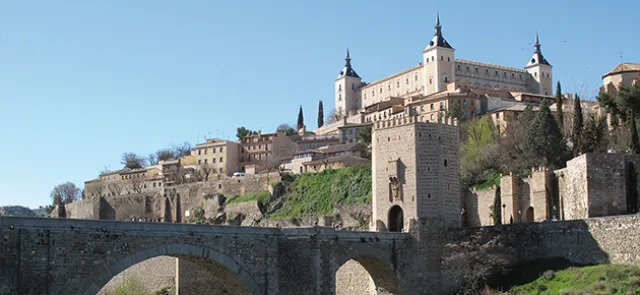
From Baghdad to Toledo: legendary places | Tangente
A great many works from ancient Greece survived and reached a wider audience thanks to their translation into Arabic or Latin. This legacy was made possible by the determination of a handful of rulers who understood the universality of knowledge and the importance of passing it on.